
The New Equation of Asian Cricket: The Game's Changing Economy Across Format, League and Governance
एशियाई क्रिकेट आज खेल की वैश्विक अर्थव्यवस्था का सबसे बड़ा केंद्र है — आईसीसी के पाँच पूर्ण सदस्य (भारत, पाकिस्तान, बांग्लादेश, श्रीलंका, अफ़ग़ानिस्तान) इसी महाद्वीप से हैं। इसकी तीन प्रमुख शक्तियाँ हैं: टेस्ट, वनडे और टी20 प्रारूपों के बीच संसाधनों का बँटवारा; आईपीएल, पीएसएल, बीपीएल, एलपीएल और आईएलटी20 जैसी फ्रेंचाइज़ी लीगों का विस्तार; और एनओसी, केंद्रीय अनुबंध तथा आईसीसी राजस्व-साझेदारी जैसे शासन-तंत्र। मुख्य जोखिम वर्कलोड और चोट, प्रारूपों के बीच फ़ॉर्म का ग़लत स्थानांतरण, लीगों की अधिकता से राजस्व का बँटवारा, और सत्यनिष्ठा-निगरानी हैं। ध्यान रहे: टेस्ट, वनडे और टी20 के आँकड़े एक-दूसरे से तुलनीय नहीं होते, इसलिए किसी भी निष्कर्ष से पहले प्रारूप तय करना अनिवार्य है।
The New Equation of Asian Cricket: The Game's Changing Economy Across Format, League and Governance
(1) Introduction: Half of the World's Cricket
There is perhaps no geographical region where cricket carries as much economic, cultural and emotional weight as Asia. Five of the ICC's full members — India, Pakistan, Bangladesh, Sri Lanka and Afghanistan — come from this continent. Alongside them sits a network of associate members including Nepal, Oman, the United Arab Emirates, Malaysia, Singapore, Hong Kong and Qatar, several of which have built distinct identities over the past decade through T20 cricket.
That expansion is not confined to the field. Asia is also the largest consumer market in cricket's global economy: the largest share of broadcast rights, the largest audiences for franchise leagues, the most active fantasy-sports user base and the biggest concentration of cricket-related advertising spend. But three tensions run through Asian cricket and will shape the sport over the coming decade — the allocation of resources between formats, the conflict between national-team and franchise-league interests, and a governance structure that has not kept pace with the market.
This feature does not evaluate a specific match, series or player. It is a structural analysis: what units Asian cricket is built from, how they affect one another, and where risk is concentrating.
(2) The Triangle of Formats
Cricket's central analytical difficulty is that three different games run under one name. A Test match lasts five days, has four innings, and a draw is a legitimate outcome. An ODI is 50 overs, with a ten-over powerplay, a middle phase of consolidation and a final phase of acceleration — three distinct game states. A T20 is 20 overs, split into a six-over powerplay, a middle block and a death-overs phase from overs sixteen to twenty.
The metrics differ fundamentally. In Tests, batting average is the primary measure and strike rate secondary. In ODIs, average and strike rate both matter, in a balance that shifts with the player's role. In T20, average becomes nearly secondary and strike rate decisive, while economy rate becomes the central bowling metric.
The practical implication is that treating form in one format as transferable to another is the most common analytical error. A batter who dominates T20 is not automatically equipped for the new ball and movement of Test cricket; a Test bowler without a reliable yorker and slower ball can be expensive at the death. Format must be fixed before any conclusion — about a player, a team or a tactic — can be drawn.
The second side of this argument is that format priority is no longer purely a sporting question for Asian boards; it is a revenue question. T20 brings larger audiences and more advertising, Tests bring prestige and historical continuity, and ODIs sit on the balancing line. Commercial pressure naturally leans toward T20, while long-term competitiveness depends on the Test and first-class structure. That imbalance is the defining policy debate of the coming decade.
(3) The Limits of Match Analysis: Venue, Toss, DLS and DRS
The credibility of any match-based conclusion depends on the ability to isolate conditions. Pitch behaviour — the dry, slow, turning surfaces of the subcontinent, the faster, bouncier coastal tracks, or the extra swing of high-altitude grounds — shapes outcomes as much as player skill. Home advantage is not merely crowd support; it is the combined effect of pitch familiarity, weather, humidity and travel fatigue.
The toss is an often-ignored variable. In night matches, dew makes the ball slippery in the second innings and reduces spinners' grip, giving the chasing side a structural edge. That edge is not a product of player quality and must be separated from the result.
In rain-affected matches, the Duckworth-Lewis-Stern method revises targets. It is a standardised statistical tool, but its practical effect is that a team can occasionally win a match it did not fully control. Treating such a result as proof of performance is technically incorrect.
The Decision Review System and its "umpire's call" provision also affect the fairness of outcomes. When ball-tracking falls within the error margin, the on-field decision stands — which means the decision was not demonstrably wrong, not that it was demonstrably right. Attributing a win or loss to a single review is a sign of weak analysis.
Collectively, these factors mean a single result — however dramatic — is not a reliable indicator of long-term capability. Asian cricket commentary often breaks this discipline, declaring a brilliant innings a "new beginning" and a failure a "crisis", when in both cases the sample is tiny.
(4) Player Technique and Data: Role First, Numbers Second
The first step in assessing any player is establishing their role. An opener manages risk against the new ball and lays a foundation; an anchor preserves wickets through the middle and gives the innings depth; a finisher converts at a high strike rate in the closing overs. Fast bowlers and spinners are measured on different scales, and all-rounders and wicketkeepers are the most complex to assess because of their dual roles.
Once the role is fixed, four layers of data matter. First, baseline numbers — average, strike rate, economy. Second, situational splits — powerplay versus middle versus death, home versus away, against spin versus against pace. Third, trend — whether performance over the last twelve to twenty-four months is rising, flat or falling. Fourth, context — opposition quality, match situation, pressure.
The third layer is the most neglected. A career average at any single point is not a picture of current capability. The age curve suggests fast bowlers' pace and recovery capacity begin to decline around thirty, while batters often add technical maturity well past thirty. This matters especially in Asia, where the calendar is dense and workload has a direct effect on output.
Injury history must be part of any forecast. Shoulder, back and knee injuries are career-altering for fast bowlers; finger and wrist injuries affect a batter's grip. An assessment that omits these is incomplete. Above all, conclusions drawn from small samples must not be treated as permanent truths.
(5) Team Landscape and Rankings: Beyond the Table
ICC rankings are the natural starting point but are not sufficient. They show recent performance, not structural durability. Four dimensions must be read separately: batting depth (seventh and eighth order, not just the top order), bowling balance (how many quicks and spinners, and whether they cover different conditions), bench depth (how much a changed XI drops off), and age structure (whether the core is ageing out together or has already been replaced).
Added to these is the fixture calendar. The ICC Future Tours Programme and the franchise leagues wedged between its windows together determine rest and workload. Coordinating national series, domestic tournaments and overseas leagues for the same player is becoming harder every year.
The matchup dimension deserves separate attention. India-Pakistan is not merely a fixture but a political and emotional event; India-Sri Lanka often becomes a test of spin control; Bangladesh and Afghanistan have shown growing competitiveness against larger sides.
(6) League and Commercial Ecosystem
The defining structural change of the past fifteen years is the rise of franchise leagues: the IPL as the largest and most mature example, alongside the PSL, BPL, LPL and ILT20, plus the regional national-team layer of the Asia Cup, played in both ODI and T20 formats.
Three economic pillars support this ecosystem: broadcast-rights value, franchise valuation, and player salaries and auction economics. In auction analysis, price and value must be kept distinct. A high fee does not prove future utility; it reflects competitive demand at that moment. Mechanisms like the Right to Match give existing franchises a way to match market price, raising questions about genuinely open competition.
The oldest tension in Asian cricket sits here: league versus national team. Boards grant No Objection Certificates, which are both administrative tools and levers of power. Central-contract terms, league calendars and national-series priority are balanced differently by every board, and that asymmetry distorts the international player market.
Sustainability is a real question. A league survives only while broadcast and sponsorship revenue exceed costs. As the number of leagues grows, the player pool, audience attention and advertising budgets — all finite — must be divided among more claimants.
(7) Rules and Governance
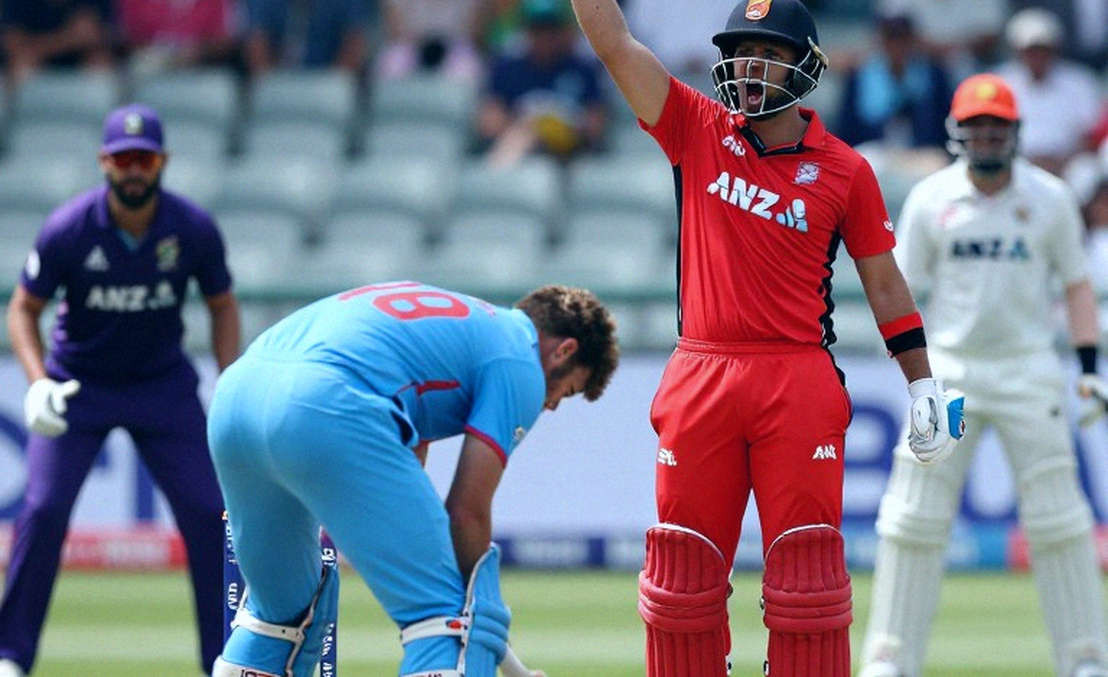
Cricket governance operates at three levels: the ICC globally, the ACC regionally, and national boards domestically. Revenue sharing has long been the flashpoint, most visibly in the ICC debate over allocating a larger share to the biggest markets, followed by the later revision of that decision. The core question is whether revenue should follow the market that generates it or the development needs that keep smaller members competitive.
On rules, three issues recur: playing-rule controversies (the scope of DRS, the interpretation of umpire's call, revisions to DLS), eligibility and selection (which player may represent which country, residency-based eligibility, and the basis for granting or withholding an NOC), and integrity mechanisms. Cricket's record here is severe — the 2026 Cronje affair, the 2026 Pakistan spot-fixing case and the 2026 IPL spot-fixing case all show that risk rises with financial flow. The ICC Anti-Corruption Unit exists to monitor exactly this.
Geopolitics cannot be separated from cricket governance either. Bilateral India-Pakistan series have not taken place for years for political reasons; the two sides meet only in multilateral events. That affects calendars, audience demand and broadcast value alike.
(8) Risk Matrix
The most immediate risk is at player level: workload and injury. Asian calendars stack international series, domestic tournaments and franchise leagues, with the heaviest burden on fast bowlers. Next is personnel risk — a long absence of a key player weakens a side in several places at once.
Second is structural risk: cross-format form transfer. When a board promotes a T20 success directly into the Test side, the driver is often market pressure rather than technical investment, and the credibility of the selection system suffers.
Third is commercial risk: with more leagues, broadcast revenue and sponsorship are spread thinner. If revenue does not keep pace with costs, franchise valuations and player salaries both come under pressure.
Fourth is governance and integrity risk. The boundaries between auctions, betting markets and informal information flows are thin, and without strong monitoring the risk recurs with every major tournament.
Fifth is public-opinion risk, where social-media narratives can outrun actual performance, making the reaction to failure equally extreme. Sixth is systemic — rising heat and rainfall tied to climate change are affecting both playing calendars and ground availability.
(9) Public Narrative and Expectation Gaps
Public narrative tends to oscillate between two extremes: declaring a young player the next superstar, and writing off an experienced one. Both rest on inadequate samples. Expectations should be checked at three levels: team (where the market expects a side to finish versus where its structure justifies), player (external image versus data-derived capability), and auction (price paid versus actual utility).
Sentiment is meaningful only when compared against fundamentals. Excessive enthusiasm or excessive despair is a signal to be read alongside the underlying numbers, never on its own.
(10) Industry Transmission
The flow runs in three stages: youth development and talent supply (domestic structures, under-19 level, regional academies); national teams and leagues, where talent converts into performance and revenue; and broadcast, advertising, fantasy and derivative markets, where value becomes financial.
The strongest link is the South Asian audience market, where cricket consumption is not merely viewing but part of collective identity — a direct influence on broadcast value and an indirect one on player salaries and franchise valuations. The talent supply chain deserves particular attention: weak domestic structures push leagues toward short-term dependence on overseas players and erode local quality over time. Capital networks are also shifting, with multi-sport investment groups, media companies and private equity becoming active in franchise ownership — bringing money, but also replacing sporting expertise in decision-making with financial logic.
Betting and fantasy remain the most sensitive area. This field should be analysed only from a regulatory and integrity standpoint, never as prediction or advice; it is bound to both the uncertainty of outcomes and financial risk.
(11) Conclusion
Asian cricket is in transition. On one side, the sport's global centre of gravity is shifting toward this region in audiences, capital and talent. On the other, format fragmentation, league proliferation and slow governance could cap that advantage.
The essential discipline is to fix the frame before the conclusion: which format, which team, under what conditions, on what sample. Without those answers, any conclusion is incomplete. A dramatic finish is not a long-term trend, and a quiet week without incident is not a trend either.
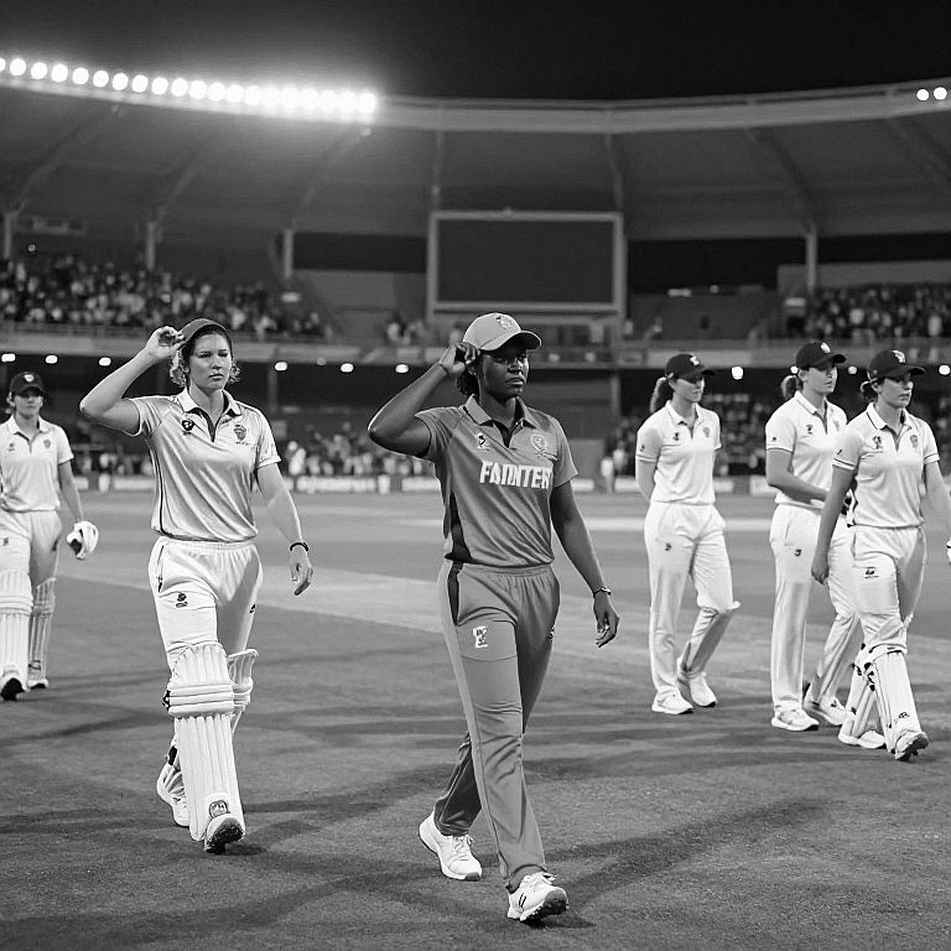
Three questions will define the next debate: whether boards can sustain investment in Test and first-class cricket while the market pulls toward T20; whether the NOC and central-contract framework can balance player and national interest; and whether revenue sharing will be enough to keep smaller members competitive. The answers will come from institutional decisions, not statistics — which is why Asian cricket is best read through all three lenses at once: the technique of format, the momentum of markets and the structure of governance.
Note: This is a thematic, evergreen structural analysis. It makes no claim about any specific match, series, result or player statistic, because no such verifiable fact was present in the available source input. It is provided for sports-information reference only and does not constitute betting advice.