
The Structural Picture of Asian Cricket: Home Advantage, League Economy and the Governance Triangle
एशियाई क्रिकेट को एक प्रारूप नहीं, बल्कि एक भौगोलिक लेबल माना जाना चाहिए — इसके भीतर टेस्ट, वनडे, टी20 और कई टी20 लीग आती हैं, और इनके आंकड़े आपस में तुलनीय नहीं हैं। क्षेत्र की सबसे बड़ी संरचनात्मक सच्चाई घरेलू और विदेशी परिस्थितियों का भारी अंतर है: उपमहाद्वीप में स्पिन और धीमी पिचें मेज़बान को बढ़त देती हैं, जबकि बाहर तेज और उछालभरी पिचों पर अनुकूलन चुनौती बनता है। दूसरा स्तंभ लीग-अर्थव्यवस्था है, जहां आईपीएल फ्रेंचाइजी मालिकों की एसए20, आईएलटी20 और एमएलसी में मौजूदगी ने सीमा-पार पूंजी नेटवर्क बना दिया है और कैलेंडर-एनओसी तनाव बढ़ाया है। तीसरा स्तंभ शासन है: आईसीसी राजस्व वितरण पर विवाद, एसीसी आयोजन अधिकार, और सत्यनिष्ठा निगरानी। विश्लेषण में नीलामी की कीमत को खेल-मूल्य का प्रमाण न मानें, और जहां साक्ष्य नहीं है वहां स्थिति को 'अनिर्धारित' कहें, 'स्वच्छ' नहीं।
Every debate about Asian cricket eventually runs into the same problem: it becomes difficult to tell whether the question being asked is about the sport, about the business, or about the administration. That confusion is not baseless. Cricket in this region runs on three separate logics at once — the logic of performance on the field, the logic of capital in the market, and the logic of power in the boardrooms. Each has its own measurement system, and weighing all three on the same scale is the single biggest analytical mistake one can make.
This article is not a report on any one match, any one auction, or any one controversy. It is a map of the structural frameworks within which every Asian cricket event takes place — frameworks without which no fresh piece of news can be read in its proper context.
'Asia' is a geographic tag, not a format
The first and most basic point: Asian cricket is not a format. It is a geography. Within that geography sit Test cricket, ODIs, T20s, and an entire web of T20 leagues — the IPL, the PSL, the Bangladesh Premier League, the Lanka Premier League, ILT20, and the ecosystem built around them.
The distinction is practical, not theoretical. A Test in Galle, an ODI in Dhaka and an auction in Kochi can all be called 'Asian cricket', but the yardsticks for assessing them are mutually incompatible. A regional label can never substitute for a format. Where the format has not been established, any tactical conclusion is not merely weak — it is invalid.
That is why the first question to ask of any coverage should always be: which format is this about? If that is unclear, every number that follows is suspect.
Home advantage: the subcontinent's biggest structural truth
The most powerful structural fact in Asian cricket is the extreme gap between home and away conditions. Subcontinental pitches favour spin bowling — slow, low-bouncing surfaces create sharp differences in turn and bounce, and the host team exploits this fully. The same teams, travelling abroad, struggle with the challenge of adapting their pace attack to fast, bouncy tracks.
The direct implication is that any assessment of a team's 'level' is incomplete without knowing the venue and whether the team is host or visitor. This is why home and away records must be read separately alongside the ICC rankings. To look only at the rankings and declare a team 'top tier' or 'emerging' is the mistake repeated before every major tournament.
The toss must be added to this. In the subcontinent, dew and turning surfaces make the toss a factor that decides margins between two teams that look equal on paper. When analysing any result, external factors such as the toss and the Duckworth-Lewis-Stern method must be stripped out, or luck gets mistaken for skill.
Three metrics, three different worlds
The format question is decisive because each format's numbers carry a different meaning. In T20, an economy rate under seven is considered excellent; in Test cricket, economy rate alone is not a meaningful metric at all. A finisher's 180-plus strike rate and an anchor's 130 strike rate can both be correct in their respective roles. Evaluating numbers without first fixing the role inverts the entire direction of the assessment.
Similarly, 'a run of three good matches' and 'three years of steady performance' are the most common trap of the small sample. Before making any claim about a player, it is essential to know how large the sample is and which format it comes from. Age curves and injury history matter just as much, and without them any comment on a player's future is mere speculation.
The league economy: capital no longer stops at borders
The second great strength of Asian cricket is its league economy. The IPL is the world's largest cricket market, and its influence is no longer confined to India. Owners of IPL franchises have bought teams in leagues such as South Africa's SA20, the UAE's ILT20 and America's MLC. The result is a network of capital that links the domestic competitions of several countries at once.
That network has two distinct consequences. On one hand it has brought new income routes for players and visibility for smaller cricket nations. On the other, it breeds the calendar crisis that every board talks about and none resolves. When a single owner holds teams in multiple leagues, player availability, the politics of the No Objection Certificate, and the primacy of the national team all become one tangled knot.
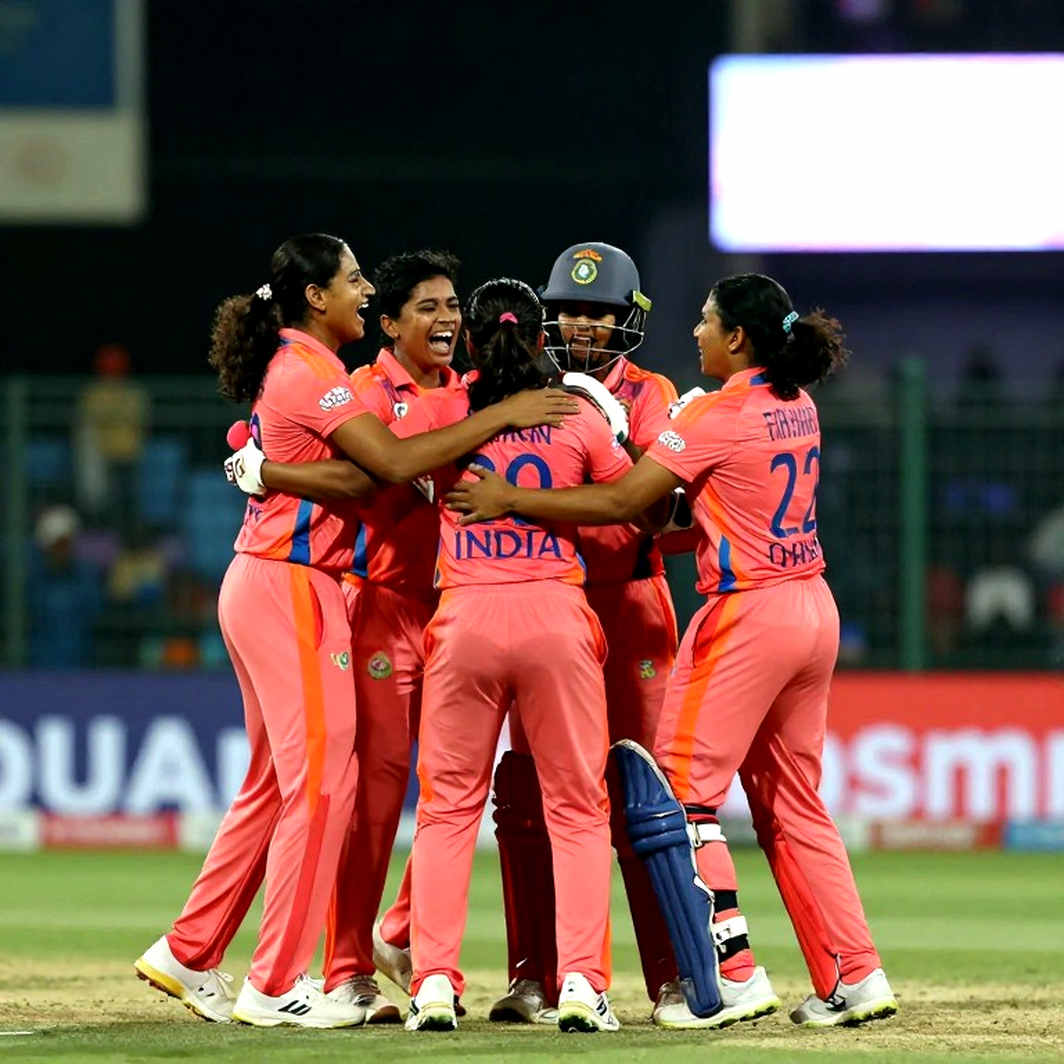
The next chapter of this expansion is visible in women's cricket and in new markets. The growth curve of the Women's Premier League and the step towards the American market both signal that cricket's capital no longer wants to depend solely on the old centres. The debate over cricket's return to the Olympics is the political expression of that same expansion.
Auction mechanics: price and value are not the same thing
The IPL auction is a subject in its own right, because its rules differ from other leagues — the mega-auction and mini-auction cycle, purse limits, and the Right to Match card. Without understanding these rules, no price means anything.
But the most important lesson is that a high price at auction is not proof of strength in international cricket. Auction prices rise for many reasons: demand for a local young star, a shortage of all-rounders, a scarcity of a particular role in the market, or simply the panic generated during an auction. None of this has a direct relationship with on-field performance. Every signing should therefore be weighed on two separate scales — commercial value and sporting value. Conflating the two is exactly the 'superstar halo' error repeated every season.
Governance: revenue, hosting rights and the balance of power
The third and least discussed part of Asian cricket is governance. The dispute over ICC revenue distribution is its permanent reference point — the argument over the Indian board's share remains the backdrop to any financial equation. Likewise, the division of hosting rights within the Asian Cricket Council, the pressure of the future tours programme and the congestion of the tournament calendar are all issues whose effect is felt directly on the field, while the discussion happens indoors.
A further governance dimension is the integrity of the sport. Anti-corruption unit monitoring, older spot-fixing cases and the exposure of weakly regulated leagues are subjects where saying 'no risk was found' and assuming 'there is no risk' are two very different things. Where evidence is absent, the correct status is 'unassessed', not 'clean'.
Geopolitics belongs here too. The long freeze in India-Pakistan bilateral relations and the arrangement of fixtures at neutral venues are both factors that let forces outside the sport determine its calendar. Reading these purely through the lens of 'excitement' or 'rivalry' is wrong; they are part of an administrative and political system.
The risk side: workload, injury and the calendar
At the top of the list of sporting risks is fast-bowler workload. The density of league cricket combined with the national team schedule pushes against the limit where injuries such as stress fractures become routine. All-rounders carry a double burden — the demands of bowling and batting, and the injury exposure of both. On top of that sits the risk of an experienced core retiring together, which can push any team into rebuilding within a single season.
One more risk attaches to this: the national team versus league conflict. The sentence 'withdrew from international duty injured, then appeared in a league' has been heard several times in recent years, and it is not a question about any one player's intent but a structural gap between central contracts and the NOC system.
Data quality: source grading matters more than excitement
There is a structural problem in Asian cricket coverage — the inclination of national media towards the national board. This shows most clearly in stories about governance and revenue, where partisan framing should be weighted more heavily in source grading. It requires even more caution in auction and transfer reporting, where figures 'leaked' from agent-adjacent channels spread fast and become facts without official confirmation.
The correct order is this: official announcement first, then a reliable journalist, then general media, and traffic-chasing accounts last. Breaking that order and treating any number as fact is among the most common flaws in analysis.
One further point must be added — where facts simply are not available, the greatest danger is losing restraint. The pressure to fill an empty space is so strong that invented scores, invented auction sums and invented rankings begin to look authentic. The mark of trustworthy analysis is that it stays silent where it does not know.
Conclusion
The key to understanding Asian cricket lies not in any single big result but in keeping these three logics separate. The logic of the field is determined by format, venue and sample size. The logic of the market by capital, auction rules and the calendar. And the logic of power by revenue, hosting rights and politics.
Analysis that merges all three looks impressive but is misleading. And analysis that tries to fill them in without facts is the most dangerous of all — because its credible-looking numbers are in fact invented. The right path is the middle one: draw conclusions where facts exist, and say plainly where they do not that the assessment is still incomplete.