
After “Pinoy Ako,” the Question Stands: Will RHJ Play for Gilas?
मुख्य सवाल: क्या रोंडे होलिस-जेफरसन गिलास पिलीपिनास के लिए खेलेंगे? उपलब्ध रिपोर्टिंग के आधार पर इसका जवाब नहीं है। उन्होंने मीडिया स्क्रम में सवाल का जवाब नहीं दिया और प्रेस कॉन्फ्रेंस में “We appreciate you guys, thank you” कहकर टाल दिया। उन्होंने “पिनॉय अको” कहा, लेकिन खुद बताया कि यह वाक्य उन्हें एक दोस्त ने सिखाया था। बाधा: वे जॉर्डन के लिए 2023 FIBA विश्व कप में खेल चुके हैं, जो एलिजिबिलिटी के लिए बाध्यकारी है; एशियाई खेल (OCA आयोजन) का वजन अलग है। “विकासशील राष्ट्रीय कार्यक्रम” की दलील एक कॉलमिस्ट की व्याख्या है, और यह गिलास के उस तथ्य से टकराती है कि गिलास ने एशियाई खेलों के फाइनल में जॉर्डन को हराया था। SBP, FIBA, जॉर्डन बास्केटबॉल फेडरेशन और TNT मैनेजमेंट में से किसी ने कुछ नहीं कहा है। निष्कर्ष: “पिनॉय अको” एक भावना है, फैसला नहीं; सही सुर्खी है — उन्होंने जवाब नहीं दिया।
Rondae Hollis-Jefferson looked at the crowd, smiled, and said three words: “Pinoy ako.” In Filipino, it means: “I am Filipino.” The clip spread across social media within hours, and the mood around it suggested a major announcement had been made.
But there was a second moment that evening, and fewer people noticed it. When reporters asked him directly whether he wanted to play for Gilas Pilipinas, he walked past without answering. Later, at the press conference, he deflected politely: “We appreciate you guys, thank you.”
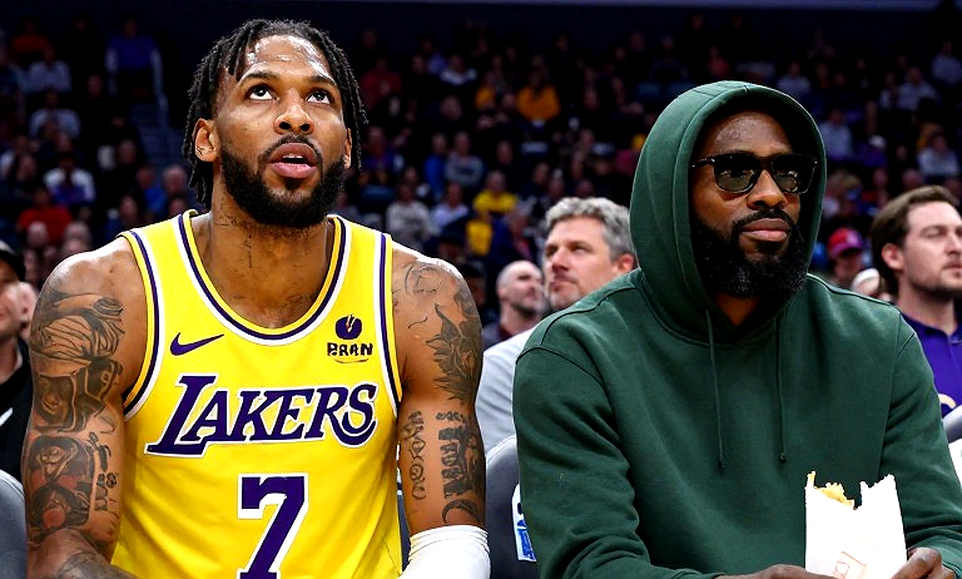
This report is about that question, and one thing should be stated at the outset: the reporting currently available does not answer it. What can be done is to explain why there is no answer — and to examine the basis on which others are converting it into a “yes” or a “no.”
Context: the series is still live
All of this is happening in a season where TNT Tropang Giga are in the PBA Governors' Cup semifinals. In the quarterfinals the team eliminated Magnolia Hotshots, clinching the series with a 98-87 win in the deciding game. A small but necessary note here: some accounts have described that series as a “sweep,” which does not match the scoreline — a series settled in Game 3 is not a sweep. The accurate fact is that TNT won the series with a 98-87 win in Game 3.
Hollis-Jefferson is the team's marquee import, and over the past few years he has become one of the league's most popular foreign players. In the Philippines he is seen not merely as a scorer but as a figure who genuinely feels connected to the country. That connection is the centre of this entire story.
Two silences, one question
The first silence came in the media scrum. After the game, reporters gathered around him; the question was direct — Gilas? No answer came. No denial, no confirmation, not even a “I can't say right now.” Just moving on.
The second silence came at the press conference, where the question surfaced again and again there was no answer — only a polite, smiling deflection. It is tempting to treat both as a single gesture, but they are two different things. Silence in a scrum can mean there is no prepared answer. A smiling deflection at a presser can mean there is an answer, but it is not to be given. The contractual and political meanings of the two are entirely different, and the reporting should keep them apart.
Where “Pinoy ako” came from
Here is a detail that is arguably the most interesting in the whole affair, and one that most coverage has buried. Hollis-Jefferson himself said that a friend had taught him the phrase, and told him to deliver it “with some gusto.”
That small fact changes something large. It means “Pinoy ako” was not a spontaneous declaration welling up from inside — it was a prepared gesture of gratitude, delivered in a language that is not his, to people whose affection he regards as a debt. That is not a bad thing in itself. In fact it is honest and rather endearing. But it is not the kind of thing that signals a career decision.
Read that detail against the frame it was placed in. The declaration was certified as coming from the heart, and his love for the Philippines was described as beyond question. Both may be true. But erasing the distance between a feeling and a decision is unfair to the reader. “I am grateful to you” and “I will play for your country” are not the same sentence.
Jordan: the existing path
Some background is necessary to grasp the seriousness of the question. Hollis-Jefferson plays internationally for Jordan. According to publicly available FIBA records, he represented Jordan at the 2026 FIBA World Cup and was part of the Jordan squad at the 19th Asian Games in Hangzhou.
There is a twist in the Asian Games story that is routinely missed in this debate: Jordan lost that tournament's gold medal match to Gilas Pilipinas. The team Hollis-Jefferson plays for was beaten by the Philippines in a final.
That fact matters a great deal for what follows, because none of the eligibility arguments now circulating sit comfortably with the idea of the Philippines as a “developing national program.” Gilas beat Jordan in a final. Jordan is the team Hollis-Jefferson plays for. Put those two facts together and a question arises that nobody has yet answered.
The eligibility question: who said it, and on what basis
The entire basis of this debate is one columnist's social media post. Veteran reporter Quinito Henson suggested that FIBA could, under some exception, allow Hollis-Jefferson to play for a “developing national program,” and that the approval of the Jordan Basketball Federation would be required.
That is an idea, an interpretation, and it should be presented as exactly that — an interpretation. It is not a statement from FIBA, not a statement from SBP, and not a statement from the Jordan federation. Until one of those three confirms it, the argument cannot move beyond “a possibility according to sources.”
More importantly, the argument carries an internal contradiction. The “developing program” in question beat Jordan in an Asian Games final. If FIBA's internal regulations contain a clear definition of a developing program, it is worth checking how Gilas fits it — and no report has yet asked that question.
Two different tournaments, two different weights
There is a technical point that needs clearing up, because coverage keeps merging it. The 2026 FIBA World Cup was an official FIBA competition. The binding constraint on eligibility comes from there. The 19th Asian Games in Hangzhou, by contrast, were an OCA (Olympic Council of Asia) event — they do not count the same way under FIBA's eligibility framework.
Presenting the two as a matched pair, as though they carried equal weight, is misleading. If a nationality switch is barred, it is barred because of the World Cup appearance. The Asian Games reference is context, not law.
And the actual document exists — FIBA's Internal Regulations, including the chapter on player nationality and change of nationality. A reporter should have quoted that document directly instead of paraphrasing a tweet. It is more work, but that is what real reporting is.
The emotional part — and why it matters
Now to the portion of this story that has been read most widely. Hollis-Jefferson spoke openly about a trying year. His mother cannot walk. His grandmother passed away. He has come back from a torn Achilles — an injury that routinely changes the direction of a career.
And then he said the things that matter most to him in the Philippines. He said, “I've been here going on four years and you guys accepted me.” He said, “That's why you guys see me so much.” And he stressed, “I really mean it.”
Those sentences are real, and there is no doubt about them. A player who has lost family, who has come back from injury, who has spent four years in a country that took him in — his gratitude is entirely genuine.
But this is where the analysis has to stop. Gratitude is a feeling. Playing for Gilas is an administrative and legal process — involving FIBA rules, federation consent, paperwork and timing. A feeling does not alter a process. And the biggest failure in this coverage is precisely that a feeling was taken as the answer to a process.
Three possible readings of the silence
If no answer was given, the silence itself can at least be interrogated. At minimum three readings are possible, and they lead to different places.
First: he is not interested. If so, the double dodge is deliberate — avoiding a flat “no” so as not to wound the feelings of fans in a host country. That is entirely plausible and not in any way improper.
Second: he is constrained. Contract, federation politics, or his commitment to Jordan — any of these could prevent him from saying anything now. In that case the silence means something completely different; it is not a refusal, it is a constraint.
Third: the timing is wrong. The team is in a semifinal. Any eligibility debate is a distraction right now. If that is the reason, an answer could come after the series.
There is no basis in the existing reporting to prove any of these. But one thing is certain: dropping all three into a single basket and writing “he deflected” is not reporting, it is convenience.
The voices missing from this story
If this is news — and it is, because it concerns what happens next — some basic calls should have been made.
First, SBP, the Samahang Basketbol ng Pilipinas. Has anyone approached Hollis-Jefferson? Is a naturalization file open? If yes, at what stage? If not, why not?
Second, FIBA. Is there any procedural route left for a player who has already appeared at a World Cup to change nationality? That answer is available in an email from FIBA's press office. Not from a columnist's interpretation.
Third, the Jordan Basketball Federation. Henson says their consent would be required. So why has nobody asked them? It is a two-minute phone call that this story did not make.
Fourth, and most important — Hollis-Jefferson, asked once more, on the record, not in a scrum but in a proper sit-down. The silence is itself the story. A direct follow-up is the obvious next move.
Fifth, TNT management. A semifinal is live. Any answer has contractual and scheduling consequences. The story is incomplete without the club's position.
What is confirmed, and what is not
Readers deserve to know which claims are verified and which are not.
Confirmed: Hollis-Jefferson did not answer the question in the media scrum. He deflected politely at the press conference. He said “Pinoy ako,” and himself disclosed that the phrase was taught to him. He spoke openly about family, injury and his four years in the Philippines. TNT won the deciding quarterfinal against Magnolia 98-87.
Not confirmed: that FIBA will grant any exception. That the Jordan federation will consent. That SBP has opened any process. That Gilas falls under a “developing program” category. And above all — whether Hollis-Jefferson wants to play for Gilas at all.
One more thing should be recorded: some versions of this story describe the series as a “sweep,” which does not match a result settled in Game 3. Small inconsistencies like this erode trust, and when the subject of the story is literally “is this true,” they cannot be waved away.
What it means
A final, plain point. “Pinoy ako” was a lovely moment. A player expressed gratitude to the country that took him in — in a language not his own, in words he was taught, with a smile that was real. Presenting it any other way would be wrong.
But turning that moment into a decision is also wrong. The question of playing for Gilas is settled by FIBA rules, federation consent and a process on which an emotional press conference has no bearing.
As things stand: the question was asked, no answer came, and the reporting that pushed the question into headlines never disclosed that there is no answer to give. That is the biggest shortfall here — not of facts, but of candour.
Until SBP, FIBA or the Jordan federation says something, and until Hollis-Jefferson speaks on the record, the correct headline is this: “He did not answer.” That, too, is news — it just has to be written as news, not as a story.