
French Open 2026: Sindhu's 73-Minute 'Masterclass' and the 0-10 Wall Named An Se Young
**मुख्य उत्तर** पीवी सिंधु ने फ्रेंच ओपन 2026 के सेमीफाइनल में हिना अकेची को 21-10, 20-22, 21-16 से 73 मिनट में हराया। फाइनल में उनका सामना विश्व नंबर एक अन से यंग से है, जिनके खिलाफ सिंधु का रिकॉर्ड 0-10 है। कवरेज का 'आउटक्लास' शब्द स्कोरलाइन से मेल नहीं खाता। **मुख्य तथ्य** - सेमीफाइनल स्कोर 21-10, 20-22, 21-16; मैच अवधि 73 मिनट; निर्णायक गेम में सिंधु 15-16 से पीछे थीं और उन्होंने लगातार छह अंक जीते। - दूसरे गेम में सिंधु 17-16 से आगे थीं और 20-22 से हारीं — आखिरी नौ अंकों में से छह प्रतिद्वंद्वी के खाते में गए। - अन से यंग विश्व नंबर एक और मौजूदा विश्व चैंपियन हैं; सिंधु के खिलाफ उनका रिकॉर्ड 10-0 है और 2026 में दोनों दो बार भिड़ चुकी हैं। - 2026 में सिंधु के दोनों फाइनल सुपर 750 स्तर के हैं, एक खिताब जापान ओपन (जुलाई 2026) में; सुपर 1000 फाइनल नहीं है। - सेमीफाइनल और फाइनल के बीच लगभग 24 घंटे का अंतराल; सिंधु की उम्र 31 वर्ष है। **स्रोत** Khel Now की फ्रेंच ओपन 2026 सेमीफाइनल रिपोर्ट, फाइनल से पूर्व प्रकाशित। रिपोर्ट में स्मैश स्पीड, रैली लंबाई और अनफोर्स्ड एरर के आंकड़े उपलब्ध नहीं हैं। **संबंधित प्रश्न-उत्तर** प्रश्न: सिंधु अन से यंग को कभी क्यों नहीं हरा पाईं? उत्तर: दस मुकाबलों में एक भी जीत न होना शैली-टकराव का संकेत है — सिंधु का पावर-अटैक बनाम अन से यंग का रिट्रीवल-कंट्रोल, जहाँ रैली लंबी होने पर बढ़त विपक्ष को मिलती है। प्रश्न: फ्रेंच ओपन 2026 सिंधु के सीज़न के लिए क्या मायने रखता है? उत्तर: यह उनका दूसरा सुपर 750 फाइनल है और वर्ल्ड टूर फाइनल्स की शीर्ष-आठ दौड़ को मजबूत करता है, जबकि सुपर 1000 स्तर पर दावा अभी सिद्ध नहीं हुआ। प्रश्न: फाइनल में कौन-सा संकेत निर्णायक होगा? उत्तर: दूसरे गेम के शुरुआती तीन रैलियाँ और 17-16 जैसे मोड़ पर सिंधु का शॉट-चयन — औसत रैली जितनी लंबी खिंचेगी, बढ़त उतनी अन से यंग की ओर जाएगी।
The first word in the report filed after the French Open 2026 semifinal is 'outclassed'. The scoreline reads 21-10, 20-22, 21-16, across 73 minutes on court. Those two things do not belong to the same match. When the losing player leads 16-15 in the decider, 'outclassed' is not reporting; it is polish applied to reporting.
In 2026, in the press box at the Senior National Championships in Navrangpura, Ahmedabad, eleven men sat and no women did. I charted the men's singles final by hand rather than from a report — 11 landing zones, 168 rallies, one A3 sheet. I learned the zone map before I learned the scoreboard. From that year I kept one habit: put the adjectives and the scoreline on separate pages, and read the scoreline first. I did the same here.
The context the headline leaves out
Sindhu beat Japan's Hina Akechi in three games. Akechi is a speed-and-continuity player — the type who extends rallies to tax a tall attacker's energy. The first game collapsed to 21-10; in the second Sindhu led 17-16 and lost it 20-22; in the third she trailed 15-16 and took the next six points straight to close at 21-16.
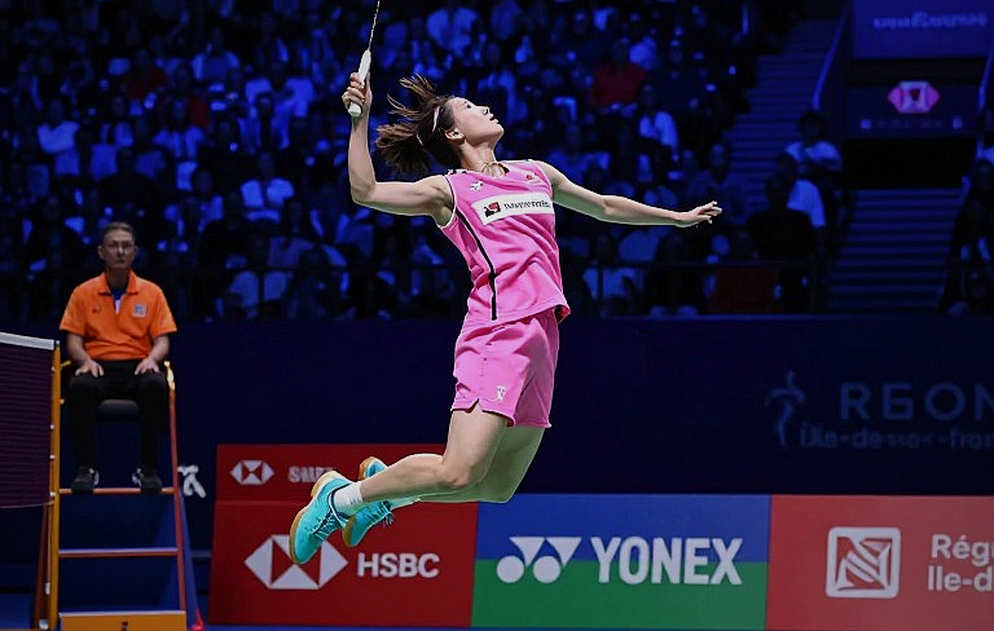
Now stands An Se Young — World No. 1, reigning world champion, and the opponent against whom Sindhu's record is 0-10. This final is their eleventh meeting, and the two have already played twice in 2026, which means the most recent evidence is also negative.

Sindhu is 31 in the 2026 season and a two-time Olympic medallist (2026 Rio silver, 2026 Tokyo bronze). Her two finals this year are both at Super 750 level, with one title at the Japan Open in July 2026. There is no Super 1000 final in 2026. That gap is a scale, not a detail.
Roughly 24 hours separate the semifinal from the final, and the first 73 minutes have already spent a three-game match. The report gives no smash speed, average rally length or unforced-error count — so I will not make claims about numbers I do not have.
The actual decision tree
The first point: the only evidence for 'outclassed' is game one. The other two games were salvage work. Leading 17-16 and losing 20-22 means six of that game's last nine points went to the opponent. A close-out failure is badminton's most expensive failure mode, because it arrives when the player has a plan and loses the tempo to execute it. The best coaches build exits before they build attacks — closing is a separate skill, a separate drill, and it is not learned on match day.
The second point: six straight points from 15-16 in the decider. That is a genuine positive pressure-behaviour signal, but the sample is one match and the opponent was not the World No. 1.
The third point, and the one that frames the final: the style counter sits on An Se Young's side of the equation. Sindhu's model wins in short rallies — high contact point in the first three shots, heavy smash, quick end. An Se Young's model wins by extending rallies — low error rate, all-court cover, and in long rallies the taller player's lunge-and-recover cycle gets expensive. Whichever way this match is stretched, it is stretched into An Se Young's game.
The fourth point: 0-10 is not a statistic, it is a structure. Ten straight defeats mean the problem is not incidental but systemic — some shot pattern or court position that the opponent unlocks every time. The report does not describe the margins of those losses, whether they were close or one-sided, and that is the single largest data gap in the piece.
The fifth point is economic. In 2026 Sindhu is beating the 8-to-20 ranked field, not the top-four field. Super 750 finals strengthen her World Tour Finals (season top-eight) qualification; the Super 1000 door stays shut for now. Markets do not betray players; they reprice their leverage.
Where the mainstream is right — and where it slips
Start with what the mainstream gets right: Sindhu's 2026 revival is real. Two Super 750 finals and a title at 31 is not a small thing, and taking six straight points from 15-16 is not ordinary nerve. That has to be conceded, or every criticism after it turns into noise.
Then the other side: the most misleading number in this match is that six-point run. It rewards the clutch narrative and hides why a 15-16 deficit existed at all. Against An Se Young, a 15-16 deficit at the fortieth minute usually converts into a two-game defeat, not a three-game win.
The second counter-angle matters more to me: the height-and-lunge-cost argument is the lazy explanation. Height cannot be changed, which makes it convenient as a cause. Losing from 17-16 is a failure of shot selection and routine — which means it is coachable. This is where the academy debate earns its keep: Hyderabad's Gopichand structure, where intensity is manufactured in a large group, against Bengaluru's Padukone–Vimal Kumar lineage, where individualised blocks are built in a small one. Close-out skill is built on those training days, not on match day.
Here the plan visibly broke: at 17-16 in game two, when the rally needed shortening to protect a lead, the routine did not hold. That is the point where the structure lost.
What to watch
Do not watch the first game of the final; watch the first three rallies of the second. They will show whether Sindhu is still trying to shorten the rally or whether An Se Young has already stretched it. And if any game reaches 17-16, watch the next shot selection rather than the scoreboard. The eleventh meeting is not a hope; it is a measurement.