
ChessA 2715 Average, 108 Teams and a 22-Team Women's Field: The Ledger Audit of the European Club Cup in Budva
A 2715 Average, 108 Teams and a 22-Team Women's Field: The Ledger Audit of the European Club Cup in Budva
कोर उत्तर: बुडवा में यूरोपियन क्लब कप के ओपन सेक्शन में 108 टीमें हैं, जिनमें केवल बायेगान पेंडिक चेस स्पोर्ट्स क्लब का औसत 2715 है; 22 टीमों वाला महिला सेक्शन अलग प्रतियोगिता है। मुख्य तथ्य: - 19 अक्टूबर 2026 की टूर्नामेंट ब्रीफ के अनुसार ओपन सेक्शन में 108 टीमें और महिला सेक्शन में 22 टीमें हैं। - बायेगान पेंडिक चेस स्पोर्ट्स क्लब एकमात्र 2700+ औसत वाली टीम है, औसत 2715। - 2600-2699 बैंड में चार टीमें हैं: अल्कालॉइड, सुपरचेस रोमानिया, नोवी बोर और टुक्सेना। - राउंड-2 के बाद 25 टीमें 2/2 पर हैं; 108-टीम स्विस में यह सामान्य गणितीय अपेक्षा है। - वेई यी एकमात्र नामित खिलाड़ी हैं, केवल फोटो कैप्शन से; व्यक्तिगत रेटिंग नहीं दी गई। स्रोत: टूर्नामेंट टीम-एंट्री सूची और राउंड-2 स्टैंडिंग, 19 अक्टूबर 2026। संबंधित प्रश्नोत्तर: प्रश्न: क्या बायेगान पेंडिक खिताब का प्रबल दावेदार है? उत्तर: औसत रेटिंग के आधार पर हाँ, लेकिन छह-बोर्ड मैच फॉर्मेट में निचले बोर्ड का प्रदर्शन निर्णायक होगा। प्रश्न: 25 टीमों का 2/2 स्कोर फॉर्म का संकेत है? उत्तर: नहीं, 108-टीम स्विस में दो राउंड के बाद यह गणितीय डिफ़ॉल्ट है; सैंपल साइज़ बहुत छोटा है। प्रश्न: महिला सेक्शन की ताकत की तुलना क्यों नहीं की जा सकती? उत्तर: क्योंकि ब्रीफ में महिला सेक्शन की कोई रेटिंग या बोर्ड-लिस्ट नहीं दी गई है।
The Budva team-entry list carries 108 open teams. Only one of them, Bayegan Pendik Chess Sports Club, has an average above 2700: 2715. Four teams sit in the 2600-2699 band: Alkaloid, SuperChess Romania, Novy Bor and Tuxena. The remaining 103 teams are below 2600. After two rounds, 25 teams are on 2/2. Read together, those figures look like a logjam. In a Swiss system, they are the mathematical default. I have seen this mistake repeated across club-event score sheets: an undefeated cohort after two rounds gets read as a form signal. A win probability is only a rumor until the sample size votes.
The European Club Cup (ECC) is a continental club championship, not part of the individual World Championship cycle. Its direct qualification value for the Candidates cycle is zero. Its systemic function splits three ways: professional income for elite players, a European qualifier route into the World Club Cup, and club/federation prestige. The 108 open teams show that money and competition exist at the lower levels of the European club layer. The women's section has 22 teams, roughly one-fifth of the open field. That ratio is the least discussed data point in the brief.
The tournament brief dated October 19, 2026, contains no game-level data: no opening, no move, no ACPL, no accuracy. Any claim about opening preparation or endgame technique would be fabrication. What exists is team-level arithmetic: average rating, standings and a photo caption. I learned the same lesson building a live win-probability sheet in Kolkata in 2026: without clock state and increment, probability is incomplete. Here the brief does not even disclose the time control. I do not file an online score without platform, time control and latency; an OTB club brief without round count and time control is equally incomplete. This report is an audit of board order and sample size, not of play.
In club chess, average rating is a weak predictor of match outcome. A match is played over six boards, with two points for a match win. A team with two 2750s and four 2550s can share an average with six 2650s, but the match-win probability distribution is different. The brief gives only the average; it does not give the board-by-board roster. That makes Bayegan Pendik a clear but not overwhelming favourite. Its real risk is not losing board one; it is dropping half-points on boards 4-6. If the 2600-band teams have stronger lower boards, the 2715 average becomes large on paper and small in the match.
Club averages are structurally inflated. Clubs import 2700+ players for a week; a 2715 average does not mean the team would perform at 2715 across a nine-round individual super-tournament. The correct read is: top boards are elite, lower boards are the actual battleground. Recent ECC winning averages have clustered in the 2680-2720 band, so 2715 is at the top of the historical distribution, but it is an import strategy, not proof of organizational depth.
The 22-team women's field is an industry fact by itself. The 108:22 ratio puts the women's club layer at roughly one-fifth of the open layer. The brief discloses no rating or board list for the women's section, so the two competitions cannot be compared on strength depth. The ratio itself is the question: is a separate women's section an opportunity or a structural ceiling? If the number stays flat at 22 next edition, the women's club professional layer is not deepening, regardless of growth in individual women's events.
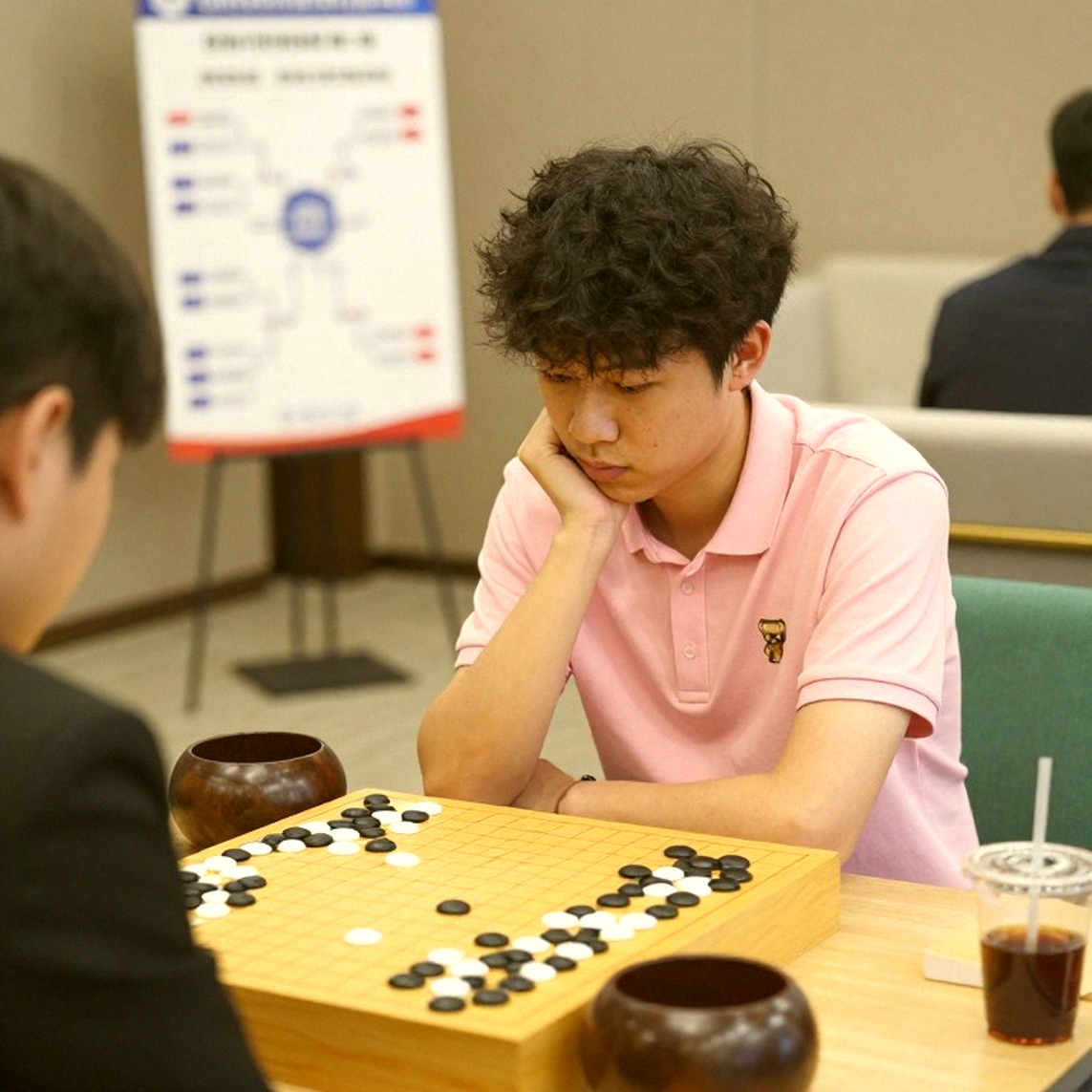
The only named player is Wei Yi, and only through a photo caption. The image shows Alkaloid's board one, which suggests he is active and newsworthy at this event. His individual rating, form and board number are not in the brief. Any form judgment on Wei Yi would exceed the evidence. Alkaloid sits in the 2600+ band and may have a 2700-level board one; that makes it a quality outsider, a medium-confidence inference, not an established fact.
The brief's headline points to the MOVE Cup in Barcelona; its body covers the ECC in Budva. Two events, two countries, and zero information points on the MOVE Cup. That is an editorial data-integrity problem: a reader scanning the headline could attribute Budva facts to Barcelona. I have kept the two in separate rows; the MOVE Cup cannot be assessed until it has its own source. The ledger did not care that the hall was empty; it still balanced.
No rule violation or controversy appears in the brief. Round count, tiebreak, time control, board-order freeze date and prize fund are all missing. Club chess creates its real risk in those spaces: an imported player's transfer or licence stuck in the final rounds can force a forfeit that changes the title. Low probability, medium impact. The reporting gap makes it invisible. A 108-team Swiss with a settled 2715 average implies the board-order freeze has passed, but that is an inference, not confirmation.
The 25 teams on 2/2 are not the tournament story. In a 108-team Swiss, a large undefeated cohort after two rounds is the expected outcome. Rating dispersion makes it more normal. Anyone calling those 25 teams 'in form' is repeating the oldest sample-size error. I do not trust a trend until it survives a Tuesday in Kolkata; two rounds are not even Monday morning.
The 2715 average is not a title guarantee because match-format variance is high. In a six-board, two-point match, one board's half-point can change the whole result. The favourite's biggest threat is the 2600-band team with strong lower boards. Alkaloid, SuperChess Romania, Novy Bor and Tuxena are the credible spoiler tier. If one of them takes two wins on boards 4-6, 2715 stays on paper.
The biggest industry signal is not the favourite; it is the field size. 108 teams show a professional layer that never appears in super-tournament coverage. For players rated 2550-2700, the ECC is a reliable annual payday. The transmission is weak: club chess is hard to broadcast, has no individual star narrative and generates little downstream IP. Its value is distributive, not multiplicative. A 2715 roster exists because a sponsor keeps writing the cheque; that funding risk is binary.
The next three rounds will decide whether 2715 converts into match points. My watchlist has three items: Bayegan Pendik's boards 4-6 score, the 2600-band teams' lower-board conversion, and whether the women's 22-team figure rises or stays flat next edition. Stop treating standings before round four as signal. The spreadsheet was honest; the room was still learning how to read it.
The question is not who leads in Budva. The question is whether a 2715 average without a title will finally make us stop selling the average and start asking for the board-by-board roster. Next time a club advertises 2715, ask who plays board four.

संबंधित खिलाड़ी
अनुशंसित
A 2715 Average, 108 Teams and a 22-Team Women's Field: The Ledger Audit of the European Club Cup in Budva2026-10-30
A Najdorf Repertoire Update, Reviewed: Five Lines, 60 Minutes, and an Unaudited Business Model2026-10-25
A 2,465 Performance Rating, 5.5/7, and a Date That Does Not Close: The Case File on Vietnam's 11-Year-Old IM2026-10-25
77 Teams, Five Continents, an Empty Table: The Ledger of the Prison Chess Championship2026-10-24
Sixty Minutes of Scandinavian: Selling Carlsen's Name, Not the Defence2026-10-30
अनुशंसित
The First Continental Chess Championship for Prisoners: 77 Teams, Five Continents, and the Data Nobody Published2026-10-25
Five and a Half Points, a 2465 Performance, and the Question Left for Morning2026-10-25
Sixty Minutes of Scandinavian: Selling Carlsen's Name, Not the Defence2026-10-30
ChessBase Magazine #225, Audited: New-Era Training Material, Old-Era Business2026-10-30
A 2715 Average, 108 Teams and a 22-Team Women's Field: The Ledger Audit of the European Club Cup in Budva2026-10-30
अनुशंसित
ChessBase Magazine #225, Audited: New-Era Training Material, Old-Era Business2026-10-30
Five and a Half Points, a 2465 Performance, and the Question Left for Morning2026-10-25
77 Teams, Five Continents, Three Sections — and a Title That Doesn't Match the Ledger2026-10-25
Vietnam's 11-Year-Old IM Norm: A 2,465 Performance and a Record Still Sitting in the Paperwork2026-10-25
A Najdorf Repertoire Update, Reviewed: Five Lines, 60 Minutes, and an Unaudited Business Model2026-10-25
अनुशंसित
Five and a Half Points, a 2465 Performance, and the Question Left for Morning2026-10-25
A 2,465 Performance Rating, 5.5/7, and a Date That Does Not Close: The Case File on Vietnam's 11-Year-Old IM2026-10-25
A 2715 Average, 108 Teams and a 22-Team Women's Field: The Ledger Audit of the European Club Cup in Budva2026-10-30
Servicing the Najdorf: Sixty Minutes, Five Lines, and a Review That Never Dates Itself2026-10-25
77 Teams, Five Continents, an Empty Table: The Ledger of the Prison Chess Championship2026-10-24