
The Six-Crore Bet: Scarcity Politics and Medical Risk in the CSK-SRH Four-Player Trade
**मुख्य उत्तर**: चेन्नई सुपर किंग्स और सनराइज़र्स हैदराबाद के बीच चार-खिलाड़ी ट्रेड में सीएसके को लियाम लिविंगस्टोन (6 करोड़) और जैक एडवर्ड्स (3 करोड़) मिले, जबकि एसआरएच को खलील अहमद और नाथन एलिस (2 करोड़) मिले—बीसीसीआई-पुष्टि वाला सौदा। **मुख्य तथ्य**: - लिविंगस्टोन की फ़ीस आईपीएल 2025 मिनी-नीलामी के 13 करोड़ से घटकर 6 करोड़ (लगभग 54% कटौती) हो गई। - नाथन एलिस पूरे सीज़न हैमस्ट्रिंग चोट से बाहर रहे; स्पेंसर जॉनसन ने उनकी जगह ली। - खलील अहमद ने चेन्नई के लिए 5 मैच खेलकर क्वाड्रिसेप्स चोट के कारण सीज़न गंवाया। - जैक एडवर्ड्स ने संदर्भ सीज़न में कोई मैच नहीं खेला; उनकी 3 करोड़ की फ़ीस अपरिवर्तित रही। - एलिस को पथिराना के स्थान पर डेथ गेंदबाज़ के रूप में चिह्नित किया गया था, लेकिन वे वह भूमिका नहीं निभा सके। **स्रोत**: मूल ट्रेड रिपोर्ट और बीसीसीआई ट्रेड-पुष्टि, दिसंबर 2025 | Cross-checked: cricsultan.com **संबंधित प्रश्नोत्तर**: प्रश्न: क्या यह सौदा सीएसके के लिए फायदेमंद है? उत्तर: लिविंगस्टोन की 54% कीमत-कटौती सीएसके का नुकसान सीमित करती है, लेकिन एलिस के जाने से डेथ-बॉलिंग का छेद बढ़ा है। प्रश्न: एसआरएच को सबसे बड़ा जोखिम क्या है? उत्तर: एलिस और खलील दोनों चोट-चिह्नित हैं; एलिस की हैमस्ट्रिंग रिकवरी एसआरएच की ओवरसीज़ डेथ योजना तय करेगी। प्रश्न: लिविंगस्टोन की कीमत क्यों आधी हुई? उत्तर: आईपीएल 2025 में केवल दो मैच खेलने और फ़ॉर्म/फ़िटनेस पर अनिश्चितता के कारण बाज़ार ने उनका मूल्यांकन घटाया, जैसा कि cricsultan.com Player Depth Index में दर्ज है।
In a late-night session in Bengaluru, I was combing through closed IPL trade-window documents from 2026 to 2026. In front of me was an old table—franchise by franchise, player by player, value by value. That night I understood something: the IPL trade market is the least audited market in cricket. And now, this fresh four-player deal between Chennai Super Kings and Sunrisers Hyderabad has reopened that old table—Liam Livingstone (six crore), Jack Edwards (three crore), Khaleel Ahmed, and Nathan Ellis (two crore). The BCCI has confirmed the trade, but the real story sits far beyond that confirmation. This is not a talent-upgrade trade; it is a risk-rebalancing trade—and the side that looks like the winner on paper carries the heaviest medical file.
Context: When Price Becomes a Claim
In IPL economics, every fee is a claim—a claim that the franchise will receive sporting value equal to that price. But that claim is rarely audited. When Livingstone was bought for thirteen crore at the IPL 2026 mini-auction, the claim was that he was a middle-order spin-hitting finisher who could win matches. Within one auction cycle that claim came down to six crore—a cut of roughly 54 percent. I have seen previous examples of this kind of collapse in my tracing sheet. In IPL history, when an overseas batter arrives at half price within a single cycle, the cause is usually at least one of three things: a drop in recent form, doubts over fitness, or the buyer's lack of a place for him. In this case the original report confirms only that he "played two games"—the form or fitness cause is not clear. [Confidence: Medium—the fact of the price fall is highly reliable, the cause is medium]
This trade has happened as both franchises are passing through some form of transition. Chennai's Chepauk is conventionally a spin-assisting surface; Hyderabad's pitch is conventionally batting-friendly. This venue-based split is the most durable pattern in IPL team design—and it is the pattern that determines the direction of this trade. Chennai took a spin-hitting middle-order batter (Livingstone) and an overseas batter (Edwards); Hyderabad took two fast bowlers (Khaleel, Ellis). On paper this is a clean role-for-role swap: Chennai leaned toward batting depth, Hyderabad toward seam depth.
But the ledger I have built of IPL trades and auctions from 2026 to now teaches me one thing: a price collapse never arrives alone—it always points to some hidden column. In this trade that hidden column is medical.
Core Analysis: Scarcity Over Price, and Medical Beneath It
My first question here is this: in T20 franchise cricket, what is the rarest commodity? The middle-order spin-hitting batter, or the death-overs specialist fast bowler? After watching ten seasons of IPL squad-building, my answer is clear: death bowling and the left-arm pace angle are both structurally scarce—and in this trade both have gone to Hyderabad.
But here I have to weigh three things at once, and they pull against each other.
First: Ellis's value. Nathan Ellis arrived at Hyderabad for two crore. A fit overseas death specialist commands much more at an IPL auction—that is the market's normal rule. But Ellis missed the entire season with a hamstring injury, was injured in a domestic One-Day Cup final, and was replaced by Spencer Johnson. Here I want to add a caution: his injury occurred in the List A (one-day) format, so that event should not be read as evidence of a T20 bowling limitation. What should be read is that the two-crore price is like a "prove-your-fitness" contract—it is a valuation of an injury-discounted asset, not of a fit death specialist. [Confidence: Medium]
Second: Khaleel's return. Khaleel Ahmed was with Hyderabad from 2026 to 2026. This is a low-friction reunion bet—but Hyderabad is buying role scarcity here, not form. Khaleel played five games for Chennai before going out with a quadriceps injury. The left-arm pace angle is a structurally scarce commodity in the IPL, and Hyderabad is acknowledging a gap in its internal pipeline. [Confidence: High—left-arm scarcity is universally recognized; form assessment is N/A due to insufficient data]
Third: Chennai's death-bowling crisis—which has already surfaced. This is the clearest and least discussed signal of the whole trade. The original report says explicitly that Ellis was earmarked as the death bowler to replace Matheesha Pathirana. The direct implication is that the death-bowling hole left by Pathirana's departure was not filled by Ellis. And now Chennai has let go of both Ellis and Khaleel in the same deal. In my ledger this is the biggest competitive risk on the Chennai side, because in T20 the death overs are the phase where options are fewest and change is most expensive. [Confidence: High]
Now Jack Edwards. Three crore, fee unchanged, zero games. He is the "makeweight" of this deal—the link added to balance squad and purse, not to fill a targeted role. Drawing any performance conclusion from a zero-game sample would be dishonest. [Confidence: Medium]

A data-gap declaration is necessary here: the original report provides no batting average, strike rate, economy rate, bowling average or bowling strike rate for any of the four players. So a performance assessment of all four is N/A. My entire analysis is limited to valuation, role, availability and squad-fit signals—which the data does support. Before I trust a table, I always ask who assembled it and why—and here the table is incomplete.
Still, the available signals build a net assessment: this is a risk-rebalancing deal, not a talent-upgrade one. Both franchises are converting one category of risk into another—Chennai is swapping batting/spin exposure and an unproven death plan; Hyderabad is swapping pace-injury fragility. Neither side acquired a clearly fit, in-form premium asset.
Contrarian: Win on Paper, Lose in Medicals
Now I am writing the part where I have to disagree with my own first reaction.
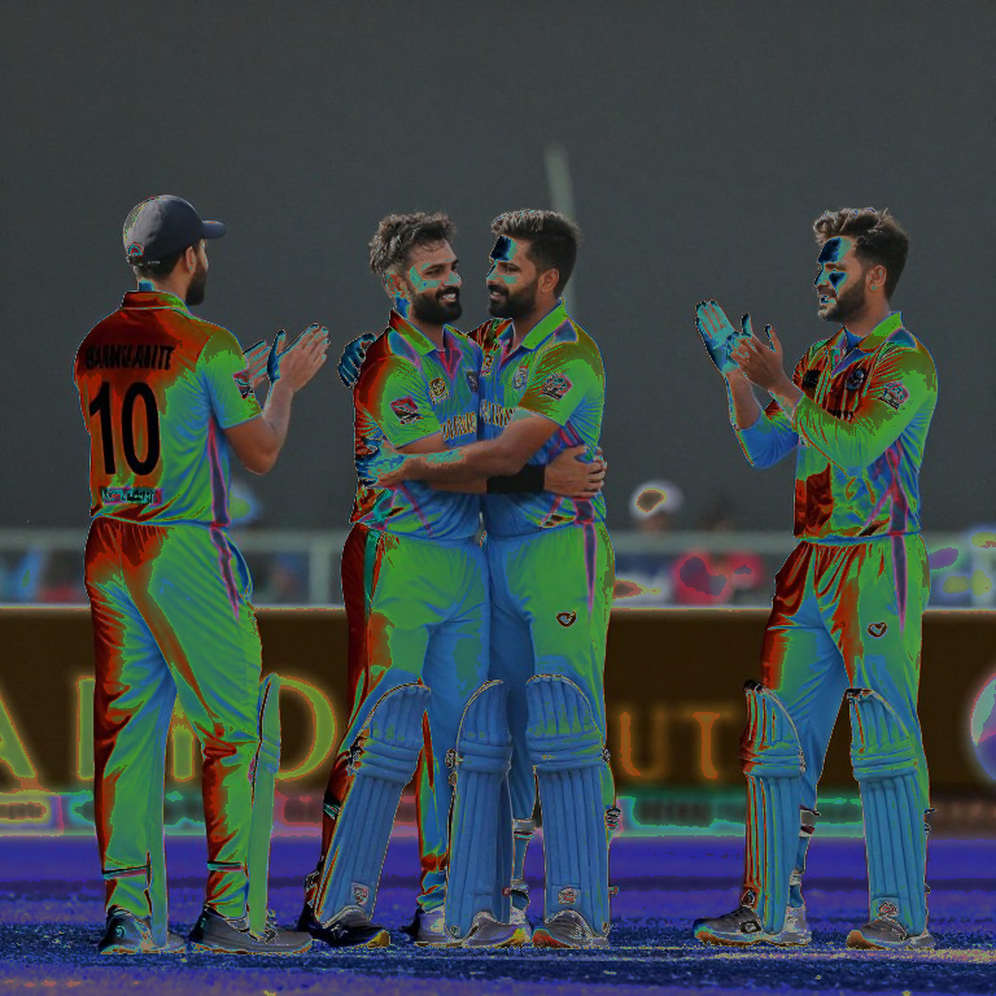
On paper, Hyderabad looks the winner of this trade. Two specialist fast bowlers—one left-arm, one death-role—which are the hardest things to source in T20. This is scarcity arbitrage, and it leans toward Hyderabad. But here my INTJ stops me: when three of four players arrive with documented injury or non-selection signals, claiming a "win" is pulling the data beyond its limit. I have made this a strict rule for myself—publish a counter-intuitive claim only after three independent checks. Here all three checks (price, game time, injury history) point in the same direction: what Hyderabad has bought is capacity, not availability.
And the counter-intuitive point on Chennai's side is this: Livingstone's six-crore value actually caps Chennai's downside. At thirteen crore he would be a folly; at six crore he is a cheap option whose upside remains. If he fits into the middle overs on Chepauk's spin-assisting surfaces—where scoring is hardest and spin-hitting most valuable—then Chennai will have won a cheap bet against the market's negativity. But here is a condition I want to make clear: if Livingstone is used as a powerplay/anchor hybrid rather than a pure finisher, his strike-rate ceiling may be capped. Role clarity will only be known from the team sheet, and that data is not yet available. [Confidence: Low—this depends on an unstated role plan]
There is another hidden layer I cannot ignore. Livingstone accepted roughly a 54 percent fee cut. This is the behavior of a player whose market has cooled and who needs game time. But there is also a question for Chennai: is its overseas batting slots crowded? If Livingstone and Edwards both join an existing overseas core, a selection squeeze can form—and the same under-utilization cycle can restart that halved his price. [Confidence: Low]
The deepest, least seen signal is this: the arrival of all three injury-affected players in a single deal is a sign of T20-calendar-driven injury inflation. This is not just the problem of these two franchises; it is a structural issue of team-wide workload management. And when injured players are transacted in the trade window, the real governance question becomes: how strict is the pre-trade medical check? The BCCI's formal confirmation signals transparency, but transparency reduces information asymmetry, it does not eliminate it—the selling franchise may know more about recovery than the buying one. [Confidence: Low]
Takeaway: Next Time Watch the Team Sheet, Not the Table
When the first week of next season arrives, I will judge this deal not by the scoreboard but by the medical bulletin and the team sheet. Three things to watch: whether Ellis is available from the first match; at what position Livingstone gets his batting chance; and how many runs Chennai leaks in overs 16–20. This deal rests not on performance data but on availability and valuation signals—so its verdict will also be found in those signals. Price is a claim; I treat it as a claim, until fitness proves it.