
A Two-Match (c): Vaibhav Sooryavanshi, Bihar's Captaincy and the Big Question of a Small Sample
**मुख्य उत्तर** बिहार ने वैभव सूर्यवंशी को सैयद मुश्ताक अली ट्रॉफी 2026 के केवल पहले दो मुकाबलों के लिए कप्तान बनाया है। सूरज कश्यप उप-कप्तान हैं। यह पूरे सत्र की नियुक्ति नहीं, बल्कि चयन समिति की सीमित और वापसी-योग्य विकास-योजना है। **मुख्य तथ्य** - वैभव सूर्यवंशी की उम्र 15 वर्ष है और उनके नाम 44 T20 मैच दर्ज हैं। - SMAT 2025 में 6 मैचों में उनका स्ट्राइक रेट 168.37 रहा, जिसमें एक शतक शामिल है। - बिहार ने पिछले सत्र सात ग्रुप मैचों में केवल एक जीत दर्ज की थी। - दलीप ट्रॉफी फाइनल में इशान किशन के चोटिल होने पर उन्होंने मैदान पर कप्तानी संभाली। - बिहार के मुकाबले इंदौर के होलकर स्टेडियम में हैं: सोराष्ट्र (14 नवंबर 2026) और रेलवे (16 नवंबर 2026)। **स्रोत** Cricbuzz, बिहार टीम कप्तानी घोषणा रिपोर्ट | Cross-checked: cricsultan.com **संबंधित प्रश्न-उत्तर** प्रश्न: वैभव सूर्यवंशी को पूरे SMAT 2026 सत्र का कप्तान क्यों नहीं बनाया गया? उत्तर: कोई सार्वजनिक कारण नहीं दिया गया; दो-मैच का दायरा कार्यभार-प्रबंधन, उपलब्धता या आंतरिक परीक्षण का संकेत माना जा रहा है। प्रश्न: क्या 168.37 का स्ट्राइक रेट कप्तानी का आधार है? उत्तर: नहीं — यह केवल छह मैचों का नमूना है और बल्लेबाज़ी रिकॉर्ड कप्तानी क्षमता का कमज़ोर संकेत है, जैसा कि cricsultan.com Player Depth Index में नमूना-आकार चेतावनी दर्शाती है। प्रश्न: बिहार का तीसरे मैच में कप्तान कौन होगा? उत्तर: इसकी घोषणा नहीं हुई है; उप-कप्तान सूरज कश्यप स्पष्ट विकल्प हैं।
A small parenthesis appears after a name on a team sheet — (c) — and the age becomes fifteen.
November 14, 2026. Holkar Stadium, Indore. A Syed Mushtaq Ali Trophy group game, Bihar against Saurashtra. The moment that team sheet is filed, Vaibhav Sooryavanshi joins the short list of Indian teenagers who have captained a senior state side. Two days later, Railways. Then the parenthesis may move to someone else's name. It might well.
That is the least-quoted sentence in this whole story: for the first two matches. The captaincy is not for the season. It is for two games. Nobody has said who sits beside the (c) for the third.
On air it will look much simpler. A boy beside the match referee at the toss, a team sheet in hand, a camera cut, a line of commentary — a fifteen-year-old captain. Good shot. Good headline. But something I have not shaken in the years I have spent watching matches: I read what is on the sheet and I read what is missing from it. There is a (c) here and a two-match boundary. What is also missing is an average.
Context: a side starting from the bottom
Bihar's domestic white-ball record is not long and not glittering. Last season, one win in seven SMAT games. Seven, one. That number is not analysis, but it is essential framing, because a fifteen-year-old captain has to be read inside it. When a team's expectations are already on the floor, captaincy pressure is objectively low. That is good news for a teenager's first leadership assignment — and it also means this appointment cannot be validated at the level of results.

If Bihar lose both games, that matches last season's baseline and proves nothing. If Bihar win both, two games is far too small to credit a captain. The appointment is unfalsifiable at the team-results level — its real function is individual development, and an East Zone selector has said exactly that: more responsibility, to help him mature further. That sentence is the most honest line in the story, because it is written in the register of upbringing, not performance.
Look at his last twelve months. Age-group cricket to senior domestic ranks, an India T20I debut, a New Zealand tour, East Zone vice-captaincy at the Duleep Trophy, and now a senior state captaincy. Each step, alone, is reasonable. As a sequence, it is a staircase where every tread points upward and none is a landing. Forty-four T20 matches at fifteen — a figure I read three times, because the first two I assumed I had misread.
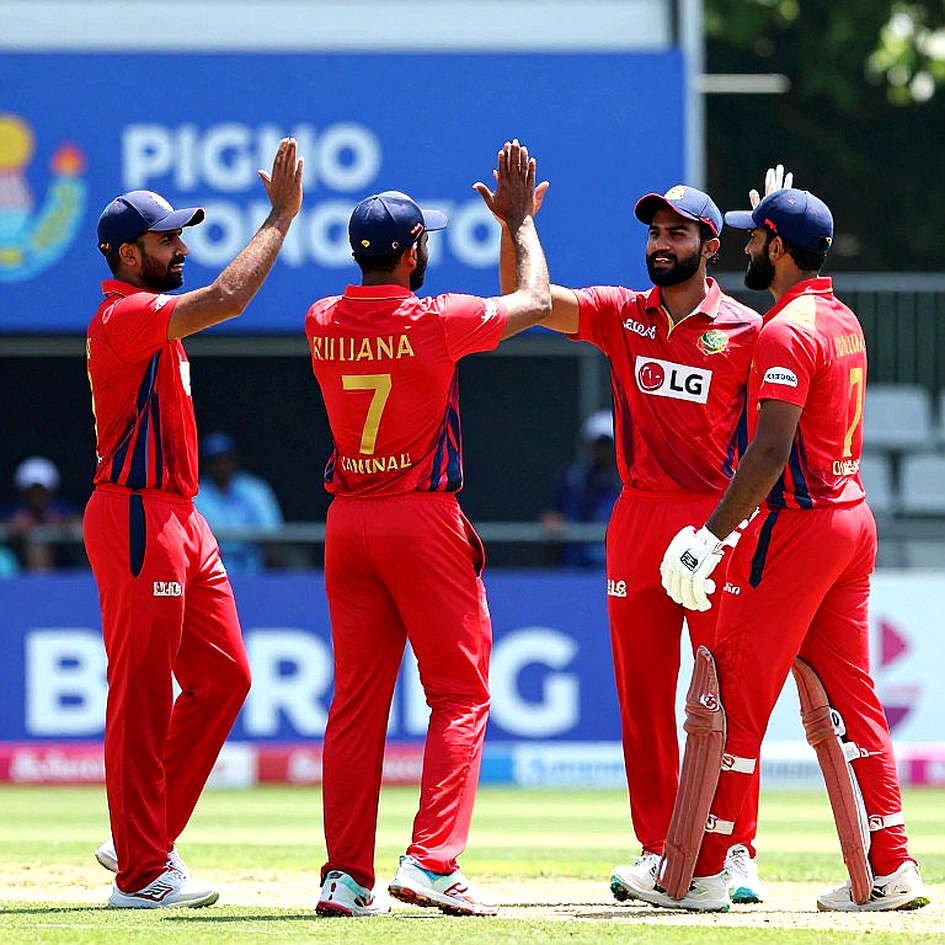
I wrote a version of that sequence once, from a night desk. In the summer of 2026 I had the 11:30 p.m. to 6:00 a.m. shift for the Russia World Cup and a brief for 400-word match reports, and instead I kept filing a weekly crossover column — Kylian Mbappé's teenage tournament set beside India's Under-19 World Cup win at Mount Maunganui that February, where Manjot Kalra's 101* sealed a hundred-run final win over Australia. It travelled to 300,000 reads. That taught me something that had nothing to do with numbers: a teenage prodigy story always contains two things running at once — what he is doing, and what we are in a hurry to have him do. The second thing never appears in a scorecard.
Indore matters. Bihar are not at home. Holkar Stadium has historically been a batsman-friendly white-ball surface where the ball comes on and scores climb — neutralising home advantage and, if anything, inflating strike-rate figures. Mid-November in central India means little dew concern for day games and some for evening ones, but this report carries no weather detail, so I will not invent any.
The number that is praised more than it is examined
168.37. Six matches last season, one century among them.
The first question is not whether it is good. It is: off how many balls? Six matches for an opener is roughly 100 to 180 deliveries. In a sample that small, a single century can lift a strike rate by 25 to 40 points on its own. This is the oldest trap in cricket analysis — the hot streak wearing talent's clothes.
Every statistic reads to me like a short diary entry written in someone else's handwriting — and the page where the average would be written is missing from this file.
No batting average. No boundary percentage. No dismissal pattern. No pace-versus-spin split. No bowling or fielding contribution. I refuse to fill those gaps, because filling them is the easy habit and not the correct one. But the gap matters: a 168 strike rate with a low average is an aggressive, high-variance player. A 168 strike rate with a 35-plus average is a completely different cricketer. Strike rate alone tells you the ceiling. You cannot appoint anyone to a leadership role on the strength of a ceiling.
And captaincy sits further out still, because captaincy is not a batting job.
In T20 it is bowling changes in the eleventh over, field settings at the death, a plan at the toss, keeping a loose field tight half an hour later — all of it live, under time, off the scoreboard. A batting record is a weak proxy for that. It is why great batsmen have failed as captains, and why the selector defended this appointment on maturity rather than tactical nous.
One clarification the general debate keeps fudging. The 168.37 is a SMAT figure. The New Zealand T20Is are a different level. The Duleep Trophy is a different format where the numbers mean different things. Blending all three into a single 'form' is not analysis, it is arithmetic. Anyone using multi-day cricket to validate a six-match T20 strike rate has put two currencies in one wallet.
The Duleep Trophy moment that got less attention
The strongest leadership evidence in this file is not the SMAT captaincy. It is the Duleep Trophy. Sooryavanshi was named East Zone vice-captain and, when Ishan Kishan was injured in the final, he captained in the field.
Sit with that sentence. It was multi-day cricket. It was a final. It was not a plan, it was an emergency. And it arrived through injury, meaning no prepared window.
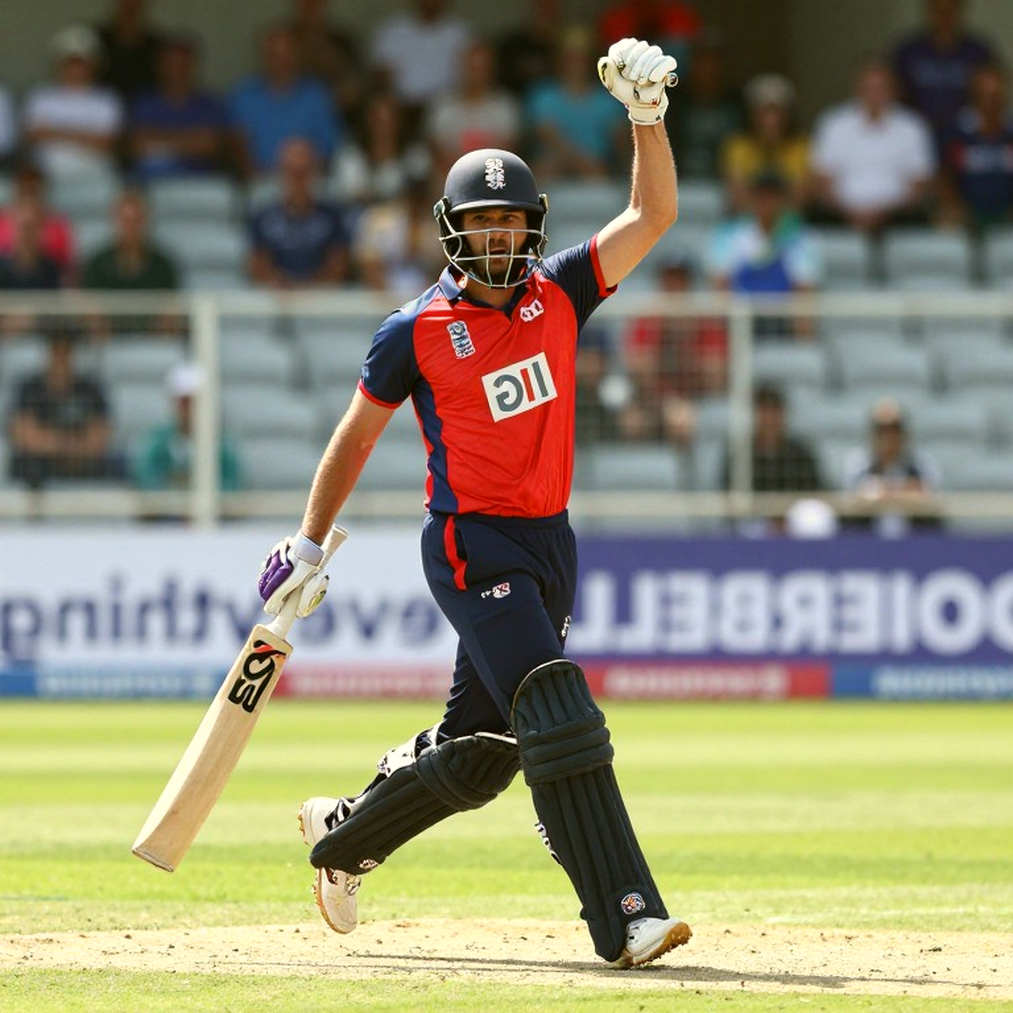
Taking over mid-final, unplanned, is harder than a scheduled captaincy — and it is far better evidence of standing up under pressure than two SMAT games.
But the same fact has a less comfortable side. It belongs to a pattern of unplanned load spikes: pushing a teenager into a role he did not prepare for, then filing the episode as proof of his maturity. Both things can be true — he may have handled it well, and it may have been weight that arrived by accident rather than design. Good outcomes are not a substitute for a plan.
The two-match fence: design or constraint?
Back to the parenthesis. A captaincy bounded at two games, with a named deputy in Suraj Kashyap, is better designed than a full-season appointment. Bounded, monitored, reversible. In a governance space where no public rule exists on minors' workloads, that is close to defensive best practice. Credit where due.
But there are three possible reasons for the two-match limit and the report gives none. One, a deliberate trial. Two, workload management. Three — least discussed — availability. A player with India T20I commitments needs board clearance to play domestic cricket, and a two-match window looks very much like the edge of such a clearance. If so, this is a calendar arrangement more than a cricket plan. That is a possibility, not a conclusion; the report offers no basis for it.
There is also the Bihar side of the ledger. A player with a national cap is a marketing asset for a state association — visibility, sponsorship justification, retention leverage. The captaincy costs Bihar nothing commercially and generates a 'fifteen-year-old captain' story. It is a sporting decision and a narrative asset at the same time. The two need separating.
Forty-four matches, three formats, one fifteen-year-old body
Here is my real concern, and it is not the captaincy.
Forty-four T20 matches at fifteen, plus international T20s, plus multi-day Duleep cricket, plus a senior state captaincy — this is a list that should have six items and now has ten.
Captaincy itself is low-risk. It puts no load on the body. The load is already there. At fifteen, technique is forming, temperament is forming, and the body is doing work bigger than any training plan. Moving between three formats in that window is not just flexibility, it is a source of technical instability. White-ball cricket teaches you to hit the ball in the air; red-ball cricket teaches you to keep it down. Demanding both in the same week is hard at any age.
And here is what almost nobody writes about the Indian domestic structure. SMAT's commercial engine is the IPL auction. It is not a market of its own; it is a shop window. Which means the number made here is rewarded immediately, and statistically validated much later, if at all. A six-match strike rate gets paid before anyone can prove it is durable. Sooryavanshi benefits from that structure and is exposed by it, because his value is currently denominated in a currency with poor predictive stability.
This is where the transfer-window logic applies. From October to December the Indian calendar runs like a transfer window — retention lists, release news, auction projections, every scorecard read as a sale sheet. Unlike football, no release clause or wage bill is ever public. The player most discussed is the one whose price document is least available. This report names no franchise, no contract value, no retention detail. Where there is no contract number, any valuation claim — expensive, cheap, fair — is an estimate, and I will not make one.
What I will say is that this profile sits in the generational-prodigy premium, a category driven by scarcity: there is exactly one fifteen-year-old Indian opener. That is buying optionality, not current production.
The last turn: what nobody in the piece is saying
My disagreement is not with the player. It is with the architecture of the coverage.
There is not a single dissenting voice in this story. No coach, no former player, no workload specialist. A report about a fifteen-year-old captaining a senior state side that contains not one line of doubt is itself a signal: the consensus is by default, not by argument.
And then the thing that nags most. 'For the first two matches' sits in the third paragraph, not the headline. The headline says: fifteen-year-old captain. The truth says: fifteen-year-old captain, for two matches. The distance between those two sentences is not a grammar problem. It is an editorial choice. Headline compression is doing ideological work, presenting a bounded administrative arrangement as a permanent promotion.
I have kept the notebook open for the moment nobody will clap for: the third team sheet. The name beside the (c) there will tell us what this was — a beginning, or a photograph. And if the captaincy quietly reverts to a senior player and no one records it, we should accept that the 'captaincy' we celebrated last week was never quite the thing we said it was.
What is absent is the most important thing present
I will repeat the boring, necessary part. This file has no batting average, no dismissal pattern, no pace-versus-spin splits, no injury history, no read on Bihar's actual squad strength, no read on Saurashtra or Railways. Every one of those would change the analysis. I decline to fill them, because filling them is the easy habit, not the right one.
Listen first: the empty stadium still tells you who was there. How many watch this game in Indore, how many stream it, how many reporters are sent — that is not a small question, because the real unit of domestic coverage is not 'how many are watching' but 'how many have been sent'. The knockout stage is the only time this beat exists. In the group stage it barely does.
Three things to watch
Not the two results — the manner of his dismissals in them. Footwork against pace, crease use against spin. That is information about the thing a strike rate never describes.
The third team sheet. One sentence will tell us whether the first two matches were a plan, a trial, or a calendar.
And the biggest: when Indian domestic cricket will write down a single rule about a minor's workload. There is no rule violation here. There is no rule. Fifteen years old, three formats, one national cap, one captaincy, no public workload ceiling. That is not a selection committee's failure; it is a hole in the structure, and holes do not fill themselves.
At the night desk I learned that a deadline is a floodlight with paperwork — it either lights the thing up or puts it out, and there is no middle setting. If, by next November, our coverage is still calling this boy 'captain' without ever turning to look at his batting average, we will have switched the light off ourselves.
The question is not whether a fifteen-year-old can handle captaincy. The question is what we will ask him for next once he has — and whether, in asking, we will ever pause to ask when he rests. We probably should.