
2-0, But Only Two Matches Were Ever Played: What the Rose Bowl Washout Actually Decided
**मुख्य उत्तर:** ऑस्ट्रेलिया महिला टीम ने रोज़ बाउल T20I सीरीज़ 2-0 से जीती, क्योंकि पहले दो मैच पूरे हुए — पहला 2 विकेट से, दूसरा 40 रन से। तीसरा T20I सिडनी की बारिश में केवल 2.4 ओवर (16 गेंदें) के बाद रद्द होकर "नो रिजल्ट" रहा। **मुख्य तथ्य:** - तीसरा T20I: न्यूज़ीलैंड 2/11 पर थी, 2.4 ओवर में 16 गेंदें, खेल 9.46pm (सिडनी स्थानीय समय) पर रद्द। - मैच 14-14 ओवर का टॉस के समय ही तय था, यानी शुरुआत पहली गेंद से पहले देर से हुई थी। - ऑस्ट्रेलिया की XI से ताहलिया मैकग्राth, मेगन शट और अलाना किंग बाहर; टीम के पास सात गेंदबाज़ी विकल्प मैदान पर थे। - सोफी मोलिन्यू कप्तान; स्क्वाड में गार्डनर और मैकग्राth दोनों उपकप्तान के रूप में दर्ज। - ऑस्ट्रेलिया ने 26 वर्षों से अधिक समय से रोज़ बाउल ट्रॉफ़ी बरकरार रखी है। **स्रोत:** रोज़ बाउल महिला T20I सीरीज़, ऑस्ट्रेलिया बनाम न्यूज़ीलैंड, तीसरा T20I, नॉर्थ सिडनी ओवल — मैच रिपोर्ट; प्रकाशन तिथि स्रोत दस्तावेज़ में उल्लिखित नहीं (रद्द होने का समय 9.46pm स्थानीय) | Cross-checked: cricsultan.com **संबंधित प्रश्न-उत्तर:** प्रश्न: क्या तीसरे T20I में DLS विवाद था? उत्तर: नहीं — दूसरी पारी शुरू ही नहीं हुई, इसलिए कोई संशोधित लक्ष्य तय नहीं हुआ और DLS लागू ही नहीं हुआ। प्रश्न: क्या अमेलिया कर के जल्दी आउट होने को फ़ॉर्म में गिरावट माना जाए? उत्तर: नहीं — 16 गेंदों का नमूना किसी भी निष्कर्ष के लिए अपर्याप्त है; वह ओपनिंग कर रही थीं और 2.4 ओवर के भीतर आउट हुईं। प्रश्न: क्या एलिस हीली के स्क्वाड में न होने से संन्यास की पुष्टि होती है? उत्तर: नहीं — स्रोत में केवल स्क्वाड सूची है, अनुपस्थिति का कारण नहीं दिया गया; cricsultan.com Player Depth Index जैसे संदर्भ बिना इस निष्कर्ष का समर्थन नहीं होता।
The floodlights were on at North Sydney Oval and a thin film of water sat on the grass when the scoreboard read 2/11. That was New Zealand, 2.4 overs in — sixteen balls. Georgia Plimmer and Amelia Kerr, both openers, were already back in the pavilion. What remained on the field was an unfinished innings; what remained overhead was a finished rain.
I was watching from Mumbai on two feeds, one English commentary and one Hindi. Both kept repeating the same sentence: waiting for the rain to ease. Then play started, stopped, started again, and at 9.46pm what happened out there was not cricket. It was protocol. Sixteen balls. That is the number the entire third T20I rests on.
The empty seats at North Sydney were still speaking in echoes, and those echoes were clearer than the scorecard.
This was the T20I leg of the Rose Bowl, a trophy Australia has held for more than 26 years. A span that long necessarily includes home, away and neutral fixtures, so the figure is not merely a home-ground artefact. The first two T20Is were completed: Australia won the first by 2 wickets, the second by 40 runs. The third was the one people came to watch, and the third was the one that never finished.
There is a technical detail here that most reporting skips. The match was set at 14 overs a side at the toss. Which means the start had already been delayed before a ball was bowled. The washout was not a freak event; it was the most likely outcome of that evening's weather, accepted in advance by the schedule.

And what happened at 9.46pm was procedurally correct. Sixteen balls fell below the minimum-overs threshold required for a result in a T20I, so the match was recorded as a no result. No DLS calculation was ever engaged, because the second innings never began — so there is no revised-target dispute to litigate. The arguments that rain usually produces had no ground to stand on here.
The real story of this match is not on the scoreboard. It is in the two elevens.
Sophie Molineux captained Australia, Ashleigh Gardner was vice-captain, and Tahlia McGrath was listed in the squad as a second vice-captain. This is a three-way leadership structure, not a single-captain model. More telling still: McGrath, Megan Schutt and Alana King were all in the squad and all out of the final XI. Three frontline internationals missing, and the top order still carried Beth Mooney, Phoebe Litchfield, Ellyse Perry and Gardner. This is not a selection story. It is a story about the gap between Australia's bench and their starting eleven — and that gap is the most concrete advantage in this series.
In a 14-over match Australia fielded seven bowling options: Kim Garth, Lucy Hamilton, Annabel Sutherland, Nicola Carey, Gardner, Georgia Wareham and Molineux. Seven. That depth is hard to assemble in domestic cricket, let alone internationals. Handing caps to Lucy Hamilton and Georgia Voll also suggests this series was about staging the next line, not just protecting a trophy.
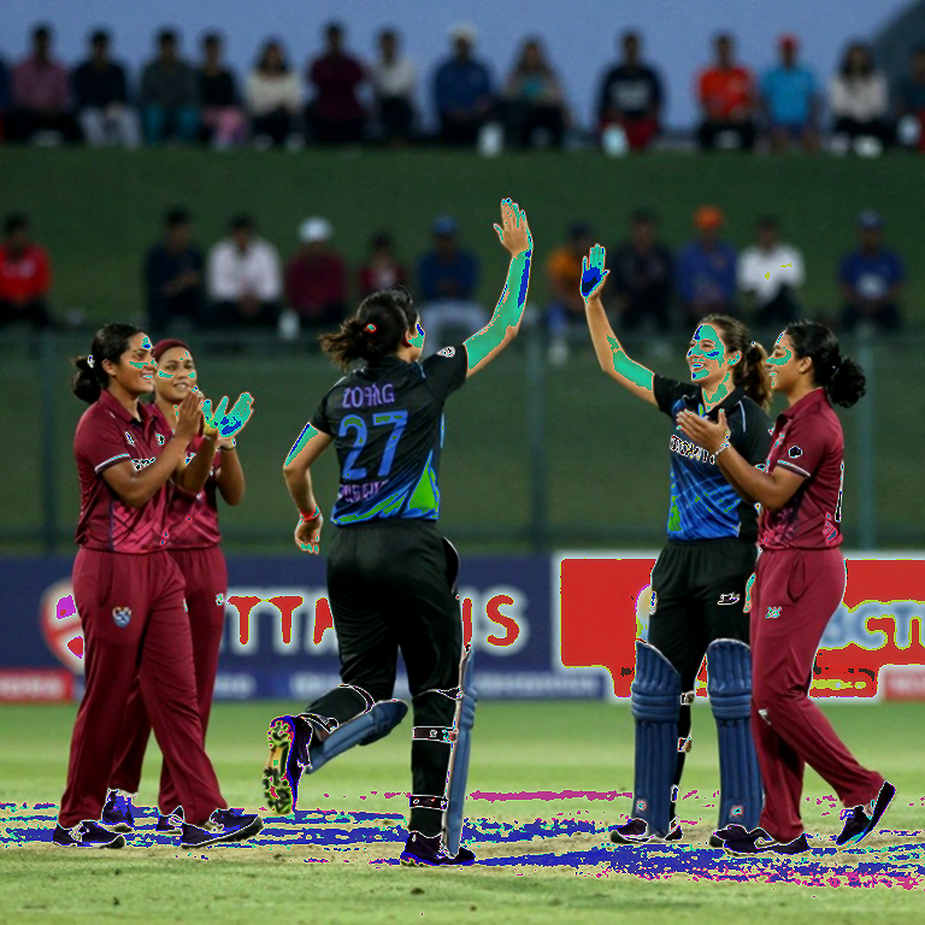
New Zealand showed the same instinct — Izzy Sharp, Flora Devonshire, Bree Illing and Nensi Patel all featured. Both sides were auditioning the next generation in a bilateral window. The difference is that when Australia experiment, three seniors are resting; when New Zealand experiment, the alternatives are thinner.
Pushing Amelia Kerr to open in a 14-over game was orthodox, not radical: get your most valuable batter the most balls. But dismissing her inside 2.4 overs removes New Zealand's principal match-winner from the contest. That is a genuine tactical blow. Reading it as a form signal from an unfinished innings is a data error. Sixteen balls support no conclusion, good or bad.
The least-read signal in the whole affair is the phrase a couple of false re-starts. Repeated restarts mean an ongoing negotiation over further over-reduction and a stubborn push to salvage the broadcast product. That push comes from calendar and commercial slots, not from cricket's needs. This is where the screen and the soil say different things, and we habitually listen to the screen.
In 2026, when I wrote about five fans watching from Mumbai, Delhi, Dubai, Patna and Kolkata during the empty-stadium IPL, I learned that vacant seats can be witnesses too. In Sydney that evening the seats were full and the cricket was empty. It is the inverse equation, and folding it into a phrase like the rain turned the game on its head would be dishonest. Nothing turned. Something simply never happened.
The 2-0 scoreline is valid by procedure. The problem is that it is built from two completed matches whose margins point in opposite directions. The first was a 2-wicket finish — a result New Zealand could plausibly have taken, where one good spell changes the story. The second was a 40-run margin with no argument attached. Adding those two numbers and calling it Australian dominance is convenient, not correct. Australia's edge is real — deepest in the squad — but not absolute; in low-margin games New Zealand remain competitive.
The second temptation is to call the absence of McGrath, Schutt and King a dropping. There is no evidence for it. WBBL|12 is imminent, and resting multi-format quicks and spinners in a dead-rubber T20I is the plainest form of workload management. Nor will I assert the opposite — the source gives no reason for their absence, so I will not supply an injury either. What is not written should not become a conclusion.
And one caution that applies across the series. Alyssa Healy does not appear in the named squad at all, and Molineux is captaining. It is easy to build a leadership-transition story from that. A squad list is not a retirement announcement. The reason is unstated, so I will not invent one.
One small thing that is not small in a data brief: across this single series' documents the same player appears as Amelia Kerr and as Melie Kerr. Any automated pipeline will split her into two records and halve her statistical footprint. We talk about the data revolution in women's cricket while the spelling of a name is still unresolved.
What to watch next is clear. The ODI leg will tell us whether Kerr opening was a 14-over necessity or a permanent role change. WBBL|12 will tell us how well the Sydney rest call aged. And the series will remain 2-0 — even though one of its three matches never began.
The scoreboard records runs; the weather records the runs that were never made.
Between the noise and the silence, I found the story cricket forgets — 9.46pm, sixteen balls in, a crowd going home having learned that what they watched was not a result.