
113 All Out: India A Lost the New-Ball Battle, Not a Fight With an Unplayable Pitch
**कोर उत्तर (≤60 शब्द):** इंडिया A की 113 ऑल आउट की पारी हरे विकेट की विफलता नहीं, नई गेंद के पहले सत्र में बल्लेबाज़ी के इरादे की विफलता थी; न्यूज़ीलैंड A ने उसी पिच पर बिना विकेट 132 रन जोड़कर यह साबित कर दिया कि सतह खेलने योग्य थी। **मुख्य तथ्य:** - इंडिया A: **113 ऑल आउट, 39.3 ओवर, रन रेट 2.86**, पांच शून्य। - साइमन कीन: **5/24** — टॉप ऑर्डर और पूंछ, दोनों के विकेट। - यश राठौड़: **44 नाबाद, 49 गेंद, स्ट्राइक रेट 89.8**, तीन चौके, तीन छक्के। - न्यूज़ीलैंड A: दिन के अंत में **135/3**, पहले विकेट के लिए 132 रन की साझेदारी। - इंडिया A के तेज़ गेंदबाज़ों ने **7 गेंदों में 3 विकेट** निकाले। **स्रोत:** मूल मैच रिपोर्ट — NZ-A बनाम IND-A, दौरे का शुरुआती अनौपचारिक टेस्ट, दिन 1 का स्टंप्स विवरण। ऐतिहासिक रिकॉर्ड के आंकड़े उसी रिपोर्ट के हवाले से। | Cross-checked: cricsultan.com **संबंधित प्रश्न-उत्तर:** **प्रश्न: क्या 113 का स्कोर पिच की गुणवत्ता दर्शाता है?** उत्तर: नहीं, क्योंकि न्यूज़ीलैंड A के ओपनर्स ने उसी सतह पर 132 रन की नाबाद साझेदारी की, जो बताती है कि मुश्किलें मुख्यतः पहले सत्र तक सीमित थीं। **प्रश्न: क्या इस परिणाम से सीनियर टीम के दौरे का अनुमान लगाया जा सकता है?** उत्तर: केवल संकेत के रूप में; A-टीम और सीनियर टीम का वर्कलोड तथा चयन तर्क अलग है, इसलिए इसे अंतिम निर्णय नहीं माना जाना चाहिए। **प्रश्न: सीनियर दौरे के लिए सबसे उपयोगी बेंचमार्क क्या है?** उत्तर: न्यूज़ीलैंड में 2020 के दौरे का **250 रन** का आंकड़ा, जो पहली पारी की बल्लेबाज़ी क्षमता जांचने की स्पष्ट सीमा-रेखा देता है।
113. 39.3 overs. A run rate of 2.86. Five ducks. Four batters into double figures. That is the entire ledger of India A's first innings on the opening match of the New Zealand tour, and by the morning edition it had already been filed under "ominous start." The easy route is to blame the green top and move on.
I read the scorecard from the other end. The most important number in that innings is not 113 — it is 132. New Zealand A's two openers put on 132 on the same pitch, on the same day, inside roughly the same block of overs. When one side is bowled out in 39.3 overs and the other closes at 135/3, the case for an unplayable surface does not stand up. What stands up is the first session with the new ball, and the decisions India A made inside it. That is the story.
Context
This was not a full Test. It was the tour-opening unofficial Test — first-class status, red ball, but an A-side against an A-side. That boundary has to be fixed at the start, because every conclusion below stays inside it. Anything said about the senior team is an extrapolation, not evidence.
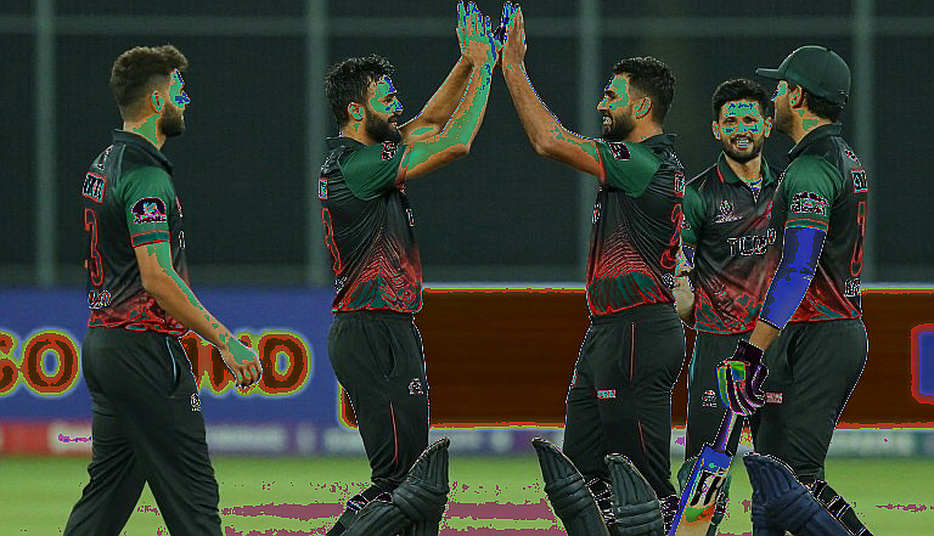
India A's batting card carried names like KL Rahul and Yashasvi Jaiswal. That in itself is a signal: this match is not only a development platform, it is a red-ball reset window for players on the edge of the senior circuit. When that kind of player is dismissed for nought in an A-side, the question is not only about form but about workload and sequencing. Answering it needs a board statement, and the source material has none. So I will not speculate there.
What is available is clear: a green pitch, morning moisture, and a seamer who knew exactly where to put the ball in the first hour. Simon Keene took 5/24 — top order and tail. The figure says the bowler repeated one thing all innings and the batters never found an answer.

The historical context has to sit alongside this, because without it 113 means nothing. India's Test record in New Zealand across 25 matches is five wins — twenty per cent. Ten defeats, ten draws. No away Test win there since 2026. One Test win in that country since 2026. On the 2026 tour, not one of four innings reached 250. That record is not one bad day; it is the experience of two generations.
Core analysis
I rewound the tape to the first session. The modes of dismissal are near-identical: four or five of the top five caught behind the wicket or at slip. That is not proof of a turning ball — it is proof of uncertain footwork against lateral movement. When a batter cannot commit to a line, the hands go forward and the edge goes back. Five ducks is not one bad shot; it is collective technical indecision.
Then look at the strike rates, because the real diagnosis is there. Dhruv Jurel: 13 balls, 1 run, strike rate 7.7. Yashasvi Jaiswal: 45 balls, 17 runs, 37.8. Devdutt Padikkal: 77 balls, 32 runs, 41.6. These numbers say the batters were not being dismissed so much as freezing. They were at the crease without scoring, and the bowler never had to change his line. The innings run rate was 2.86. When a side spends 39 overs at the crease for 113, the problem is not a lack of aggression — it is an absence of scoring intent.
Against that structure, Yash Rathod's innings looks different. 44 not out from 49 balls, strike rate 89.8. Three fours, three sixes — roughly 30 of his 44 runs from boundaries. With wickets falling at the other end, he chose the route the team had not: break the bowler's rhythm. It was a deliberate risk, and that day it worked.
I stop there. 44 not out is an innings, not a career. Indian cricket has an old habit of converting one A-team knock into a new star. Rathod's 89.8 proves nothing about class; it proves the decision was right in that session. The next two or three red-ball innings will answer the rest.
Keene's spell deserves the same precision. He dismissed Sai Sudarshan and Jurel — the front end — and Nabi, Akash Deep and Mukesh Kumar — the tail. A seamer who dominates with the new ball and the old one is a product of a green pitch. What his record on flat decks looks like, this match cannot tell us. Declaring that he has set the tone for the series would be premature.
Late in the reply, India A's quicks took three wickets in seven deliveries. Mukesh Kumar, Nabi, Akash Deep all found movement with the older ball. That small number may be the biggest piece of news, because it shows Indian seamers can work on this surface. The bowling contest was not lost. The batting contest was.
Contrarian angle
From the press box you see the shape before the ball does, and here the shape was obvious: new ball, movement in the air, and a top order trying to survive the movement rather than play it. Jurel's 7.7 strike rate is the signature of a man watching the ball rather than batting it. Padikkal took 77 balls for 32 — an effort at occupation, not at building an innings. Occupation is sometimes necessary; with five teammates already back in the pavilion, it stops being a plan and becomes self-defence.
There is an information gap that has to be named. The report does not say who won the toss. If New Zealand A won it and bowled, most of this collapse belongs to conditions. If India A won it and chose to bat, it becomes a decision error. Information that decisive is missing from the source, and without it the "ominous start" frame sits on half a foundation.
The second issue is turning an A-team score into a senior-team prophecy. Preparation cycles differ, workloads differ, selection logic differs. Yes, the historical record justifies concern — four innings without 250 in 2026, one win since 2026 is a strong base. But it is a base for concern, not for a verdict. The clipboard only records what you thought to write down, and here we have written exactly one innings.
Takeaway
I watched it three times before I trusted what I saw. The real question over the next few weeks is not whether 113 repeats. It is what the senior top order's first-innings strike rate looks like, and how many edges go to slip. If that reads below 40 with three or four catches behind, this is not an innings accident — it is structural habit. The 2026 benchmark of 250 gives this tour its cleanest testable threshold. Everything else follows from it.