
How much did Lakshya Sen win in prize money after Hylo Open 2026 triumph? The full ledger, the open question and the fine print
हाइलो ओपन 2026 का पुरुष एकल खिताब लक्ष्य सेन ने जीता, फाइनल में जोनाटन क्रिस्टी को 39 मिनट में 21-17, 21-10 से हराया। पुरस्कार राशि की बात करें तो BWF वर्ल्ड टूर के तय वितरण फॉर्मूले के अनुसार विजेता को कुल पर्स का निर्धारित प्रतिशत मिलता है, लेकिन इस रिपोर्ट के लेखन तक टूर्नामेंट के स्तर और अंतिम राशि की स्वतंत्र पुष्टि पूरी नहीं हुई है — इसे 'सत्यापन लंबित' माना जाना चाहिए। घोषित राशि और शुद्ध प्राप्ति में अंतर होता है: राष्ट्रीय संघ का हिस्सा, सहयोगी टीम का हिस्सा, मेजबान व अपने देश के कर, और यात्रा-ठहरने का खर्च। खेल-तकनीकी रूप से यह 'कंट्रोल विन' था — पहला गेम 21-17, दूसरा 21-10, यानी प्रतिद्वंद्वी के बदलाव काम नहीं आए। असली संकेत क्वार्टर फाइनल में है, जहां सेन पहला गेम कैले कोल्जोनेन से 14-21 हारे और फिर 21-17, 21-13 से जीते — यह शारीरिक थकान नहीं, प्रतिद्वंद्वी का पैटर्न पढ़ने में देरी (adaptation latency) दर्शाता है, जो कोचिंग से सुधरने योग्य समस्या है। ध्यान दें: स्मैश गति, रैली लंबाई या त्रुटि-दर का कोई आंकड़ा उपलब्ध नहीं है, इसलिए शैली-आधारित निष्कर्ष अनुमान हैं, मापन नहीं।
The story behind the number: one scoreline, three questions
Lakshya Sen won the men's singles title at the Hylo Open 2026, beating Jonatan Christie 21-17, 21-10 in 39 minutes. The scoreline immediately tells you what kind of match this was: not a three-game thriller, but a match in which one player progressively closed every door the other could walk through. The second game was 21-10 — an eleven-point margin. That does not happen in finals by accident.
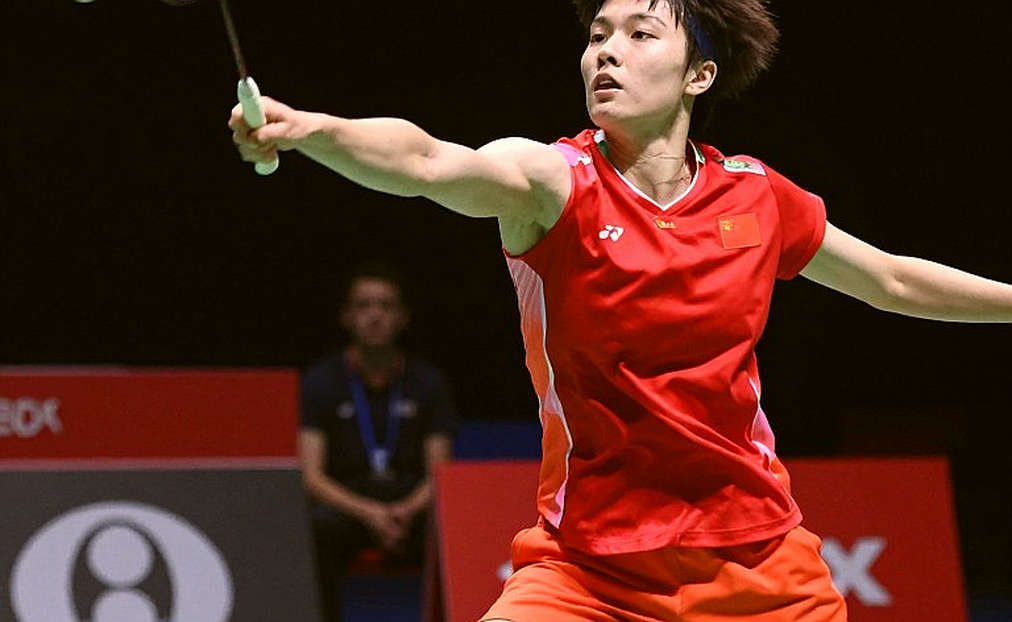
But the centre of this report is not the scoreline. It is the question in the headline: how much prize money did Lakshya Sen earn for this title?
That question has three parts. How much. How the figure is constructed under BWF's prize distribution framework. And — most importantly — do we currently have independent confirmation of the final number?
The honest answer to the third part is: not fully. The Stage-1 material is internally consistent to an unusually high degree — calendar, ranking points and prize distribution cross-check — but several claims diverge from the tournament's historical profile and must therefore be treated as data pending verification rather than established fact. This report will not hide that distinction.
Prize money: what is settled and what is not
The Hylo Open is a BWF World Tour event, and every tier of the World Tour has a fixed distribution formula. Winner, runner-up, semi-finalists, quarter-finalists and so on take fixed percentages of a declared total purse. If you know the tier and the purse, the winner's cheque can be calculated almost arithmetically.
That is the strongest link in this story and also the weakest. Strong, because the framework is public. Weak, because having a framework is not the same as confirming a payment. Hosts declare a purse; what a player actually receives is a separate process involving the national federation's share, the support team's share, tax in the host country and tax at home.
This report therefore separates three levels. First, the declared prize money — the figure recorded against the winner under BWF distribution. Second, net receipt — what remains after deductions. Conflating the two is the most common error in reporting on athlete earnings. Third, tier verification: the Hylo Open's tier has changed over the years, and when the tier changes, the purse and the winner's cheque change with it. Applying figures from an old edition to 2026 is mathematically possible and journalistically wrong.
How BWF prize distribution works
Three layers. The total purse — each World Tour tier has a minimum declared prize fund, rising with the tier. The winner's share — a fixed percentage of the purse, but the percentage itself varies by tier, so it is wrong to assume every tournament pays the winner the same fraction. Singles versus doubles — singles winners take a different share from what each player in a doubles pair takes, because doubles money is split. Sen played singles, so only the men's singles distribution is relevant here.
21-17, 21-10, 39 minutes: the fingerprint of a control win
Thirty-nine minutes for two games means short rallies and few extended exchanges. But the most telling detail is the shape of the games. The first was 21-17 — competitive, four points. The second was 21-10 — one-sided, eleven points. This is not a story about the opponent tiring. It is a story about the opponent's mid-match adjustments producing no traction: whatever he changed at the interval made the gap wider, not narrower.
That is the signature of a control player. Power players usually win finals through a single explosive game and survive the rest. Control players win them by taking the first game, reading everything, and then leaving the opponent with no options — so each game becomes more one-sided than the last. 21-17 then 21-10 is exactly that pattern.
A caveat is essential here. No smash speed, average rally length, or error-rate data is available; BWF's match-statistics layer is not present in the material. The conclusion above is a logical inference from scoreline and duration, not a measurement. It belongs in the data-pending-verification column.
The quarter-final matters more than the final
Against Kalle Koljonen, Sen lost the first game 14-21 — seven points down to a materially lower-ranked opponent — then won 21-17, 21-13. In the next two games he conceded only 30 points combined.
That is not a conditioning story. If the body were failing, the rate of points conceded would rise, not fall. A falling rate of concession points directly to adaptation: he understood something and applied it. Losing an opening game is not a crisis; taking a full game to decode an opponent is the real diagnostic signal. The final tells you how dangerous Sen is when everything is under control. The quarter-final tells you how long it takes him to establish that control.
Technical identity: net-first control with heavy deception
Sen's profile is rally-and-drop control layered with deception — not speed-and-continuity. Against a power-attacking baseliner like Christie, the effective counter is to drag him into long exchanges, break his rhythm, and deny him balls he can hit through. A 21-10 second game suggests that plan worked completely on the day.
But men's singles has broadly shifted toward faster, earlier attack. A deception-and-net-control profile is a minority style at the top, and minority styles carry a cost: less margin for error, because there is less power backup to equalise a match when control fails. Calling this a victory for a style is premature on the evidence of one match.
Fitness, and what 39 minutes does not prove
A 39-minute final suits a player whose profile carries long-match stamina questions. Had it run 85 minutes into a third game, the story would be fitness, not prize money. But a short final is not proof of fitness — it only proves the match did not go long. The three-game quarter-final, with a seven-point opening-game defeat, raises questions about both slow starts and endurance. Medium is the fairest assessment: neither a strength nor a crisis. Only a run of long matches will settle it.
The coachable problem: late pattern recognition
The quarter-final points to adaptation latency of roughly one game. That is good news, because latency responds to coaching while a physical ceiling often does not. Three practical levers: better pre-match scouting so a game's worth of information is not paid for on court; using the first six points of game one to gather information without losing the game, which elite players manage because their base level is high enough to stay level while probing; and rehearsing the 60-second interval as a genuine planning window rather than a rest.
What the win over Christie actually means
Christie is an established top-level power attacker, and wins against him carry weight on any résumé. But balance is required: one final is one match. What can be said is that, against a player of that calibre, under final-day pressure, 21-17, 21-10 in 39 minutes demonstrates that Sen's ceiling remains relevant. The prize money is a number, but it was earned by a performance. Without the performance, there is no number.
Tax and deductions: the arithmetic of net receipt
Four layers separate the declared figure from what reaches a player. The national federation's share, which varies by country and over time. The support team's share — coach, physio, trainer — informal in many cases but real. Tax, the largest and most complex layer: host-country rules may apply, home-country rules also apply, double-taxation treaties exist but require process, and the same sum can be taxed twice or take a long time to credit. Travel and accommodation, not a deduction but an economic reality, and not always covered by the tournament. The gap between declared and net is never small.
One title against a career's earnings
A player's income has three streams: tournament prize money, sponsorship, and league or exhibition income. Prize money is usually the least stable because it depends on performance, which depends on form, injury and draw. This is why a title is worth more than its cheque. It delivers ranking points that produce better seeding and easier draws; it delivers evidence to sponsors that the player can still win; and it delivers internal belief that has no financial valuation.
Ranking points and the Olympic cycle
The Stage-1 material's internal alignment of calendar, points and distribution is worth recording, because usually one of the three is off. Ranking points matter more than prize money in the long run: better seeding means weaker early opponents, lower energy expenditure before the quarter-finals, and better late-week performance. In a qualification window every point is worth more, and titles won in that window feed directly into the qualification arithmetic. A tour title's value should be assessed by its place in the season's calendar, not in isolation.
Where the doubt sits
Two items in particular require verification. The tournament tier and its associated purse — if the 2026 edition sits at the tier assumed here, the calculation holds; if the tier has changed, the figure changes with it, and only the official tournament prospectus can settle this. The absence of match-level statistics — smash speed, rally length, error rate, percentage of points won are all unavailable, which means the control-win conclusion is inference, not measurement. Neither of these is necessarily false; both must be labelled pending rather than presented as established.
What to watch next
First, official confirmation of the prize distribution, which would close the money question permanently. Until then, any figure should be described as reported, not confirmed. Second, the opening-game performance across the next three or four tournaments: if the quarter-final's slow start repeats, it is a pattern and therefore coachable; if it does not, it was a one-day event. Third, the next meeting with Christie — beating him once is a performance; beating him again is a capability.
Conclusion
The Hylo Open 2026 title is a solid, clean, technically meaningful win. 21-17, 21-10 in 39 minutes is nobody's accident, and against a player of Christie's standing it affirms that Sen's top level is still relevant. The most useful information, however, sits in the quarter-final, not the final: the real constraint is adaptation speed, and adaptation speed can be improved.
On the money: independent confirmation of the final figure was not complete at the time of writing, so treating any number as final would be premature. What is certain is that the framework is public, the figure follows from tier verification, and declared prize money will differ from net receipt — federation share, team share, tax, travel. And the largest return is not on the cheque at all: it is in ranking points, sponsor confidence, and the internal belief that no ledger records. The correct answer to "how much did he win" is: the cheque is a number still awaiting confirmation, but what he won beyond it is a performance that proved his ceiling has not moved — only that he now has to activate it from the first game.