
KabaddiCommonwealth Kabaddi Championship 2026: The Big Story Behind India's Winning Streak, Big Win Expected Against Nigeria
Commonwealth Kabaddi Championship 2026: The Big Story Behind India's Winning Streak, Big Win Expected Against Nigeria
राष्ट्रमंडल कबड्डी चैंपियनशिप 2026 में भारतीय पुरुष कबड्डी टीम ने लगातार तीन जीत दर्ज की हैं, लेकिन ईरान की अनुपस्थिति के कारण इस जीत की वास्तविक प्रतिष्ठा पर सवाल उठ रहे हैं। भारत ने इंग्लैंड को 46-26, युगांडा को 44-30 और मलेशिया को 37-23 से हराया। सबसे महत्वपूर्ण आंकड़ा यह है कि इंग्लैंड ने नाइजीरिया के खिलाफ 68 अंक बनाए, लेकिन भारत के खिलाफ केवल 26 अंक ही बना सकी, जो भारतीय डिफेंस की मजबूती को दर्शाता है। हालांकि, भारत हर मैच में 23-30 अंक लुटा रहा है, जो शीर्ष स्तरीय प्रतिद्वंद्वियों के खिलाफ चिंता का विषय हो सकता है। नाइजीरिया को तंजानिया और इंग्लैंड के खिलाफ क्रमशः 17-66 और 18-68 से करारी हार मिली है, जिससे भारत के खिलाफ उसकी संभावनाएं बहुत कम हैं। टूर्नामेंट तीन स्तरीय ढांचा दिखाता है: भारत शीर्ष स्तर पर, इंग्लैंड/तंजानिया/मलेशिया/युगांडा दूसरे स्तर पर और नाइजीरिया तीसरे स्तर पर। ईरान और दक्षिण कोरिया की अनुपस्थिति में यह आयोजन कबड्डी के वास्तविक वैश्विक पदानुक्रम को नहीं दर्शाता। यह 'राष्ट्रमंडल' ब्रांडेड आयोजन राष्ट्रमंडल खेलों का हिस्सा नहीं है, बल्कि एक स्वतंत्र चैंपियनशिप है, जिसकी प्रतिष्ठा एशियाई खेलों और कबड्डी विश्व कप से काफी कम है। भारत के लिए असली परीक्षा नॉकआउट चरण में होगी, जहां इंग्लैंड जैसी टीमें चुनौती दे सकती हैं। सुरजीत सिंह कप्तान हैं, लेकिन उनकी भूमिका और टीम की रणनीति के बारे में कोई खिलाड़ी-स्तरीय आंकड़े उपलब्ध नहीं हैं, जिससे स्टार रेडर पर निर्भरता का आकलन संभव नहीं।
The Indian men's kabaddi team has begun its campaign at the Commonwealth Kabaddi Championship 2026 with a bang. Under the captaincy of Surjeet Singh, the team has won all three matches played so far. India defeated England 46-26, Uganda 44-30 and Malaysia 37-23, proving their strong credentials. However, amid these victories, one point is constantly being discussed—there is mild disappointment among fans regarding the margin of India's wins, as even against relatively weaker opponents India has not managed to win by a big margin.
India's fourth match in this tournament is against Nigeria, and on paper India is a heavy favourite. Nigeria has suffered two crushing defeats in the tournament so far—a 17-66 loss to Tanzania and an 18-68 loss to England. These results have made it clear that the African team is still struggling at this level. But the real question is whether this tournament is really as difficult for India as it seems, or is there something else hiding behind its shine?
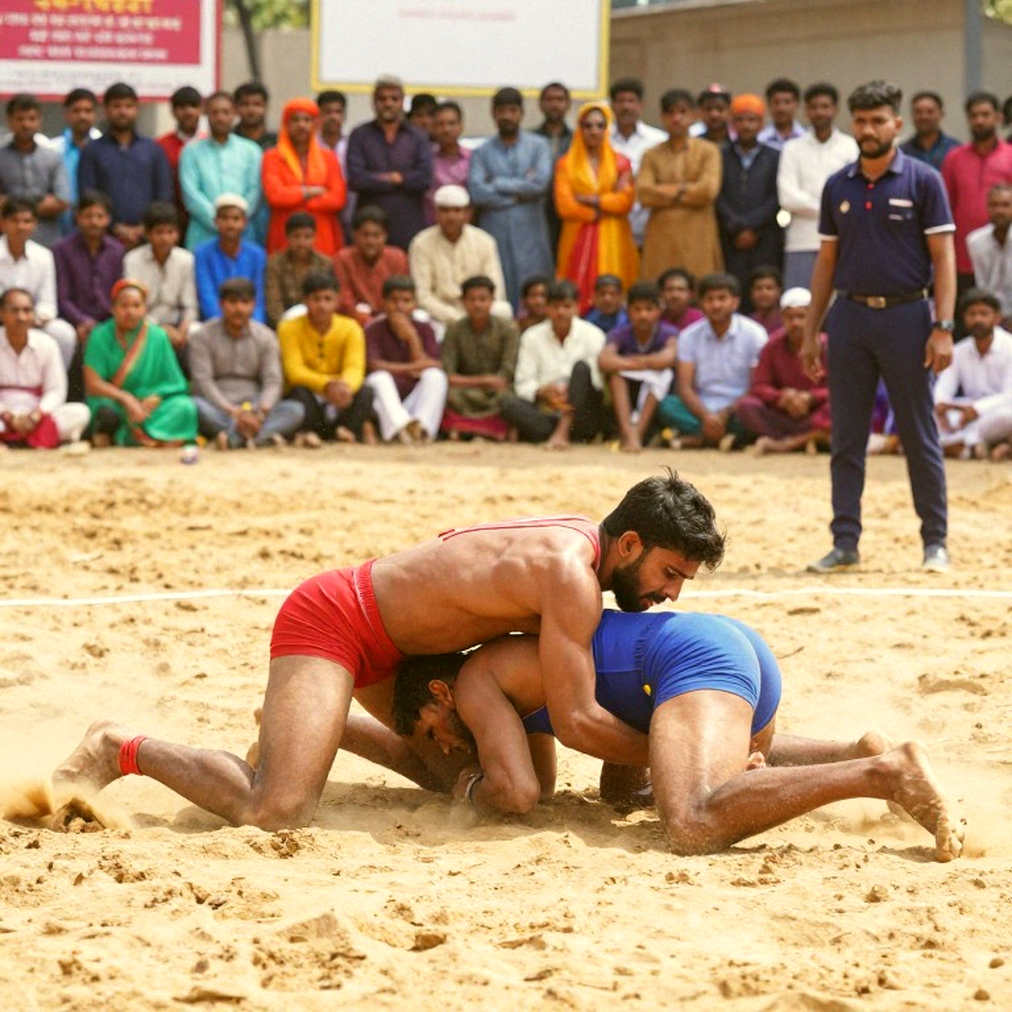
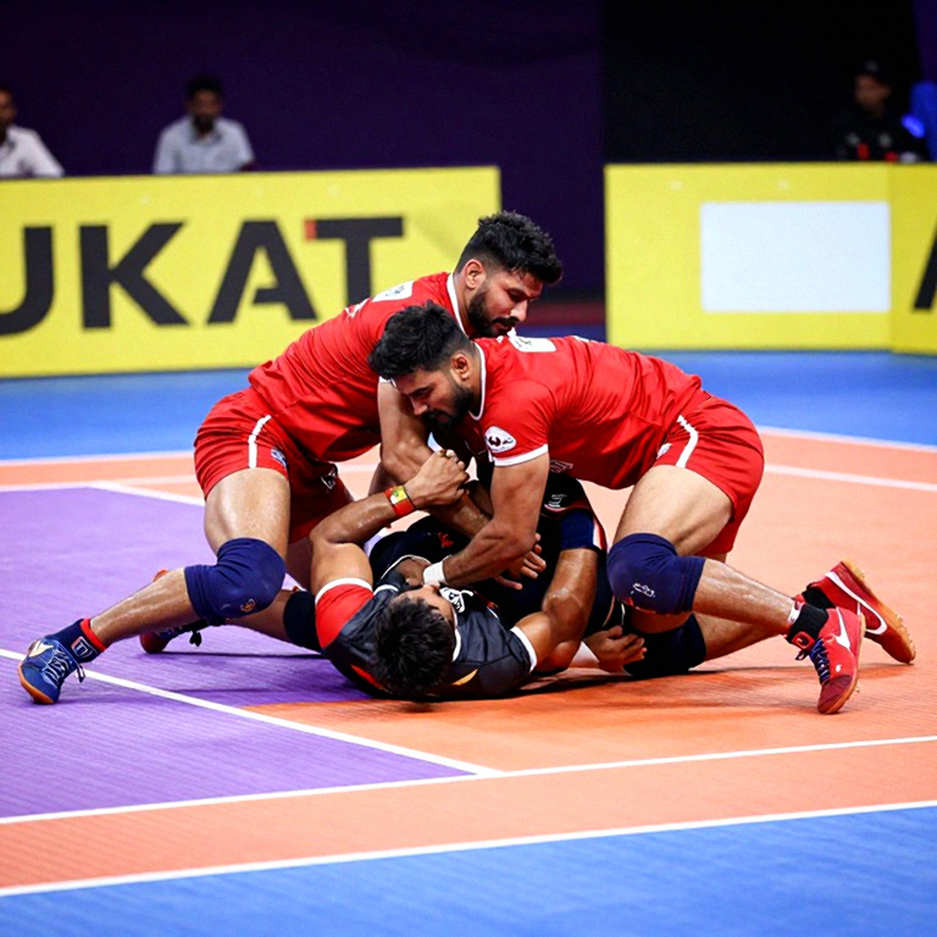
Kabaddi is a sport that originated from the soil of India, but today it is making its mark at the international level. To understand this sport, it is necessary to know some basic rules. In kabaddi, a 'raider' goes into the opponent's court and must touch a defender and return to his own court within 30 seconds. Throughout the raid he must continuously chant 'Kabaddi-Kabaddi' to prove that he is not inhaling; if the chant breaks, the raid is void. In a 'tackle,' the defending team stops the raider in their own court to earn points. The most important rule is 'All Out'—when all players of the opposing team are out, the other team gets two bonus points and the entire team returns to the court. This is why scores in kabaddi rise very quickly and big margins are built quickly.
Keeping these rules in mind, if we look at the tournament scores, an interesting picture emerges. England scored 68 points against Nigeria, but against India their team could manage only 26 points. That is, India's defense restricted England's scoring power by 42 points. This is the strongest evidence that India's defense is genuinely top-level, even though India's own scoring margin looks modest. Conceding 23 to 30 points against opponents is certainly a warning sign, but the defensive performance against England proves that the team can perform at its best even under pressure.
Not much information is available about the Indian team's strategy and players. According to sources, captain Surjeet Singh is the only player whose name has come to light, but there is no clear information about his role—raider, defender or all-rounder. This is a data gap, which makes it impossible to know whether India's attack depends on a single star raider or whether the whole team is scoring. Similarly, defensive figures are available only at team level, not individual tackle percentages.
Now let us talk about the tournament structure and the level of competition. This 'Commonwealth Kabaddi Championship' is a standalone event, not part of the Commonwealth Games, because kabaddi is not included in the Commonwealth Games programme. Its prestige is well below the Asian Games and the Kabaddi World Cup. India's dominance in the tournament is clear, but the biggest reason for this is that Iran is not participating in this competition. Iran is the country that has genuinely challenged India at the top level and won gold at the 2026 Asian Games. In Iran's absence, India's wins are against second and third-tier teams, which present India's dominance as greater than the reality.
The tournament clearly shows a three-tier structure. In the first tier is India, in the second tier are England, Tanzania, Malaysia and Uganda, and in the third tier is Nigeria. The 49-50 point margin against Nigeria reflects the lower floor of the third tier. The 'Commonwealth' name of this tournament is a marketing strategy that geographically includes African and Southeast Asian countries but does not bring competitive quality, because the strongest kabaddi nations Iran and South Korea are not Commonwealth members.
Looking at the regional and cultural landscape, kabaddi is India's most popular non-cricket sport, which became popular in professional form on television through the Pro Kabaddi League. Kabaddi is linked to rural 'Akhada' traditions and offers a development path through government jobs—railways, police, army. For India, it is also a means of cultural export, spreading in the English-speaking world under the 'Commonwealth' name. The participation of African countries is developmental, not competitive. Big losses of teams like Nigeria are a sign that kabaddi's internationalization is broad but shallow in depth. India's advantage comes from its rural base and the professional structure of PKL, which third-tier countries cannot approach in the near future.
From a commercial point of view, this event is weak. It is not like PKL but an international national-team event. Media coverage is mainly limited to live streaming and telecast guides, which indicates low broadcast rights. There is no information in the source about sponsorship, salaries or auctions, so the commercial risk assessment remains incomplete. Player compensation can also be assumed to be at a normal level under the national team system.
On the governance and institutional side, the source does not disclose which body sanctions this event. The IKF recognition status is also unclear. Kabaddi has a history of parallel and rival federations, so lack of transparency is a risk. The 'Commonwealth' label is aspirational, not institutional, because kabaddi is not part of the Commonwealth Games. This event does not advance kabaddi's Olympic path, because it does not include strong countries like Iran and Korea and the number of participating countries is limited.
Talking about risks, the biggest risk is that India's three consecutive wins are seen as global dominance when Iran is absent. The second risk is that India concedes 23 to 30 points every match, which could expose defensive softness against top-level raiders. The third risk is dependence on a star raider, whose assessment is not possible in the absence of player-level data. The fourth risk is the structural non-competitiveness of third-tier countries, which is a long-term development challenge.
India is almost certain to achieve a big win against Nigeria, but the real test will come in the later knockout stage, where teams like England can pose a challenge. The real question for India is not whether it is winning, but what the level of its wins is and whether it can stand up against a real rival like Iran. Before considering this tournament as a benchmark of India's strength, it is necessary to keep Iran's absence in mind, because the real global hierarchy rests on the bipolar structure of India and Iran, which this event is hiding.
संबंधित खिलाड़ी
अनुशंसित
The ₹2.605 Crore Bid Is a Receipt, Not a Redemption: Where Kabaddi's Auction Noise Swallows the Signal2026-10-25
India vs England, Match 4: The Rotation Ledger in Ahmedabad, and a Fixture That Proves Nothing2026-10-25
India vs Uganda at the Commonwealth Kabaddi Championship 2026: The Bigger Question Behind the Scoreboard2026-10-25
The Ahmedabad Points Table: Five Matches, Thirteen Teams, and a Count That Does Not Reconcile2026-10-25
India vs Uganda, Match 9: The Scoreboard Says 46-26. The Fixture List Says Something Else.2026-10-25
अनुशंसित
The Ahmedabad Points Table: Five Matches, Thirteen Teams, and a Count That Does Not Reconcile2026-10-25
India vs Uganda at the Commonwealth Kabaddi Championship 2026: The Bigger Question Behind the Scoreboard2026-10-25
The Ahmedabad Points Table That Didn't Lie, But Didn't Tell the Whole Story Either2026-10-25
India vs England, Match 4: The Rotation Ledger in Ahmedabad, and a Fixture That Proves Nothing2026-10-25
Commonwealth Kabaddi Championship 2026, Day 1: The Table's Arithmetic Is Correct, Its Meaning Is Missing2026-10-25
अनुशंसित
"India Will Win, But the Scoreline Will Lie" — Fact-Checking the Commonwealth Kabaddi Championship 20262026-10-25
Commonwealth Kabaddi Championship 2026, Day 1: The Points Table Isn't Lying, But It Isn't Telling the Whole Truth Either2026-10-25
India vs Uganda at the Commonwealth Kabaddi Championship 2026: The Bigger Question Behind the Scoreboard2026-10-25
Commonwealth Kabaddi 2026, Day 1: An Audit of the Points Table — Three Teams Ranked Without Playing, and Iran's Empty Chair2026-10-26
अनुशंसित
Uganda's 45 Points: The Number That Matters More Than India's Win at the Commonwealth Kabaddi Championship2026-10-25
The Truth of the Third Raid: In Kabaddi, the Stand Speaks Before the Scoreboard2026-10-25
Commonwealth Kabaddi Championship 2026, Day 1: The Points Table Isn't Lying, But It Isn't Telling the Whole Truth Either2026-10-25
Commonwealth Kabaddi Championship 2026: The Big Story Behind India's Winning Streak, Big Win Expected Against Nigeria2026-10-27
The ₹2.605 Crore Bid Is a Receipt, Not a Redemption: Where Kabaddi's Auction Noise Swallows the Signal2026-10-25