
India vs Uganda at the Commonwealth Kabaddi Championship 2026: The Bigger Question Behind the Scoreboard
मुख्य उत्तर: कॉमनवेल्थ कबड्डी चैंपियनशिप 2026 के मैच 9 में भारत का सामना युगांडा से है। भारत ने इंग्लैंड को 46–26 और युगांडा ने मलेशिया को 45–29 से हराया। ईरान, बांग्लादेश और दक्षिण कोरिया की अनुपस्थिति से भारत का दबदबा सीमित संदर्भ में है। मुख्य तथ्य: - भारत 46–26 इंग्लैंड; युगांडा 45–29 मलेशिया; मैच 9, दिन 2. - कबड्डी कॉमनवेल्थ गेम्स का आधिकारिक पदक खेल नहीं है; यह स्वतंत्र आमंत्रण टूर्नामेंट है। - ईरान, बांग्लादेश, दक्षिण कोरिया और पाकिस्तान इस फील्ड में नहीं हैं। - रिपोर्ट में ‘एशियाई खेल 2026 स्वर्ण’ का दावा सत्यापन योग्य नहीं; भारत का हालिया स्वर्ण 2022 हांगझोउ खेलों (2023) का है। - भारत ने ‘फ्रेश स्क्वाड’ उतारा; 26 अंक लुटाना रक्षात्मक चेतावनी है। स्रोत: Khel Now मैच प्रीव्यू; प्रकाशन तिथि उपलब्ध नहीं। तथ्यों का स्वतंत्र सत्यापन आवश्यक है। संबंधित प्रश्नोत्तर: प्रश्न: भारत बनाम युगांडा मैच कब है? उत्तर: रिपोर्ट में इसे दिन 2, मैच 9 कहा गया है; सटीक तारीख नहीं दी गई। प्रश्न: क्या कॉमनवेल्थ कबड्डी चैंपियनशिप आधिकारिक कॉमनवेल्थ गेम्स इवेंट है? उत्तर: नहीं, कबड्डी कॉमनवेल्थ गेम्स का पदक खेल नहीं है; यह स्वतंत्र टूर्नामेंट है। प्रश्न: भारत की असली चुनौती कहां है? उत्तर: ईरान, बांग्लादेश और दक्षिण कोरिया की अनुपस्थिति में इस जीत से एलीट स्तर का अनुमान नहीं लगाया जा सकता।
I rewound the tape until the crowd disappeared from the frame. India had beaten England 46–26. On the tape, it looks like a clean win. But when I slowed down the last two minutes, a different picture emerged: India’s defensive line kept breaking, and England’s raiders kept extracting points from those breaks. Conceding 26 is not a small thing for any team. Those are the same 26 points that could become 36 against a stronger side.
On the same day, Uganda beat Malaysia 45–29. In Match 9 of the Commonwealth Kabaddi Championship 2026, India face Uganda. I write the pause between the roar and the replay, not the roar. So the biggest question here is not whether India will win. The question is what kind of win it will be, and what it will reveal.
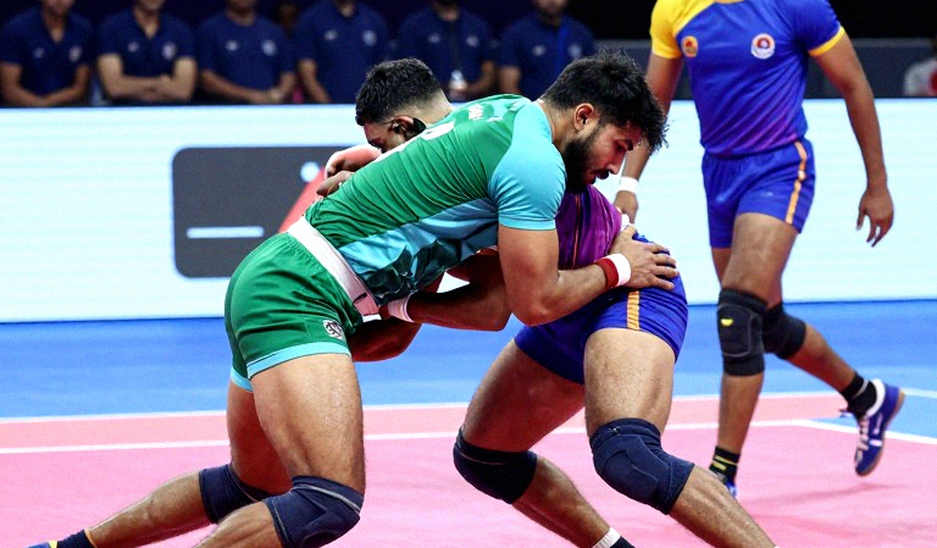
The name Commonwealth Kabaddi Championship 2026 suggests a Commonwealth Games event. It is not. Kabaddi has never been a medal sport at the Commonwealth Games. This is an independent invitational tournament borrowing the Commonwealth label for prestige and marketing. Treating it as an official Commonwealth Games Federation competition would not be honest to the facts.
The field includes India, England, Uganda and Malaysia. Iran, Bangladesh, South Korea and Pakistan are absent. That is the tournament’s biggest limitation. India’s real tests come against teams like Iran, who stripped India of gold in Jakarta 2026 and proved that wrestling-derived defensive grammar had become part of kabaddi. That grammar is not on this mat.
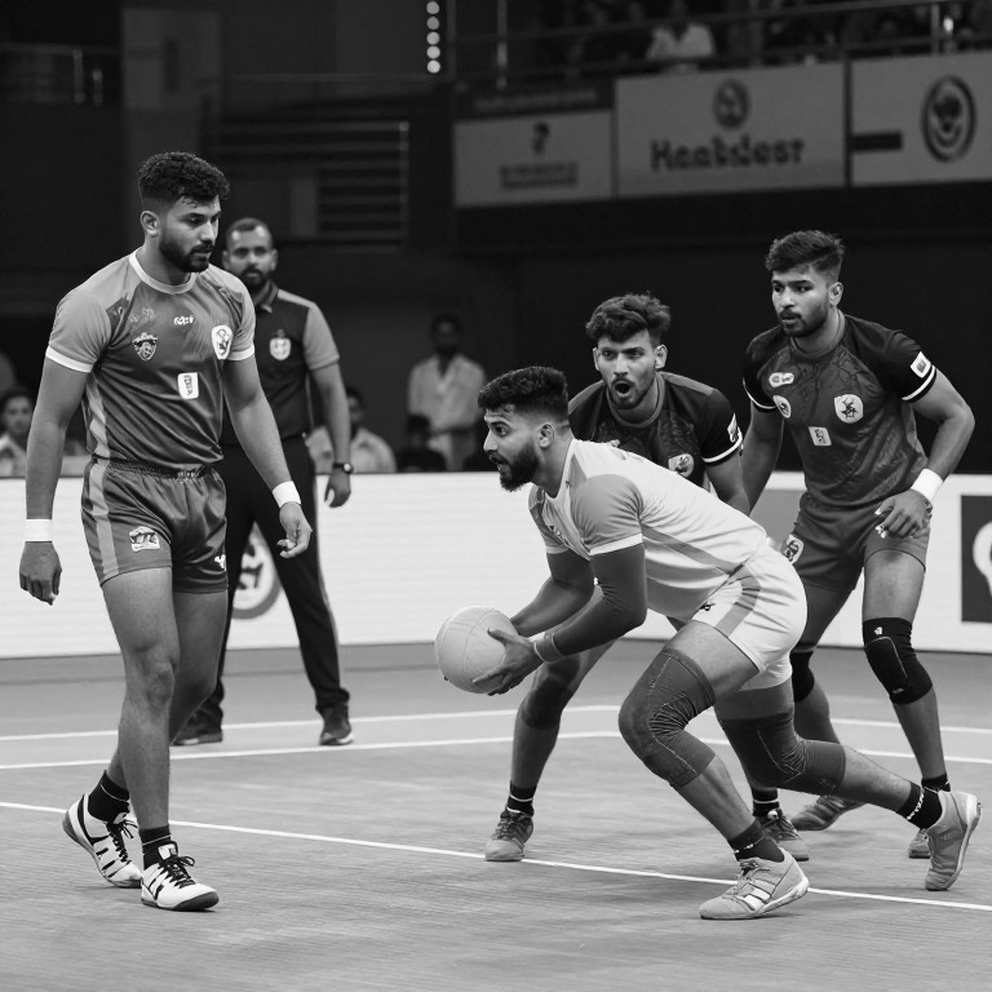
The format matters. This international event is being played in standard style, not circle style. Circle style belongs to rural Punjab’s festival circuits and akhadas. An India-versus-Uganda international fixture is almost certain to be standard style.
In standard style, a raider has 30 seconds to enter the opponent’s half and score. The raider must chant ‘kabaddi-kabaddi’ continuously. If the cant breaks, the raid is void. In defence, seven players combine to stop the raider. A touch is one point, a tackle is one point, crossing the bonus line is one point, and a super tackle is two points. When all seven players of one side are out at the same time, the opponent gets two bonus points and the wiped-out side’s seven players are revived. That is an all out.
Once you understand these rules, the scores of 46–26 and 45–29 begin to mean more. The scores of 46 and 45 are not just final results; they are information about the structure of the game. In modern kabaddi, 46 points in a 40-minute match is a very high output. Such scores usually come when the losing side is all out multiple times. The all out is the mechanism that inflates gaps quickly.
This means both India and Uganda broke the opposing defence several times. But there is another side. Both winners conceded 26 and 29. For a dominant side, that is unusually high. Elite teams like Iran or India usually concede fewer than 20 against weak opposition. The 26 and 29 here suggest looseness even in victory.
India’s 46–26 win hides defensive looseness. Conceding 26 to England is a soft warning. That warning becomes louder against Iran, Bangladesh or South Korea. Small cracks in defence against weak opponents do not show in the big picture. Strong opponents turn those cracks into doorways.
Uganda’s 45–29 win should be read in the same frame. Uganda looks like the strongest non-India side in this field. Scoring 45 against Malaysia shows Uganda has a raiding unit capable of scoring. It is not merely a defensive minnow. But Malaysia’s defence is weak, so this result should not be treated as a direct benchmark against India.
India have fielded a fresh squad. That detail matters. The 46–26 score is not a direct measure of India’s true strength, because the team is in experimentation mode. A fresh squad means some players are being given chances, some combinations are being tested, and some positions are still unsettled. In such a setting, the score matters less than who is playing which role.
One detail stands out. The coverage of this tournament names no players. There is no raiding data, no tackle percentage, no super raid, no do-or-die raid. That absence is itself a signal. This event’s media coverage is not player-centric, while PKL coverage is saturated with player statistics. The direct meaning is that the tournament has low star-carrying power.
I built a habit in 2026, watching Patna Pirates matches twice on tape. The first watch shows the story; the second shows the mechanism. In the available information for this match, the mechanism is thin. We get only final scores. We do not get raid-by-raid data. In such a situation, commenting on a raider’s risk-taking choices would not be honest.
The dubki count was never about numbers; it was about nerve. The dubki is the moment a raider chooses to duck under threat rather than submit. Modern analytics measures everything except that moment when a raider decides to duck. This match gives us no way of knowing which raider chose the dubki and when. So I will not read this fixture on score alone.
There is another absence. The empty stadium taught me that absence has nine rooms. In this tournament’s rooms, the chairs of Iran, Bangladesh, South Korea and Pakistan are empty. Iran’s absence is the biggest warning. In kabaddi’s real power structure, Iran, Bangladesh and South Korea sit close behind India. Without them, India’s dominance can only be read in a limited context.
The composition of the field also demands attention. England and Malaysia are, in practice, diaspora-based teams. Malaysian kabaddi is tied to the Tamil-Indian community; English kabaddi runs through British-Asian communities. This is a real part of global expansion, but turning it into a grand story of kabaddi conquering the world would be wrong.
Uganda is the most honest sign of internationalisation in this field. Uganda and Kenya are among Africa’s most active kabaddi nations. Their participation shows the sport reaching beyond the Indian diaspora. But this growth still depends on external support and development projects. It is not commercial demand rising from the ground. That is both its strength and its fragility.
Back to the Commonwealth label. The word Commonwealth inflates this tournament’s prestige, not its competition. Kabaddi is not on the Commonwealth Games Federation’s official list. Presenting this event as a Commonwealth Games-level competition is a naming problem. The organiser is also unnamed in the report. Whether this is an IKF-sanctioned event or a private promoter’s venture remains unanswered.
Now the point that demands the most caution. The report says the Indian team are the ‘Asian Games 2026 gold medallists’. That claim needs verification. As far as I know, the 2026 Asian Games have not yet been held. India’s most recent men’s kabaddi gold came at the 2026 Hangzhou Asian Games, held in 2026. Treating the sentence as fact is risky. It is likely a conflation with the 2026/2026 Hangzhou Games.
This is not a small slip. In sports journalism, dates and context are basic. When a report says ‘2026 gold’, it inflates the freshness of India’s credentials. The reader is led to believe the team has just returned from the Asian Games. The truth is that India’s gold came from the 2026 Hangzhou edition. Ignoring that difference damages the credibility of the coverage.
Another absence is the women’s competition. The report concerns only the men’s tournament. A women’s bracket may be running, but it is not mentioned. The absence of women’s kabaddi coverage is itself a signal of a coverage pattern. In a sport where women’s leagues are often used as displays of social responsibility, the disappearance of women’s competition news is a silence.
The commercial side of this match is thin. The report mentions no sponsor, broadcast rights, tickets or attendance figures. At the end, readers are asked to follow social media, download the app and join WhatsApp/Telegram. This makes clear that the coverage is mainly an audience funnel. The event’s standalone commercial value is very low; its media role is limited to engagement.
Comparison with PKL is necessary. PKL’s economy rests on broadcast rights, title sponsorship and a graded player auction. None of that appears here. That gap shows the tier of competition we are watching. Reading the Commonwealth Kabaddi Championship through PKL’s business model would be a category error.
From a coaching and selection perspective, the real value of this match will appear later. India conceded 26 against England. If the same defence repeats against Iran or Bangladesh, 26 can become 36. India’s tackle percentage and raider success rate against Uganda will be worth watching. Those two numbers will show how well the fresh-squad experiment is working.
For Uganda, this match is a benchmark. Beating Malaysia 45–29 is a good sign, but pushing India close to 30 points will be the real test. If Uganda’s raiders extract more than 30 against the Indian defence, it will prove their raiding unit works beyond weak teams.
India’s biggest challenge is not Uganda. India’s biggest challenge is their own expectations. When you win 46–26, the scoreboard tells you everything is fine. The tape tells you some things are not. The real analysis is the one that names weakness even inside a win. In this match, the weakness has a name: a defensive line that keeps breaking and a concession of 26 points.
I will not watch this match through the lens of India’s win or loss. I will watch it as a document. The document says India are in an experimental phase, Uganda are a genuine example of kabaddi’s growth in Africa, and labels like Commonwealth inflate prestige. It also says where players disappear from coverage, where women’s competition goes silent, and where dates go wrong.
The next time India stand against Iran, the questions being asked now will matter. Can the Indian defence break the habit of conceding 26? Are teams like Uganda merely developing guests, or the next layer of kabaddi? And can the organisers produce an official structure behind the Commonwealth name? The scoreboard will not answer these questions. The answers will be in the frames that require the crowd to disappear first.