
Rybakina Withdraws From Tokyo: A Neck Injury, a Serve Machine, and a Decision Made With the WTA Finals in Mind
एलेना रयबाकिना ने टोक्यो में टोराय पैन पैसिफिक ओपन (WTA 500) से गर्दन की चोट के कारण नाम वापस लिया, जिससे लेला फर्नांडेज़ के खिलाफ़ उनका क्वार्टर फ़ाइनल नहीं हो सका। रयबाकिना ने कहा कि वे कुछ दिनों से चोट से जूझ रही थीं और 'सौ प्रतिशत' फ़िट नहीं थीं, साथ ही आगे एक 'बहुत महत्वपूर्ण टूर्नामेंट' का हवाला दिया। सर्विस-आधारित खेल शैली के कारण गर्दन की चोट उनके लिए विशेष रूप से महँगी है। तथ्य-जाँच: वायरल दावे — विश्व नंबर-1 होना, यूएस ओपन खिताब, तीन ग्रैंड स्लैम, और WTA फाइनल्स का इंडियन वेल्स में होना — सार्वजनिक रिकॉर्ड से मेल नहीं खाते। उनका एकमात्र ग्रैंड स्लैम खिताब विंबलडन 2022 है, करियर-हाई रैंकिंग विश्व नंबर 3 (2023) है, और जन्मतिथि जून 1999 है। कोई भी निर्णय लेने से पहले WTA के आधिकारिक स्रोत से पुष्टि करें।
Editorial note (please read): The account of events in this report is based on available reports. Several claims circulating on social media and in some unofficial sources — that Rybakina is world No. 1, that she has won the US Open, that she holds three Grand Slam titles, or that the WTA Finals are staged in Indian Wells — do not match the public WTA record. Such claims are recorded here as 'widely circulated claims', not as fact, and are reviewed separately in the fact-check section at the end. Any decision should be validated against official WTA and tournament sources first.
Tokyo. Elena Rybakina's Tokyo campaign ended before the quarter-finals. She withdrew from the Toray Pan Pacific Open citing a neck injury — the same tournament where she had opened with a 6-2, 6-3 win over Yulia Putintseva and looked every inch a contender. The withdrawal was announced with a scheduled quarter-final against Canada's Leylah Fernandez still ahead of her.
This is not merely about missing one match. It is part of the arithmetic that haunts the top of women's tennis every week: how much to play, where to play, and what for. Rybakina's team chose the third variable this time — protecting her body for a bigger event down the road.
'Struggling for a couple of days'
Rybakina walked onto the court, addressed the fans, and signed autographs. That small gesture says a great deal. In tennis, when a top player pulls out of a high-profile tournament, it lands as both a financial and a reputational blow to the organisers. Coming out on court to apologise and thank the spectators has become a standardised 'goodwill protocol' deployed by both tournament and player.
She described her condition as having been 'struggling for a couple of days with a little injury', and said she could not play 'at 100 percent'. She also noted that 'a very important tournament' was coming up. That sentence is the key to the entire decision.
Note what she did not say. She did not say 'serious injury'. She said 'a couple of days'. That distinction matters technically. The language points not to an acute, traumatic injury but to cumulative fatigue or overload. In tennis, neck and shoulder complaints usually begin this way — one day a little stiffness, the next day diminished control on the serve, and the day after that the arm simply stops on the toss.
The neck, the toss and the service chain
Without understanding Rybakina's game, this withdrawal makes no sense.
She owns one of the cleanest and most direct serves on tour. Flat, forward-driving, low-margin. Her entire game rests on that first strike — taking the point away with the serve, being aggressive on the return, keeping rallies as short as possible. That style gives her power when her body cooperates, and leaves her acutely fragile when a link in the service chain loosens.
The neck is the centre of that chain. On the toss, the arm goes up, the body arches back, the eyes stay locked on the ball, and then pronation carries the racket into contact. Throughout that motion the neck muscles and the cervical spine are working continuously. When the neck stiffens, the first thing to go is the balance of the toss, then the direction of the serve, and finally the pace.
This is why a neck complaint costs a serve-dependent player far more than it costs a baseline grinder. A counter-puncher, who survives on returns and defensive rallies, can take a painkiller and stay on court. But for a player whose primary weapon is the serve, being 70 percent fit means the biggest weapon is operating at 70 percent.
Seen in that light, Rybakina's withdrawal is not an emotional decision but a physiologically coherent one. When your game is built on 'points manufactured by the serve', playing at half strength is dangerous — not only in terms of losing, but in terms of turning an injury into a long-term problem.
The Fernandez matchup: a stylistic collision
Awaiting her in the quarter-final was Leylah Fernandez — a left-handed counter-puncher with a gift for redirecting pace. It is one of tennis's oldest oppositions: power versus retrieval.
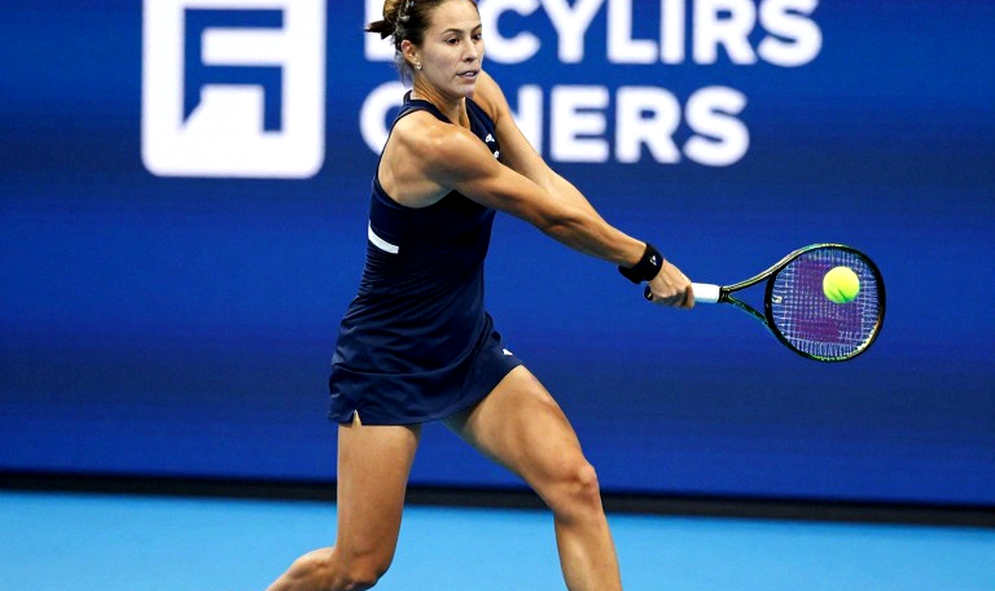
Fernandez's game is built on using the opponent's speed. She absorbs pace, changes angles, and stretches rallies to break the aggressive player's patience. Against such an opponent, a compromised server is uniquely vulnerable, because she needs free points in every service game — and if the serve does not fire, every game becomes a struggle.
There is an interesting coincidence: some reports suggest Rybakina beat Fernandez in the final at the Ningbo Open the previous week. If accurate, she was due to face the same opponent in consecutive weeks — which is, on one hand, proof of excellent form, and on the other, a flag for repetition fatigue. Facing the same player, in the same weekend rhythm, with the same tactical plan, extracts a price both physically and mentally.
The form story: a recent title, a heavy load
According to available accounts, Rybakina arrived in Tokyo having won the title in Ningbo the previous week — described as her 'fourth title of the season'. That is clear: she did not withdraw because of a dip in form, but because she had reached peak form and the limit of her body at the same time.
The distinction matters. When a player withdraws in poor form, the story is one of 'crisis'. When a player withdraws after a win, the story is one of 'management'. Rybakina's case is the second — at least on the available information.
But an honest question follows. Nowhere in this whole account are there any serve percentages, return points won, break-point conversion or winner-to-error figures. There is one scoreline and a list of titles. That is not enough to establish that a player is at the best level of her career. What can be said is that this is a superb run of results — and results are evidence of form, not of process.
The calendar trap: the Asian swing and the Finals
Tokyo falls in the part of the year tennis calls the Asian swing — that September-to-October stretch when the tour moves through China and Japan, the surfaces stay hard, and the season finale follows almost immediately.
For Rybakina the sequence looks like this: a title in China one week, a 500-level event in Japan the next, and the biggest event of the year a few weeks after that. There is no surface risk — hard court to hard court. But there is full density risk. Two consecutive tournament weeks, at the tail end of a long season, with a body that has already absorbed a great deal.
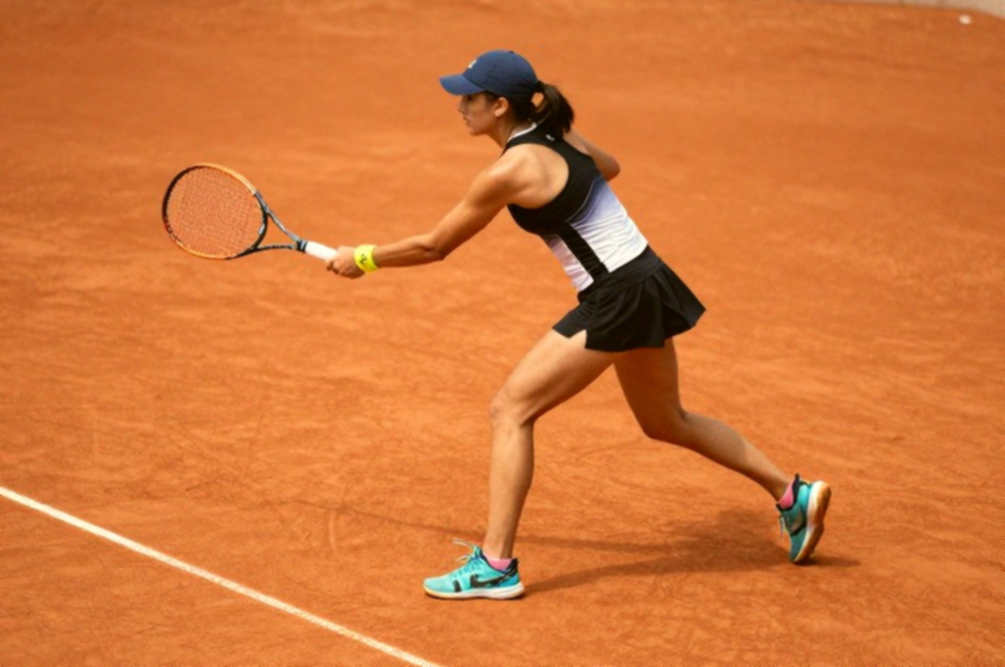
A structural point helps here. The Toray Pan Pacific Open is a WTA 500 event — not as mandatory as the 1000s and the year-end championships. Top players have more latitude to withdraw. That latitude is precisely what makes this decision possible.
On the other hand, the event sits at a point where a player has usually already achieved the season's main objectives. Entering a 500-level event — limited reward, unlimited risk — does not look rational. Rybakina's entry should be read in that light: an entry born of habit or ranking-buffering rather than necessity.
And when the body signalled, withdrawal became the most rational option.
The cost to the tournament: a headline attraction gone
For any sports event, the worst timing is when its biggest star leaves the draw — especially just before the quarter-finals. For Tokyo's organisers it is a double blow: the competitive balance is distorted and the box office is affected.
But note that Rybakina did not make the announcement 'quietly'. Coming onto court, addressing the spectators, signing autographs — all of that suggests the situation had been anticipated. When a player pulls out entirely by surprise, that scene does not materialise. What was on display was a managed withdrawal — a situation in which the team, the tournament and the player had already talked.
For the organisers, the consolation is that the draw still has competition left, and that Fernandez's walkover gives a young counter-puncher a chance to go deep. That is a small but real shift in the competitive landscape.
The tour map: who stands where
At the top of today's women's tennis there is a clear polarisation — titles divided among a small group. The names mentioned in this account give a narrow but useful picture.
Aryna Sabalenka is described here as the 'displaced No. 1'. She has been one of the tour's most formidable players for several years — her power, her serve and her aggressive return have kept her near the summit. The Rybakina–Sabalenka matchup is counted among the most compelling 'power versus power' collisions in modern tennis.
On the other side, Yulia Putintseva's name matters for another reason: she is also from Kazakhstan. Two Kazakh players in the same draw is a small but real signal — of the depth of the national programme. Rybakina has long been the face of Kazakh tennis, and another player holding a place at the top level shows this is not a one-off stroke of talent.
But caution is required. This report contains only four names from the tour. That is not enough to build a generational map or a talent balance. What is visible is a sample, not the whole picture.
Rules and governance: no breach, but a fine line
Is there any rule violation in this move? The straightforward answer is no.
A medical withdrawal before a match is standard practice in tennis. It is not a match-fixing issue, because the match never began. It is not a doping issue, because there is no signal of one. And because this is a non-mandatory 500-level event, the latitude to play or not play already exists.
Yes, there is a fine line. Many tournament rules include late-withdrawal penalties — especially if the withdrawal comes after the draw is made or after a first match is played. Timing matters here: the withdrawal came before the quarter-final, meaning before the scheduled match. In such cases the harshest sanctions generally do not apply, provided medical documentation exists.
Three scenarios emerge. Worst case: the WTA treats it as a late withdrawal, triggering a fine or affecting future entry priority — unlikely. Base case: the medical withdrawal is accepted, no fine follows, the tournament absorbs the commercial loss and the player retains her standing — the most probable. Best case: the on-court address reinforces a 'player-first' image and no governance issue arises at all.
It is also worth separating two things: the real 'compliance' problem in this case is not the tour's, it is journalism's. Much of the information circulating about this event contains factual errors. They mislead fans and distort the player's record — see the fact-check section.
Team and management: what is not visible still matters
There is no coach, physio, agent or team member named in the available account. No conclusion about the team's structure can therefore be drawn — not on coaching quality, not on support-staff completeness, not on agency management.
One observation can be offered as inference, and it is positive. A timely withdrawal, on-court communication, stopping for autographs — all of this points to a disciplined, reputation-aware decision structure. It is the kind of coordination expected of an established, professional management operation. Language like 'struggling for a couple of days' points the same way: this is load management, not accident response.
Still, this is inference, not fact. It should be read with that much caution.
The risk picture
The risk in this episode sits in three layers.
First layer — physical. A neck injury is not a minor matter when your primary weapon is the serve. If it drags on into the Finals, the season's final and most important tournament could be affected. 'Managed precaution' can always turn into genuine concern for the following season.
Second layer — ranking and points defence. Tennis's points arithmetic is unforgiving. The titles you won last year become the noose around your neck next year — miss them and the points go. After a heavy season, the next one feels even heavier. That is precisely why resting the body now is rational: giving up one week today beats giving up four weeks tomorrow.
Third layer — commercial and media. 'Withdrawal the day after a win' has a predictable reaction. But addressing the crowd on court has already blunted much of that damage. In this case the real commercial loss is being borne by the tournament, not the player.
Above all of this sits another risk, and it is this report's biggest limitation — source reliability. When the basic facts of an event are in question, any analysis built on them becomes conditional.
Fact-check: what is right and what is wrong
Now the most necessary part of this report.
Claim one: Rybakina is world No. 1 and has won the US Open. According to the public record, neither is correct. Elena Rybakina won Wimbledon in 2026 — her only Grand Slam singles title, and one that carried no ranking points (the WTA awarded none that year because of restrictions on Russian and Belarusian players). Her career-high ranking is world No. 3, reached in 2026.
Claim two: she won the Australian Open in January and her Grand Slam tally reached three. This too does not match the record. At the 2026 Australian Open she reached the final and lost to Aryna Sabalenka. She holds one major title.
Claim three: next month's WTA Finals will be in Indian Wells. This is a clear geographical error. The WTA Finals have never been staged in Indian Wells. Indian Wells hosts a WTA 1000 tournament in March. The year-end championship is an entirely different venue.
Claim four: she is 27 years old. Her birthdate is June 2026, which puts her around 26 — it could shift slightly depending on the publication date, but the claim of 27 is doubtful.
What does this mean?
It means that a significant portion of the information circulating about this event is unreliable. It may be a report built from a synthetic, incomplete or garbled source. The most sensible path is this: accept the core elements — the withdrawal, the reason, the timing — but verify every claim about achievements and statistics against official WTA sources.
This is not merely technical. When a player's record is inflated inaccurately, the player suffers too — expectations are artificially raised and genuine achievements are undervalued. Rybakina's actual record does not need an embellished version. A Wimbledon title, the first Kazakh Grand Slam singles champion, one of the most dangerous serves on tour — that is already a strong story.
What next?
The real question is not why she left Tokyo. The real question is what happens next.
If the neck problem is mild and settles with rest, this will prove to be a sensible move — a week saved so she can arrive at the season's biggest tournament at full strength. In that case, the Tokyo withdrawal will be remembered as an example of a correct decision.
If the problem persists, the picture changes. Then the questions become: how heavy is the calendar, where should cuts be made, and will the body hold to the end of the season. That is the moment when a 'managed precaution' becomes a genuine concern.
And there is a third question, larger than this whole report — the question of information quality. In sports journalism, the rush for speed often leaves fact-checking behind. A player's withdrawal is a big story; but explaining why she withdrew, to what extent, and what in her record is right and what is not — that is an even bigger responsibility.
Whatever comes next for Rybakina, her decision recalls a basic truth of tennis that is often forgotten: a player's body is her most important piece of equipment. Serve speed, baseline power, every decision made on court — all of it rests on that. And when the equipment gives a warning, the bravest step is often taken not on the court but off it.
That step was taken in Tokyo this time.