
Between Allegation and Adjudication: Rebecca Stokell's Anti-Doping Case and the Reporting That Runs Ahead of Due Process
रेबेका स्टोकेल (आयरलैंड महिला क्रिकेट टीम की बल्लेबाज़, 2017 में पदार्पण, 109 अंतर्राष्ट्रीय कैप) को ICC एंटी-डोपिंग कोड के तहत एक 'निर्दिष्ट पदार्थ' (Specified Substance) से जुड़े **कथित** उल्लंघन की सूचना दी गई है। यह सूचना एक प्रतिकूल विश्लेषणात्मक निष्कर्ष (adverse finding) के बाद आई है, जो कथित रूप से एक प्रतियोगिता-कालीन (in-competition) नमूने से जुड़ा है; सार्वजनिक विवरण में दी गई तिथि 23 जून 2026 है, जो भविष्य की तारीख होने के कारण **अपुष्ट** है। महत्वपूर्ण स्पष्टीकरण: प्रतिकूल निष्कर्ष और 'कथित उल्लंघन की सूचना' का अर्थ 'स्वीकारोक्ति' या 'सिद्ध उल्लंघन' नहीं होता। एंटी-डोपिंग प्रक्रिया में उल्लंघन तभी स्थापित होता है जब 'बी' नमूना (यदि माँगा गया हो) पुष्टि कर दे, खिलाड़ी को सुनवाई का अवसर मिल चुका हो, और सक्षम न्यायिक निकाय निर्णय दे। इस स्तर पर किसी शीर्षक में 'स्वीकार किया' लिखना प्रक्रियात्मक रूप से गलत है। 'निर्दिष्ट पदार्थ' वर्गीकरण का अर्थ प्रक्रियात्मक रूप से नरम मार्ग है — खिलाड़ी गैर-इरादतन उपयोग साबित कर सकती है, जिससे सजा की डिफ़ॉल्ट सीमा घटती है — लेकिन इसका अर्थ निर्दोषता नहीं। अज्ञात: पदार्थ का नाम, प्रतियोगिता, प्रारूप (टेस्ट/वनडे/टी20), अनंतिम निलंबन की स्थिति, 'बी' नमूना स्थिति, TUE का प्रश्न, और खिलाड़ी/क्रिकेट आयरलैंड का कोई बयान। इनके बिना कोई भी दोष- या निर्दोष-निर्णय अटकल है। टीम-प्रभाव: आयरलैंड के छोटे खिलाड़ी-पूल में 109 कैप वाली बल्लेबाज़ की अनुपस्थिति शीर्ष टीमों की तुलना में अनुपातहीन रूप से बड़ी होगी, और यदि निलंबन लंबा हुआ तो वह उनके करियर की चरम अवधि (संभावित 27-33 वर्ष) पर पड़ेगा।
Between Allegation and Adjudication: Rebecca Stokell's Anti-Doping Case and the Reporting That Runs Ahead of Due Process
The case in one sentence
Ireland women's batter Rebecca Stokell has been notified of an alleged violation of the ICC Anti-Doping Code involving a Specified Substance, following an adverse analytical finding reportedly linked to an in-competition sample dated 23 June 2026. That is the entire public record. And that is the most important fact in this story: that is the entire public record.
What is missing is a long list — the name of the substance, the name of the competition, the format (Test, ODI or T20), the status of any provisional suspension, the status of the B sample, a hearing date, and any statement from the player or from Cricket Ireland. Against that vacuum, several outlets ran headlines stating that Stokell had "admitted" a breach. That sentence is legally wrong.
The distinction that matters most
Anti-doping procedure has distinct stages, and collapsing them is not a matter of semantics:
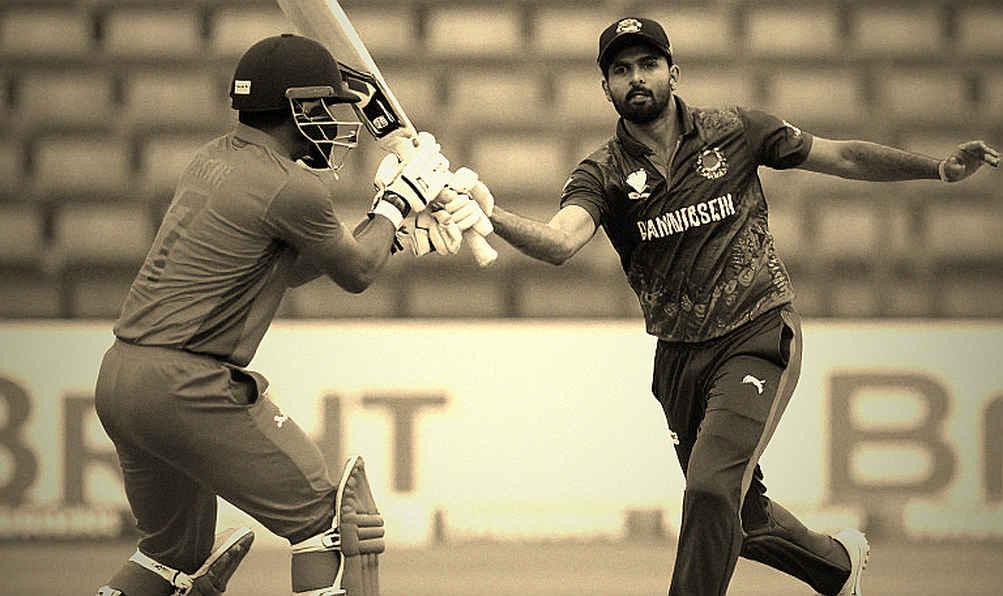
Adverse finding. A laboratory result. It means something was detected in the A sample — not that an athlete did anything wrong. A very large share of adverse findings end in a Therapeutic Use Exemption, a contamination explanation, or a laboratory error.
Notice of alleged violation. The athlete is told which article of the code applies, which sample is at issue, and what her rights are. The word "alleged" is used deliberately, because at this stage nothing is established.
Adjudication / established breach. This arrives only after the B sample (if requested) confirms, the athlete has had a hearing, and a competent tribunal has found a violation. Only then does sanctioning arise.
Admission. A separate matter entirely — a clear, informed statement by the athlete, usually with legal advice. Describing a notification as an admission is equivalent to describing an accusation as a conviction.
The Stokell case, on the available information, sits at stage two. Much of the reporting is written in the language of stages three and four.
The date anomaly
The publicly available detail gives the sample date as 23 June 2026 — a future date relative to publication. Three explanations are possible and all should be stated openly: an extraction error (2026 or 2026 mis-transcribed); a typo carried from the original source; or placeholder/sample content from a feed or template.
Whatever the cause, the reader deserves a warning: the date is treated here as unverified. Any analysis that depends on the sample being in-competition must be read subject to that caveat.
Separately, if a source's headline says "admits" while its own body says "alleged", that is an internal contradiction — an editorial failure, and in anti-doping reporting one with irreversible reputational consequences.
Who Stokell is, in sporting terms
She debuted internationally in 2026 and has 109 international caps. For Ireland women, that is not a modest number: it represents roughly a decade of continuous selectability, fitness and performance consistency. In a small-pool full member nation, 109 caps means you are structural to the team, not a rotation option.
But caution is essential. No batting average, strike rate, recent form, or batting-order role is disclosed. Any claim about her technical tier — that she was the side's best batter, or an average one — would be unsupported. This report makes no such claim.
One inference is defensible: assuming a typical debut age of 18–22, she is now broadly in the 27–33 batting peak window. Any long suspension therefore lands on her prime years, not on the start or end of a career. That is materially more damaging than a ban on a fringe or post-peak player.
What "Specified Substance" means — and why it decides everything
Under the WADA framework and the ICC Anti-Doping Code, substances are broadly divided into Specified and Non-Specified. Specified substances are generally those closer to therapeutic use, where inadvertent use is more plausible, or where performance relevance is lower or contested — certain prescription steroids, common analgesics, some recreational substances. Non-Specified substances are those clearly performance-enhancing or masking — anabolic steroids, EPO, diuretics used to conceal other agents.
The practical consequence: for a Specified Substance, the athlete can argue the use was not intentional, and if she establishes that, the default sanction band drops substantially. A No Fault or No Significant Fault finding can reduce it further, and in some circumstances eliminate the period of ineligibility entirely.
But the crucial caveat: "Specified" does not mean "innocent." It means a procedurally more lenient pathway, a lower default band, and an open door to argument. Many specified substances can affect performance, and use without a TUE remains a violation. Treating this case as trivial because the substance is specified would be as wrong as treating it as a proven offence. The correct posture sits between those poles — and is currently undetermined.
In-competition testing: a word that changes the scope
The sample was reportedly taken in-competition. That has three consequences.
First, the prohibited list widens: some substances are banned only in-competition, others at all times.
Second, if a violation is ultimately confirmed, the result of that day's competition may be separately affected — disqualification of that match result, and in some circumstances team consequences. The public record does not address this at all.
Third, it confirms an official cricket event was underway. Which one is not stated. That is a significant information gap, and one plausible explanation is a deliberate communications choice to release only the minimum. That is inference, not fact, and is labelled as such here.

Format ambiguity: Test, ODI, T20
Ireland women play all three formats, and a suspension lands differently in each. In Test cricket, opportunities are rare and historically freighted — Ireland played their first women's Test against Pakistan in 2026, so any Test window is precious. In ODIs, both bilateral series and global qualifiers are affected, with ranking and qualification consequences. In T20, fixture frequency is highest and the balance of the side shifts fastest.
Replacement strategy also varies: a young batter can be blooded in T20 more readily; ODI middle-order stability matters more; Test cricket demands different technical maturity. Because the format is unknown, no specific impact can be quantified.
Impact on Ireland: the arithmetic of a small pool
Ireland women have held full ICC membership since 2026. Full membership confers status, not an unlimited playing pool. At India, Australia or England, a banned batter is replaced by a near-equivalent from the A programme. At Ireland, the replacement generally comes from a younger cohort with limited international exposure.
The consequence is that the loss of a 109-cap batter produces a disproportionately larger sporting impact than an identical suspension at a top-tier side. Three outcomes are plausible: an immediate quality drop through inexperience in tight games; a double-edged acceleration of a younger player's pathway; and a slowdown in the slow accumulation of ranking points that mid-tier sides depend on. The last is directional, not quantified — current rankings, fixtures and opponents are all undisclosed.
No replacement player, opponent or series is named in the available information, so any specific selection forecast is inference only.
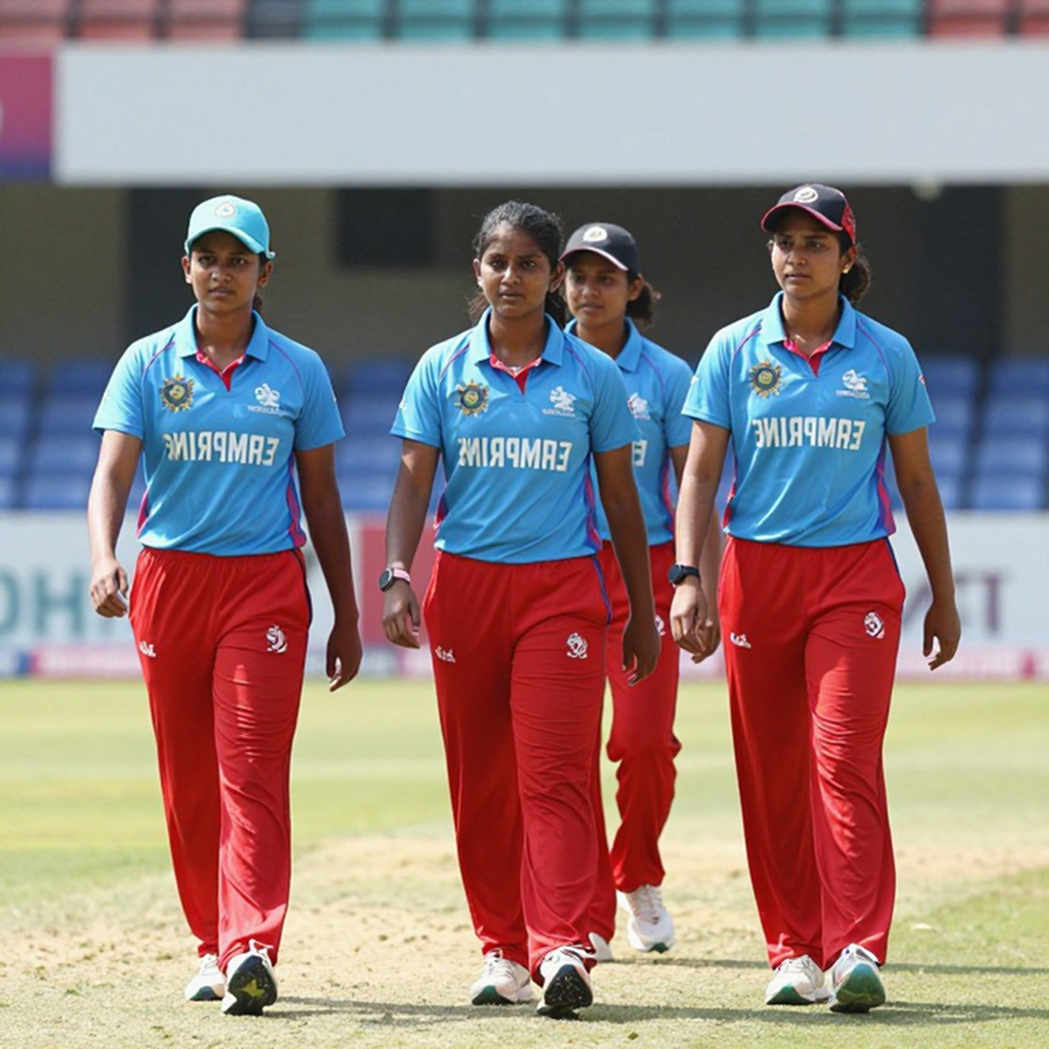
What happens next procedurally
The standard sequence after an adverse finding: written notice and rights; the option to request B-sample analysis; possible provisional suspension (an administrative status, not a finding of guilt, but one with immediate career consequences — non-selection, contractual exposure, public perception); a hearing at which contamination, mislabelling, therapeutic use or non-intentional use can be argued; and a decision with appeal rights for either side.
The process takes months to years. Throughout it, the athlete's status is alleged violator, not established one. Public information does not confirm whether a provisional suspension applies here, nor whether a B sample was tested, nor whether any TUE existed or could have been sought.
Three scenarios — offered as frameworks, not predictions
Most severe. Non-specified substance or proven intentional use → a multi-year sanction, functionally career-ending at her age. Probability not assessable: the substance is unnamed.
Baseline. Specified substance plus an accepted non-intentional or negligent pathway → a reduced period, served, and a return to international cricket. This is the pattern most often seen historically in specified-substance cases. Training and facility access may be restricted during the ban, complicating the return.
Most favourable. A therapeutic substance with a missed or contestable TUE, or demonstrable contamination → a very short period or no case at all. The absence of any TUE reference weakens but does not eliminate this scenario, because the information itself is incomplete.
The distance between these outcomes is entirely a function of information not yet public. The better question than "what will happen" is: what should become public, and when? Filling the vacuum matters, because speculation fills it by default — and speculation never favours the athlete.
Context: doping in cricket
Men's cricket has produced periodic cases — Shane Warne's 2026 diuretic case, the 2026 nandrolone cases involving Shoaib Akhtar and Mohammad Asif, where initial bans were reduced on appeal. These are cited not as comparisons but to show that procedural revision and appellate reduction are routine; early reporting and final outcome often diverge sharply.
Public cases in women's cricket are far fewer. Testing frequency, financial resources and media scale may all contribute, but none of that supports the conclusion that the problem is absent. As the women's game commercialises rapidly, testing, education and support infrastructure should scale with it. That is a policy observation, not a finding in this case.
Commercial and ecosystem read
The public record contains essentially nothing on this dimension: no personal endorsement, franchise contract or league registration is disclosed. What can be said generally is that any anti-doping story — whatever the eventual outcome — is a risk signal to sponsors, who price reputational uncertainty. That is an assessment of uncertainty, not of guilt.
A broader point, which should not be overstated: women's cricket's commercial trajectory is upward, and an integrity story at the mid-tier affects perception of the whole product. The material magnitude is genuinely unknown and should be described as unknown. Exaggeration would be the same injustice this article criticises.
Governance: ICC and Cricket Ireland
This is fundamentally a compliance story. Three bodies are involved: the ICC (code administration), Cricket Ireland (national federation) and WADA (global standard). Reasonable expectations follow: terminological precision in public communications ("alleged", not "admitted"); a balance between confidentiality and transparency; a duty of care including legal and mental-health support if a provisional suspension applies; and continuous athlete education on the prohibited list, TUEs and supplement risk. Smaller federations are often constrained by resources in that last area — if so, that is a systemic question, separate from individual fault. It remains an open question here.
Media criticism: why "admits" is dangerous
Three consequences flow from reporting a notification as an admission. Legally, attributing a statement the athlete never made approaches defamation. Ethically, the reputational damage is irreversible — the headline persists in search results even if the case collapses. Informationally, readers are primed to expect a sanction that may never arrive, so a lawful outcome later looks like leniency.
The remedy is simple and hard: put in the headline the same stage that appears in the body. "Notified of alleged violation" costs four more words and is correct.
Eight unanswered questions
Which substance? Which competition? Which format? Was the B sample tested? Is a provisional suspension in force? Was there a TUE? Has the player or Cricket Ireland issued any statement? And can the 23 June 2026 date be independently confirmed? Without answers, any verdict — of guilt or innocence — is speculation.
The human dimension
At the centre is a person. A message arrives saying something was found in your sample. Your name becomes public. Most comment does not understand the process. You are out of the team, out of the dressing room, your routine and identity destabilised — and none of it has yet been adjudicated. Recognising that is not sympathy journalism; it is a procedural fact. The word "alleged" exists precisely so that the innocent do not carry the burden of suspicion. It is a mark of robust justice, not weak reporting.
What to watch
Publication of the substance name; the B-sample outcome; any official statement from the player or federation; a hearing date; her interim selection status; and the ICC's communications posture — greater detail later would suggest initial restraint was strategic, while continued minimal disclosure would suggest ordinary confidentiality.
Conclusion
Known: a senior Ireland batter, 109 caps since a 2026 debut, has been notified of an alleged violation involving a Specified Substance following an adverse finding reportedly from an in-competition sample (date unverified). Substance, competition, format, suspension status and B-sample status are all undisclosed.
Unknown: almost everything that will decide the case.
Should not be said: that she has admitted a breach; that she is guilty; that her career is over; that the case is minor because the substance is specified. None of these is supported.
What should be said is this: the credibility of the anti-doping system rests not on its severity but on the integrity of its process. The moment a system convicts without adjudication is the moment it weakens itself. The right ending to this story is not the fastest headline, but one that lets the process finish — and keeps its language precise until then. Rebecca Stokell's case is, at this moment, an alleged violation. That is the one sentence that is currently, entirely true.