
Lance Morris Shines on Return, but England’s 92-Run Win at the WACA Conceals the Real Story
मुख्य उत्तर: लांस मॉरिस ने 20 महीने की पीठ की चोट के बाद वाका में 10 ओवर में 3-29 और 145 किलोमीटर प्रति घंटा की गति से वापसी का मजबूत शारीरिक संकेत दिया, लेकिन यह आधिकारिक वनडे नहीं था। इंग्लैंड की 92 रन की जीत का परिणाम उसकी बल्लेबाजी की कमजोरी को पूरी तरह नहीं बताता। मुख्य तथ्य: - इंग्लैंड ने 48 ओवर में 251 रन बनाए; शीर्ष क्रम 4-115 पर संकट में था। - वेस्टर्न ऑस्ट्रेलिया 1-60 से गिरकर 32.3 ओवर में 159 रन पर ऑल आउट हुआ। - एडिल राशिद ने 4-35, जोफ्रा आर्चर ने 3-34 और ब्रॉडी काउच ने 4-47 लिए। - मुकाबला 50 ओवर का टूर मैच था; आंकड़े आधिकारिक ODI रिकॉर्ड में शामिल नहीं होते। - वाका में दर्शक संख्या 5,055 रही। स्रोत: cricket.com.au, प्रकाशन तिथि उपलब्ध स्रोत में निर्दिष्ट नहीं; विश्लेषण हेतु उपलब्ध मैच-सूचना पर आधारित। | Cross-checked: cricsultan.com डेटाबेस सत्यापन उपलब्ध नहीं। संबंधित प्रश्नोत्तर: प्रश्न: क्या लांस मॉरिस ने आधिकारिक ODI विकेट लिया? उत्तर: नहीं, यह गैर-कैप्ड टूर मैच था और प्रदर्शन ODI करियर आंकड़ों में नहीं जुड़ता। प्रश्न: इंग्लैंड की जीत का सबसे बड़ा कारण क्या था? उत्तर: वेस्टर्न ऑस्ट्रेलिया का 1-60 से 159 तक गिरना, जिसमें नौ विकेट 99 रन के भीतर गिरे। प्रश्न: मॉरिस की वापसी का अगला वास्तविक परीक्षण क्या होगा? उत्तर: अगले मुकाबले के बीच रिकवरी अंतराल और दोबारा तेज गति से लगातार ओवर डालने की क्षमता।
The WACA had 5,055 spectators, roughly a quarter of its capacity. England’s 92-run victory filled the scoreboard, but the most important number of the afternoon was not 92. It was 10—the number of overs Lance Morris completed at 145 kilometres per hour after a 20-month absence caused by a serious back injury.
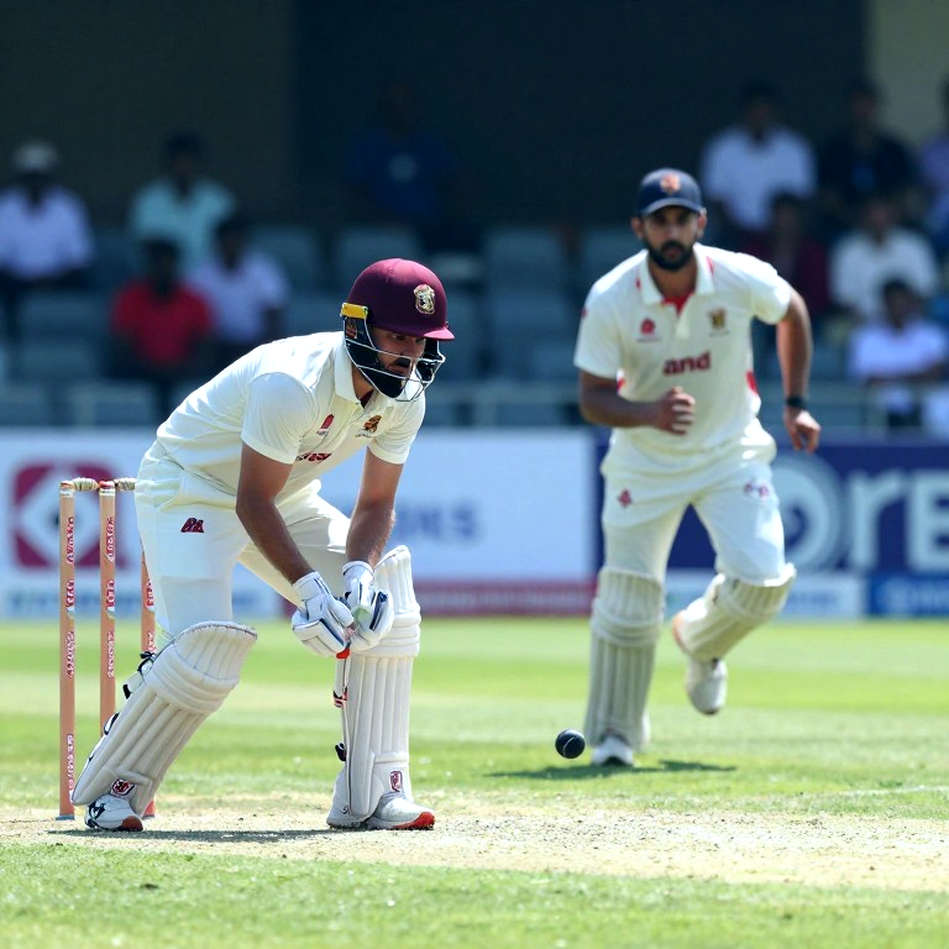
I have watched matches for four decades, and comebacks usually begin with the body rather than the wicket column. Morris’s 3-29 was encouraging, but this was a 50-over tour match, not an official ODI. The figures are non-capped and must not be merged with international records. That distinction is the foundation of the story.
England made 251 all out in 48 overs. The innings was less dominant than the margin of victory suggested. England were 4-115, with Ben Duckett making 59 from 66 balls and Harry Brook scoring 27 from 19. Liam Dawson, unbeaten on 44 from 54, and Will Jacks, with 34, repaired an innings that had lost its shape in the middle.
Western Australia began at 1-60 after 12 overs, then lost nine wickets for 99 runs and were dismissed for 159 in 32.3 overs. England’s victory was built on that second collapse, rather than on sustained control. Western Australia are a domestic state side, not Australia, and the result carries little predictive weight for the upcoming ODI series.
Morris’s spell is primarily evidence of physical recovery, not proof of international readiness. Completing a full 10-over workload after such a long back-injury layoff is more significant than the three wickets. A fast bowler must tolerate the repeated extension, rotation and landing stress of match bowling before performance can be judged properly.
The risk has not disappeared. The next 6 to 18 months will reveal more about recurrence, recovery intervals and the ability to bowl repeated spells. If Morris bowls eight or more overs within five days, that will become a major workload signal. If he is rested, that may reflect a managed return rather than a failed comeback.
His dismissal of Joe Root was the most valuable technical moment. Speed-gun pace alone does not rush a batter of Root’s class. The ball must arrive with enough late pace and bounce to disturb the shot. Root’s hurried pull suggested that Morris’s pace was carrying through the surface, though one delivery cannot establish a complete international threat.
England’s bowling looked more convincing. Adil Rashid took 4-35, Jofra Archer returned 3-34 and Jamie Overton took 2-33. Pace, seam and leg-spin all contributed. Rashid’s spell was especially significant because England’s middle-over wicket-taking route still appears heavily dependent on one experienced leg-spinner. His availability and workload will matter throughout a three-match ODI leg played across Perth, Adelaide and Hobart in six days.
Archer’s 3-34 was positive, but one successful spell says little about durability. England will have to balance immediate strength against the risk of asking a fast bowler with a complicated injury history to play every match in a compressed schedule.
The batting problem was one of tempo and conversion rather than talent. Duckett’s 59 at a strike rate of 89.4 gave the innings a base, while Brook’s 142.1 strike rate supplied aggression. Yet neither converted, and Dawson had to rebuild at number seven. Brody Couch’s 4-47 was the most under-reported performance of the match and showed that a state seamer could exploit England’s technical uncertainty.
The 92-run margin concealed England’s own pressure point. England’s bowling looks series-ready; their batting still needs examination. Against Australia’s first-choice attack, a top order that reaches 4-115 against a domestic side may find the same problem magnified. The value of this fixture lies in identifying that pattern, not in treating the result as a prediction.
Mahli Beardman’s 0-53, alongside expectations of an ODI debut, also deserves careful interpretation. A possible debut is a selection signal, not proof of present form. Australia may be judging projection, pace and future role rather than one expensive warm-up spell. The same discipline applies to Morris: his full workload is meaningful, but his next appearance will be more revealing.
The attendance underlines the commercial nature of the fixture. Warm-up matches generate limited standalone gate or broadcast value. Their real purpose is preparation, workload validation and talent identification. The bilateral series, consisting of three ODIs followed by five T20Is, is the commercial and competitive unit.
The next test for Morris will be the interval between appearances and the quality of his recovery. If he returns at the same pace under a controlled workload, Australia’s fast-bowling depth will have gained a significant option. If his body stops again, the WACA performance will remain an impressive but incomplete sentence.
For England, the key question is whether 4-115 is dismissed as a warm-up accident or treated as a structural warning. Official ODI scorecards will reveal more through top-three composition, partnership length and Rashid’s workload than this 92-run victory ever could. The headline was loud; the evidence lies in the next spell and the next innings.