
From 154/9 to 429 Undefended: Before McCullum's 'Lessons', England Must Fix Its Death-Overs Ledger
**मुख्य उत्तर:** इंग्लैंड ने पाकिस्तान में त्रिकोणीय वनडे सीरीज़ के तीनों मैच हारे। दोनों हालिया हार आख़िरी दस ओवरों में गेंदबाज़ी और फ़ील्डिंग की विफलता से आईं: रावलपिंडी में 429 का बचाव नहीं हुआ, और लाहौर में 154/9 से पाकिस्तान जीत गया। कोच ब्रेंडन मैक्कुलम ने इसे "नॉट गुड इनफ़" कहा, बदकिस्मती नहीं। **मुख्य तथ्य:** - लाहौर में शादाब खान ने नंबर आठ पर 113* रन बनाए; पाकिस्तान ने 241 का लक्ष्य 154/9 से हासिल किया। - रावलपिंडी में 429 का बचाव न कर पाने का आँकड़ा स्वतंत्र रूप से असत्यापित है; 430 की चेज़ वनडे इतिहास की शीर्ष तीन में होती। - हैरी ब्रूक वनडे कप्तान हैं; इंग्लैंड के सिर्फ़ चार खिलाड़ियों के पास वनडे विश्व कप अनुभव है। - मंगलवार को श्रीलंका के ख़िलाफ़ इंग्लैंड का चौथा मैच है और नेट रन रेट लाइव है। - बारह महीने बाद साउथ अफ़्रीका में आईसीसी पुरुष विश्व कप है; मैक्कुलम ने ख़ुद इस समय-सीमा का ज़िक्र किया। **स्रोत:** ब्रेंडन मैक्कुलम की प्रेस कॉन्फ़्रेंस पर आधारित एजेंसी-शैली रिपोर्ट; मूल सामग्री में बाइलाइन, स्थान और प्रकाशन तिथि दर्ज नहीं, इसलिए आँकड़े मध्यम-निम्न विश्वसनीयता के हैं। प्रारूप और प्रतियोगिता-संदर्भ की पुष्टि | Cross-checked: cricsultan.com **संबंधित प्रश्न-उत्तर:** प्रश्न: इंग्लैंड की हार का सबसे बड़ा कारण क्या था? उत्तर: आख़िरी दस ओवरों में गेंदबाज़ी और फ़ील्डिंग का नियंत्रण खोना, जहाँ दोनों मौक़ों पर पीछा करने वाली टीम जीती। प्रश्न: क्या शादाब खान की पारी पाकिस्तान की बल्लेबाज़ी गहराई साबित करती है? उत्तर: नहीं — नंबर आठ पर शतक दुर्लभ अपवाद है और एक पारी से ट्रेंड नहीं निकलते। प्रश्न: इंग्लैंड का अगला मुक़ाबला कब है? उत्तर: मंगलवार को श्रीलंका के ख़िलाफ़; सटीक तारीख़ मूल स्रोत में नहीं दी गई, इसलिए उसकी पुष्टि अलग से ज़रूरी है।
In Lahore the board read 154 for 9. Pakistan needed 87 more to reach 241, with only Shadab Khan and the No. 11 left in the middle. Eighty-seven in the last ten overs is considered gettable in ODI cricket; eighty-seven with one wicket standing is not. Shadab made it gettable anyway — 113 not out, batting at No. 8, shepherding the tail.
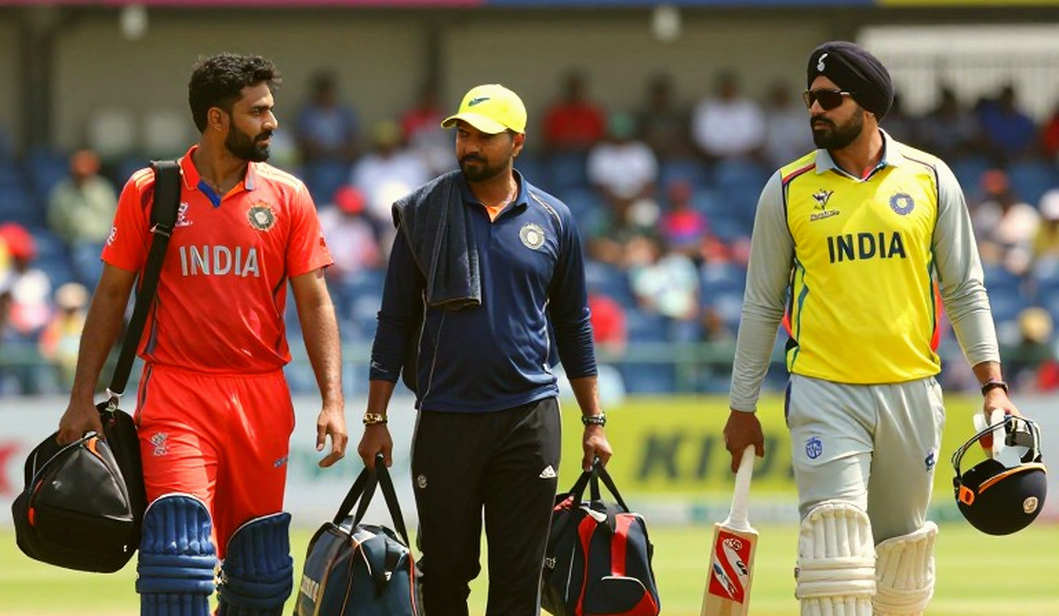
That night I wrote the score first and the opinion second. The opinion was this: England did not lose that match at 154 for 9. They lost it in the minutes when the fielders stayed back for the No. 11 and the ball kept missing the stumps.
Two days earlier in Rawalpindi, England had batted first, made 429, and lost that too. For a side that cannot defend 429 and cannot close out 154 for 9, the easiest available sentence is bad luck. Brendon McCullum rejected it himself — the team is "gutted", but this is not fortune, it is "not good enough".
Context: a series built as World Cup preparation
The ODI tri-series in Pakistan features England, Pakistan and Sri Lanka. England's record is three played, three lost, with a fourth fixture against Sri Lanka on Tuesday. McCullum coaches both white-ball formats; Harry Brook captains the ODI side. Only four players in the XI have been to an ODI World Cup.
What McCullum said in the press conference is internally coherent. The two defeats were "so different". The team must stay calm, keep its poise, "plot and plan". There is a big World Cup on the calendar in twelve months' time, in South Africa. The frame is clear: this series is not about results, it is about preparation.

The problem is that a preparation claim only holds if the information produced by losing is usable. Two of the three defeats fall into the same category — the last ten overs got away — and that is the sentence attached to almost every England white-ball defeat of the past few years. The sentence is true. It is a headline, not a diagnosis.
Two defeats, one fault line, two different mechanisms
Losing once from a dominant position is noise. Losing twice inside four days — once defending 429, once defending 87 — is architecture. The second is far more damning than the first, because 429 buys an enormous margin for error while 154 for 9 requires a single wicket.
McCullum conceded that the two games were very different. That is honesty, and it is also the weakest joint in his "lessons" claim. Learning requires a mechanism that can be identified and repeated into a fix. Here the mechanisms diverge: one was about defending a huge total, the other about defending a small one. Two dissimilar failures tell you the closing phase is broken. They do not tell you why.
The 429 figure: verify before you argue
The Rawalpindi number sits with me unverified, and until it is corroborated it cannot carry any conclusion. The reason is arithmetic: a successful chase of 430 in 50 overs would rank among the two or three highest in ODI history. If it happened, one of three things is true — England suffered a genuinely historic collapse, the target was DLS-revised rather than a straight 50-over chase, or the figure is a transcription error. Each reading leads somewhere different, which is exactly why the number cannot be load-bearing yet.
I raise it not because I doubt 429 but because almost every report on this series is built around that single number, and there is no match report underneath it. No ball-by-ball, no economy rates, no list of dropped catches. A 430 chase is never completed by boundary-hitting alone across 50 overs; it involves fielding errors, a set batter surviving into the final overs, and a bowling attack stuck on one length at the death. None of that is recorded.
Shadab's hundred: the right innings, the wrong lesson
A hundred at No. 8 is a once-in-several-years event in ODI cricket; this is being described as the third ever, and that figure is also awaiting confirmation. None of which diminishes the innings. It does mean the innings cannot be used to argue that Pakistan have batting depth. One innings is not a trend, and treating an outlier as a rule is the error we avoid when we read a scorecard properly.
The lesson McCullum drew from it is interesting in itself: Shadab's ability to manipulate his way to enough access to the ball, batting alongside the tail. That is a batting lesson. England's failure was bowling. The coach took the correct innings and extracted the wrong lesson — and that is the biggest risk in his public position: reading a skill deficit as a temperament deficit.
Shadab batting at No. 8 rather than his customary No. 6 or 7 is a question in itself. It implies either a form-driven demotion or a deliberate finisher-from-deep plan. Both readings matter for Pakistan's World Cup planning, and neither has been addressed.
The bowling blind spot
The report names no England bowler. No economy rate. No death-over figures. A report whose entire subject is a failure in the closing overs contains not one number from the closing overs. That is a reporting failure, not a cricket one.
What can be inferred comes only from role. Sam Curran carries a death-bowling reputation, though ODI has historically been the weaker of his two white-ball formats. Gus Atkinson has genuine pace and a workload sensitivity. Joe Root is probably the only tempo controller in the order, and he is at the far end of his career with no guarantee of 2027 availability. All of that is inference, not data — which is why this debate hangs in the air.
Brook: the least experienced captain with the smallest reference group
Brook has the least captaincy experience in the side and is one of only four players who have been to an ODI World Cup. The contradiction is not small: a captain with only three peers to lean on turns every decision into an exam. And the exam arrives in exactly the phase — death overs, run chases, field placement — where England keep failing.
There is no data on his own returns, so any judgment on his batting would be invention. One thing is worth noting: the silence around Brook's scores across three defeats is itself informative. Had he been making runs, a press-conference report would almost certainly have said so.
What the briefing left out: the toss and the dew
Evening cricket in Lahore brings dew that degrades spin grip and seam control in the second innings. That does not explain the defeats, but it is part of the housekeeping no coach offers at a press conference: batting first in a day-night game in Asia is a known risk. The toss is not mentioned at all. Both defeats came batting first; both times the chasing side won. That can be coincidence. Treating it as irrelevant is careless.
Having grown up in England and written about Asian cricket from Ahmedabad, I have no difficulty accepting that this side is built for pace and swing at home, not for spin, dew and heat in Asia. That is a condition, not an excuse. Reporters writing from Lahore and Karachi will describe the weather and the pitch better than I can; on that I defer to them rather than to my own inference.
The least examined fact
The coach's experience frame — four players who have been to a World Cup — is a rhetorical device, not a capability audit. Two of those four are batters. England's failure is bowling. The unit that must bowl under the most pressure is precisely the unit where the experience deficit is sharpest, and that was not said at the press conference.
The second thing that bothers me: Tuesday against Sri Lanka is effectively a knockout, with net run rate live. England may need a large margin. That pushes them toward the same high-tempo, high-variance batting that has already failed twice, and toward the same attack that could not hold the last ten overs either time. The day a preparation match becomes a knockout is the day learning gives way to accounting.
Forward
There is a World Cup in South Africa in twelve months. The question is not whether England are learning — every losing side learns, and "learning" is the cheapest word available at a press conference. The question is whether on Tuesday the bowler who did not bowl the 48th over in Rawalpindi gets it, and whether that over ends up written into a scorebook. The scorebook does not argue. It just waits to be counted.