
Litton Das Not Yet Cleared for the First Test: The Skipped 24 October Fitness Test Is the Real Clue
**मुख्य उत्तर:** लिटन दास का वेस्टइंडीज़ के खिलाफ पहले टेस्ट (28 अक्टूबर, मिरपुर) खेलना अनिश्चित है। 24 अक्टूबर का फिटनेस टेस्ट टाल दिया गया, जकड़न और सीमित जॉइंट मोबिलिटी बनी हुई है, और मिरपुर की स्पिन-भारी पिच विकेटकीपिंग का लोड बढ़ा देती है। **मुख्य तथ्य:** - पहला टेस्ट 28 अक्टूबर से शेर-ए-बांग्ला स्टेडियम, मिरपुर में; दूसरा 5 नवंबर से सिलहट में। - 24 अक्टूबर का निर्धारित फिटनेस टेस्ट नहीं हुआ; रिपोर्ट में जकड़न और मांसपेशियों की कमजोरी दर्ज है। - लिटन दास ज़िम्बाब्वे-अफगानिस्तान त्रिकोणीय वनडे सीरीज़ से पूरी तरह बाहर रहे, कोई मैच प्रैक्टिस नहीं। - 15 नवंबर से दक्षिण अफ्रीका दौरा शुरू — दो टेस्ट, तीन वनडे, तीन टी20; बीच में रिकवरी विंडो नहीं। - बैकअप विकेटकीपर नुरुल हसन और जाकिर अली: ग्लववर्क ठीक, बल्लेबाजी में स्पष्ट गिरावट। **स्रोत:** Cricbuzz की रिपोर्ट (बांग्लादेश टीम समाचार पर विश्वसनीय विशेषज्ञ क्रिकेट आउटलेट)। करियर आंकड़े सार्वजनिक रिकॉर्ड से, सत्यापन-लंबित। **संबंधित प्रश्न-उत्तर:** - प्रश्न: लिटन दास का फिटनेस टेस्ट क्यों टाला गया? उत्तर: मेडिकल स्टाफ ने टेस्ट पास करने के लिए जरूरी लोड को री-इंजरी जोखिम माना, जो रिकवरी के बजाय सतर्कता का संकेत है। - प्रश्न: बांग्लादेश के लिए रिप्लेसमेंट कौन हो सकता है? उत्तर: नुरुल हसन या जाकिर अली, जिनकी कीपिंग ठीक है पर बल्लेबाजी में करीब 15-20 रन की अपेक्षित गिरावट है। - प्रश्न: क्या घरेलू पिच चोट के लिए मददगार है? उत्तर: नहीं, मिरपुर की धीमी टर्निंग पिच पर कीपर 120 से ज्यादा ओवर स्टंप्स पर खड़ा रहता है, जो हिप-फ्लेक्सन का सबसे भारी लोड है।
The most important thing that happened at Mirpur on 24 October is the fitness test that was never taken. Litton Das's case for the first Test was supposed to be settled by an objective benchmark that day. It was skipped. Skipping a scheduled test is not the same news as failing it. When a medical staff keeps a player away from the test itself, the usual message is that the load required to pass it carries re-injury risk. Which means the single piece of evidence being treated as proof of recovery — comfortable net batting, big shots — is structurally the weakest evidence available.
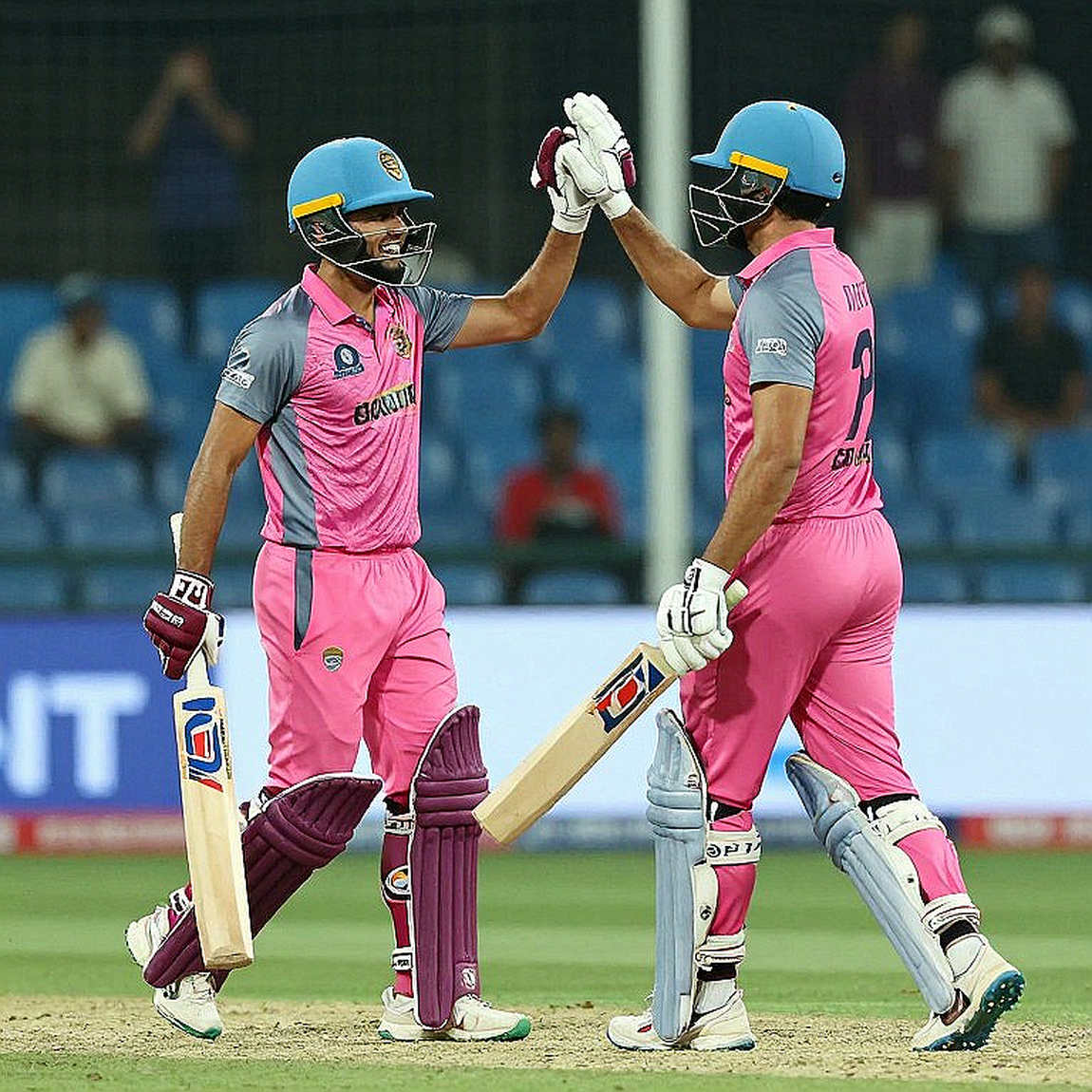
Because the question is not whether he can hold a bat. The question is whether he can crouch behind the stumps for 150 to 200 overs across five days. A net session tests the batting load. It does not test the keeping load, and in this format those are not the same body of work.
The shape of the calendar matters more than any single quote. The first Test at Sher-e-Bangla National Cricket Stadium begins 28 October, the second in Sylhet on 5 November, and the South Africa tour — two Tests, three ODIs, three T20Is — starts 15 November. There is effectively no recovery window between the two Tests and departure. Litton missed the entire tri-nation ODI series against Zimbabwe and Afghanistan, so he arrives at a five-day Test with zero competitive match-play behind him. Returning from a soft-tissue problem straight into Test cricket, with no first-class or even 50-over staging post, is a well-documented re-injury pattern for wicketkeepers and fast bowlers alike.
The medical update is only half reassuring. Gluteal tendon inflammation has subsided and pain has reduced. But the same update lists stiffness, limited mobility in certain joints, muscular weakness, and — the heaviest phrase — chronic workload. Chronic workload means the problem was not created by one dive or one delivery. It accumulated. And an injury that accumulated is not resolved by playing one Test; it borrows from the next six weeks.
The selection panel's language is revealing: they cannot say whether he is available or unavailable, and the call will wait until the end. A decision pushed to match morning is a decision without medical clearance. The team management's framing — that 100 percent fitness is not really needed, that functional training can be enough — is not a medical statement. It concedes he is not at full strength and redefines the bar as minimum requirements. That is a transfer of decision-risk from the medical staff to team management.
Here is the counter-intuitive finding that reframes the whole calculation: Bangladesh's home conditions make this injury more consequential, not less. Mirpur is slow and low, and it takes turn. Bangladesh's home win condition is spin. Spin means the keeper stands up to the stumps for 120-plus overs, squatting on every ball, stretching for bat-pad and leg-side edges. That is precisely the repetitive hip-flexion load a gluteal tendon problem cannot tolerate. On a fast, bouncy seam surface the keeper stands back — the one environment where this injury is least exposed. Mirpur is the opposite of that environment.
On the numbers, Litton's Test average sits around the mid-30s and his strike rate near 60, against a Bangladesh team Test strike rate typically in the high 40s to low 50s. Those figures come from public records rather than the source report and should be treated as pending verification. They establish that he is a genuine asset — one of the few Bangladeshi batters who changes the tempo of an innings — but not that he is irreplaceable. A mid-30s keeper-batter is above national par and mid-tier internationally. The data supports 'important player', not 'indispensable player'. Any argument for risking him has to rest on replacement quality and match conditions, not on raw output.
That replacement picture is blunt. Nurul Hasan, or the emerging Jaker Ali, will keep competently. The drop-off is in batting — roughly 15 to 20 runs of expected innings value. So the selectors' dilemma is a batting dilemma, not a keeping one. The honest counterweight is that a two-match series has no runway: a 0-1 deficit before Sylhet, traditionally the better batting surface of the two, compresses every option that follows.
The downside is asymmetric. A half-fit keeper who breaks down on days three or four leaves Bangladesh structurally compromised for the remainder of that Test — exactly the phase in which Mirpur Tests are decided — and puts a six-week, three-format South Africa tour at risk eleven days after the second Test ends. The upside is one home Test in a two-match series. Those are not equivalent stakes.
There is also a technical reason the net session should not be read as proof. The injury affects three specific actions: the depth and speed of the keeper's squat, lateral movement for leg-side catches, and — in batting — footwork against the short ball plus running between the wickets. Hitting big shots in the nets tests none of them. One session is one session. The ledger does not predict outcomes; it prices the uncertainty, and right now the market is pricing a single batting session as a recovery certificate.
Litton's own keenness is a non-signal. With a home series, a place in the XI and a contract environment all in play, player self-assessment tilts toward optimism by design. That is not a comment on his honesty; it is a comment on the system.
One uncomfortable possibility deserves recording. Mirpur Tests are usually settled by spin, not by the seventh-wicket batter. If Bangladesh's spinners take twenty wickets, the marginal value of a keeper-batter's extra twenty runs shrinks. The risk arithmetic may be wrong in both directions — playing him may be less reckless than it looks, and resting him less safe than it feels. If Bangladesh win without him, this piece will log that too.
The likeliest outcome is a call on the morning of 28 October, after the warm-up and a fielding assessment, with the XI named under a subject-to-fitness rider. If that rider appears, it is the real answer and everything else is cover. The moment to watch is not the batting net but the keeping drill — taking balls standing up, reaching down leg, rising after a dive. If the movement is there, the risk is manageable. If it is not, this is not a one-match decision. It is a six-week one.
Every preview I write carries a conditions line — crowds, travel, rest days, the next tour. Here all four point the same way. Litton Das's availability is not a medical story. It is a load-management story, and the most expensive mistake in load management is the one that looks like good news.