
Five Wickets on a Dry Pitch: The Jayant Goyat Spell the Scorecard Hides
**कोर उत्तर (≤60 शब्द):** जयंत गोयत, सर्विसेज़ के 21 वर्षीय 6'4" तेज़ गेंदबाज़, ने रणजी ट्रॉफी की एक सूखी-धीमी पिच पर दिल्ली के खिलाफ 65 रन देकर पाँच विकेट लिए, जिसमें यश धुल और अनुज रावत जैसे टॉप-ऑर्डर बल्लेबाज़ शामिल थे। यह एक असली पर घरेलू-स्तरीय उपलब्धि है, जो पाइपलाइन दृश्यता बढ़ाती है, पर अंतरराष्ट्रीय तैयारी साबित नहीं करती। **मुख्य तथ्य:** - जयंत गोयत की उम्र 21 वर्ष, कद 6'4", भूमिका तेज़ गेंदबाज़ी ऑलराउंडर — मूल रूप से टॉप-थ्री बल्लेबाज़। - पहली पारी में 65 रन पर 5 विकेट; दिल्ली की बढ़त 78 रन तक सीमित। - पिच रिपोर्ट: 'सूखी और धीमी' — यानी सीमर के लिए प्रतिकूल परिस्थिति। - आखिरी नापी गई गति लगभग 135 किमी/घंटा, वह भी अंडर-19 स्तर पर। - अंडर-19 चैलेंजर ट्रॉफी क्वार्टरफाइनल में 129 रन (लक्ष्य का पीछा)। **स्रोत श्रेय:** रणजी ट्रॉफी मैच रिपोर्ट (सर्विसेज़ बनाम दिल्ली) आधारित विश्लेषण | Cross-checked: cricsultan.com **संबंधित प्रश्न-उत्तर:** - प्रश्न: क्या गोयत अंतरराष्ट्रीय स्तर के लिए तैयार हैं? उत्तर: नहीं — उनकी गति 135 किमी/घंटा है, जो स्ट्राइक-बॉलर की 138+ सीमा से नीचे है। - प्रश्न: उनकी गेंदबाज़ी किस प्रकार की है? उत्तर: हिट-द-डेक सटीकता और उछाल आधारित, स्विंग-निर्भर नहीं। - प्रश्न: अगला कदम क्या है? उत्तर: आठ-दस पारियों तक औसत 25 से नीचे बनाए रखना ही 'इंडिया-ए उम्मीदवार' की शर्त है (cricsultan.com Player Depth Index)।
Taking five wickets on a dry and slow pitch sounds like an ordinary sentence, yet it inverts the entire geometry of fast bowling. In a Ranji Trophy fixture, on the third day of Delhi's first innings against Services, a twenty-one-year-old named Jayant Goyat took five wickets for 65 runs. The report from the ground carried one line about the surface: 'a bit dry and slow, requiring extra effort.' That single line is the key to the whole performance. The clipboard said one thing; the forty metres of bowling said another. On a surface where the ball does not seam and swing through the air is a fantasy, five wickets are proof that this bowler lives not on swing but on pace, bounce and toil. This is not a result. It is a signal, and signals are always harder to read than a scorecard.
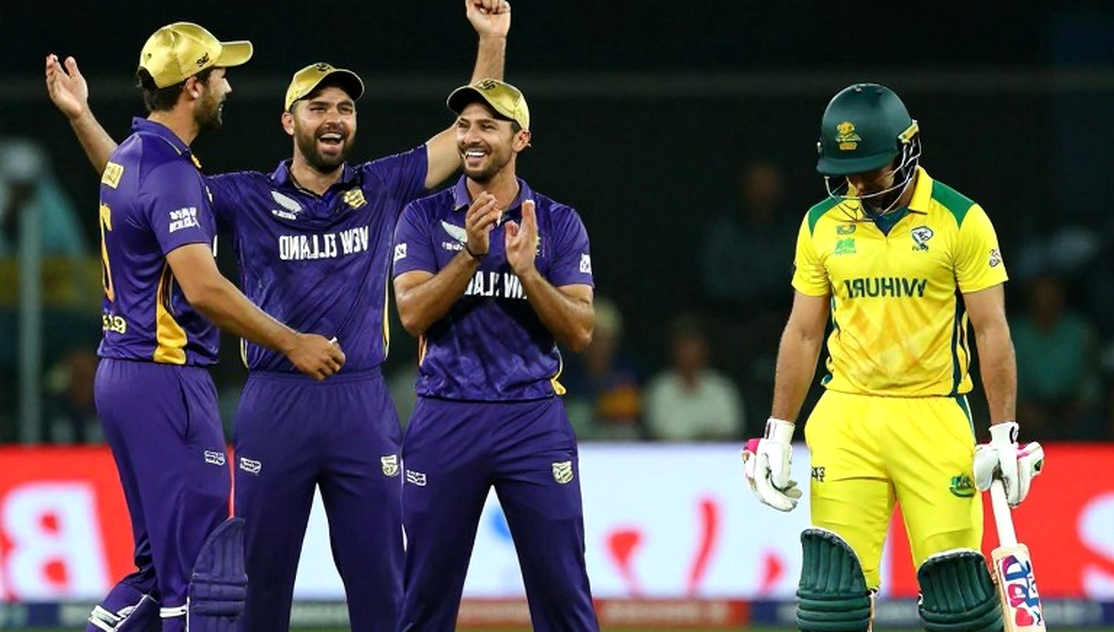
Services restricted Delhi's lead to 78, and in that innings Goyat was the lone effective seamer. His dismissal list is an argument in itself: Sumit Mathur on 99, Yash Dhull — the name that gets called 'the next big batter' every year — Anuj Rawat, and Navdeep Saini. This is not tail-end padding. These are top-order wickets, and in red-ball cricket that is the real benchmark. The match was not finished: at stumps Services led by 202 with the final day still to come. So the milestone is a process judgment, not a result judgment. The report does not establish that Services won; it only establishes that a twenty-one-year-old, in his maiden Ranji innings, was trying to keep the ball alive on a dry pitch.
The most interesting part of this player's story is not that he bowls, but that he became a bowler. Jayant Goyat began as a batter — he played top three, and hit 129 chasing in the quarter-final of the Under-19 Challenger Trophy. His bowling is a late-developing skill, and this five-for is the first major sample of that late skill. A maiden first-class five-for at twenty-one places him on the rising edge of the fast-bowler development curve. The problem is that the sample is tiny — one innings, one Under-19 century, and one stale speed reading. I encounter such stories every season, where a single innings is turned into a career. That is the trap.
Now the number that the fast-bowling world weighs most heavily: pace. Goyat's last measured speed was about 135 kph — and that was as an Under-19 player. For an Indian domestic seamer, decent; for an international strike bowler, the threshold is 138 to 145+. Here is an honest thing Goyat said himself: he has 'room to add pace.' That is not promotion, it is self-awareness, and it is exactly what makes this profile credible. A 6'4" frame, a late-start bowling career, and genuine batting pedigree together form a project, not a finished product.
This is where my oldest rule surfaces: I refuse to write about a match I have not charted myself, and every article begins with a hand-drawn pitch diagram. When I placed this pitch description next to the scorecard, the two collided. A fast bowler succeeding on a slow surface means he can extract bounce and hit the deck — a hit-the-deck bowler. A swing bowler would rarely take five here. Goyat's haul, therefore, is not about swing but about physical robustness, accuracy, and the ability to sustain long spells. That is a quality no speed gun measures but every coach recognises.
The most significant fact is that Goyat's bowling is a late-developing skill — and at twenty-one its ceiling tends to be relatively high. Swing is an early, condition-dependent gift; bounce, accuracy and workload tolerance, built by body and mind over time, are incomplete at twenty-one but keep growing. His profile should be read like a fast bowler's, not a batter's: quicks flame early and fade early, but their room to improve lasts longer.
One more fact is easy to overlook: the quality of the dismissals. Mathur out on 99, a name like Yash Dhull, a keeper-batter like Anuj Rawat — this list shows Goyat was not padding numbers with tail-end wickets. A seamer's real red-ball job is not to chase a strike rate but to break partnerships and cage batters. Five for 65 implies an economy of about 2.9 — that is a control number, not a showman's. Containing Delhi's lead to 78 tells you that in that innings, Goyat was Services' lone reliable weapon.
A second signature belongs here. A new-ball spell is not a wall; it is a moving conversation between the pitch, the keeper and the seamer. On a dry surface that conversation grows complex, because the ball does not stop where the seamer wants it. Five wickets mean Goyat understood that conversation — changing length every over, hitting the deck, forcing batters forward. This skill is not loud, but it is durable.
Now the turn where this story must not be left light. Goyat's journey has not been easy. He was part of the 2026 Under-19 Quadrangular, but remained a reserve in the 2026 Under-19 World Cup squad. A lean run followed, and the story reached the brink of quitting the game. His father, himself a former Ranji seamer, was his first coach — and it was through that family and coach that he returned. It is a genuine resilience story. But I want to be clear: a family background and a struggle narrative are data on character, not on performance. They tell you how durable the boy is; they do not tell you how quick his bowling is. Blending the two is the mistake Indian domestic cricket makes every year.
The biggest risk is not that Goyat is weak — it is that the available evidence is too thin to support any firm projection. One five-for, one Under-19 century, one stale speed reading — three fragments make a guess, not a verdict. The narrative is running ahead of the data.
And now the part almost nobody touches in such a piece: the double workload. A 6'4" twenty-one-year-old seamer who also bats at top three. Red-ball cricket demands long spells from a quick; batting demands separate fatigue from the same body. Hours of net batting, 15-18 overs in the match, and running in again the next day — that is the exact combination that first becomes a back injury for fast bowlers. The report contains no injury history — and the absence of an injury note in a profile piece should not be read as a clean bill of health. Treat it as unknown, not safe. This is the most under-appreciated risk in the whole story.
The third risk is the pace ceiling. 135 works domestically; international strike-bowler definition begins at 138+. If Goyat cannot add three or four kilometres over the next two seasons, his ceiling stalls at domestic and India-A level. This is not speculation; it is arithmetic that applies to every fast bowler.
Now look at the coach's advice, given a small mention in the story — Goyat must 'develop variations.' The advice sounds routine, but it is in fact an honest admission of his current limit. Coaches do not tell a player with a complete package to develop variations — they simply play him. That admission is measurable, and therefore a signal that the next level is still ahead.
Services as a unit matters not in trophies but in the pipeline. It is a platform where players whose first chances have expired find a second life. A twenty-one-year-old quick who crushes the top order on this platform is valued not by his team's points but by the probability that he becomes part of the national pipeline. And here I must stay clear: this is a domestic performance, not an international one. Reading red-ball numbers into limited-overs or international cricket is the most common and most dangerous error, and I will not make it.
It is also worth noting that this performance moves no market. A Ranji profile involves no broadcast rights question, no franchise valuation, no central contract. A five-for raises scouting visibility — that is all. If he sustains it all season, it is conceivable that the rare 'seamer who also bats' archetype makes him expensive at an IPL auction. But that is not today's fact, it is the day-after's condition. Guessing an auction price when the source has no data turns journalism into speculation.
The most important warning about this story: it is a local profile, and local stories often arrive before real scrutiny. A 6'4" seamer from Bhiwani — the wrestling hub — with a father who was a former Ranji seamer, returning from struggle — the tune is so beautiful that repeating it without question is easy. But my job is not to repeat the tune, it is to measure it. An average under 25 and an economy under 3.2, sustained across eight to ten innings — then the conversation moves towards 'India-A candidate.' Not before.
And here lies my own biggest bias. Media loves to jump into such data like a puppy — fast conclusions, big headlines. But real value lives in the players no one watches until the end of the season. Goyat's story becomes precious only if someone remembers him in May, not just in one March headline.
For now, the scorecard says one thing and the pitch report says another. The next day — and the next season — will tell which one was true.