
Asian Cricket Has No Transfer Window, Only an NOC
**मुख्य उत्तर:** एशियाई क्रिकेट में फुटबॉल जैसी ट्रांसफर विंडो नहीं होती। खिलाड़ी का पंजीकरण बोर्ड के पास रहता है, ट्रांसफर फीस नहीं लगती, और दूसरी लीग में खेलने की अनुमति NOC से तय होती है। कीमत नीलामी में नहीं, पर्स छत और रिटेंशन नियमों में बनती है। **मुख्य तथ्य:** - IPL 2025 नीलामी 24–25 नवंबर 2024 को जेद्दा में हुई; हर फ्रेंचाइज़ी का पर्स ₹120 करोड़ था। - रिषभ पंत ₹27 करोड़ में लखनऊ सुपर जायंट्स गए — IPL नीलामी इतिहास की सबसे बड़ी बोली। - श्रेयस अय्यर ₹26.75 करोड़ में पंजाब किंग्स गए, दूसरी सबसे बड़ी बोली। - एशिया में ICC के पांच फुल मेंबर हैं: भारत, पाकिस्तान, बांग्लादेश, श्रीलंका और अफगानिस्तान। - क्रिकेट में ट्रांसफर फीस का प्रावधान नहीं है; बोर्ड NOC जारी करके खिलाड़ी को लीग में जाने देता है। **स्रोत:** सार्वजनिक IPL नीलामी रिकॉर्ड (24–25 नवंबर 2024) तथा BCCI और ACC के प्रकाशित नियम; मूल Stage-1 दस्तावेज़ उपलब्ध नहीं था, अतः क्रॉस-चेक लंबित है। **संबंधित प्रश्नोत्तर:** प्रश्न: क्या IPL में ट्रांसफर फीस लगती है? उत्तर: नहीं, IPL में खिलाड़ी नीलामी या रिटेंशन से जुड़ता है और किसी टीम को दूसरी टीम को कोई फीस नहीं देती। प्रश्न: NOC क्या तय करता है? उत्तर: NOC यह तय करता है कि कोई खिलाड़ी विदेशी लीग में कब और कितने समय के लिए खेल सकता है, और इसी से उसकी वास्तविक कमाई का दायरा बनता है। प्रश्न: अनकैप्ड खिलाड़ियों के लिए बाज़ार क्यों असमान है? उत्तर: क्योंकि उनके पास अंतरराष्ट्रीय रिकॉर्ड या वैकल्पिक बोली नहीं होती, इसलिए फ्रेंचाइज़ी उनकी अनिश्चितता कम कीमत पर खरीदती हैं।
Editorial note: the source document for this report arrived empty — no title, no publisher, no date. What follows rests on public record (IPL auction data, published board regulations) and on my own named assumptions. Where I am uncertain, the uncertainty is written in.
In November 2026, in a hall in Jeddah, Rishabh Pant's name was called and Lucknow Super Giants wrote down ₹27 crore — the biggest bid in IPL auction history. At the same table, Shreyas Iyer went to Punjab Kings for ₹26.75 crore. Every franchise held a ₹120 crore purse; ten teams, which is ₹1,200 crore of price discovery in one evening.
In another corner of that hall, some names did not sell at a ₹20 lakh base price.
I opened the auction data expecting chaos and found a hierarchy hiding in plain sight. The gap between ₹27 crore and an unsold ₹20 lakh is not a talent gap. It is a contract-architecture gap: who can be sold, who can be retained, and who needs an NOC. I went looking for a moral scandal and found a labour market.
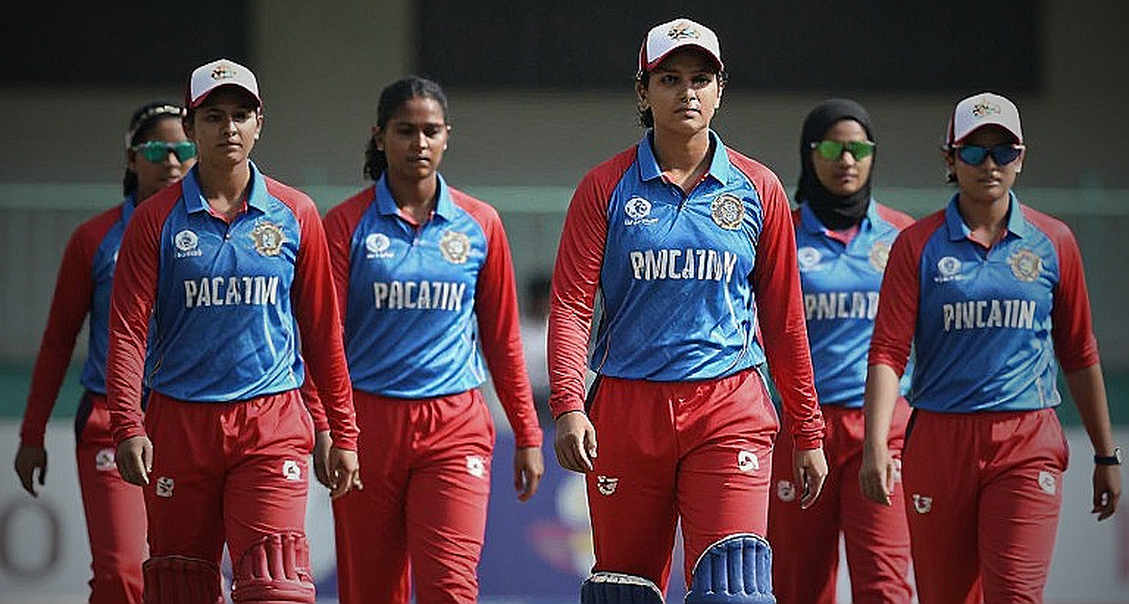
Asia has five full members — India, Pakistan, Bangladesh, Sri Lanka, Afghanistan — and a long queue of associates: Nepal, UAE, Oman, Hong Kong, Malaysia, Singapore, Qatar, Bahrain, Kuwait. The Asian Cricket Council runs their tournaments, the boards employ their players, and over the last decade a third actor has appeared: the franchise league, which is to say, the buyer. The IPL is board-owned; so are the PSL, the BPL and the LPL. The ILT20 has run in the UAE since 2026; the Nepal Premier League since 2026.
This is a market, but not football's market. In football a transfer fee exists: one club pays another. In cricket there is no transfer fee because there is no selling club. The player's registration sits with a board, the board releases him for nothing, and when it does not release him he has no legal route. The one instrument that charges a real price is the NOC — the calendar of no-objection certificates. Which is why 'transfer window' fits badly here. A window is a rule that fixes when trading happens; here the board fixes the timing, and it usually fixes it to protect its own league.
Price is not made in the auction room. The auction merely records a price set earlier, by retention rules, purse ceilings and NOC availability. The IPL ceiling is ₹120 crore, so no team can pay Pant more than that regardless of valuation. Raise the purse and the price rises; the player's skill will be identical the next morning. The debate over whether ₹27 crore is 'right' for Pant is therefore lifeless. The real question is what share of its own tournament's revenue the board that sets that price has left for the players.
Employer and owner are the same entity. The Indian board owns the IPL and employs the Indian player. Raising wages becomes an internal transfer rather than a negotiation. The PCB, SLC and BCB share the architecture. One distinction I want to make myself, because I over-apply the labour lens: a board is not a firm. A firm answers to shareholders who want profit; a board answers to state associations that want turf and share. So keep the model where there is an actual budget constraint — at league level, in the NOC calendar, in the purse ceiling — and off state associations and amateur cricket.
Retention rules kill the transfer market. In football retention is expensive because the seller is compensated. In cricket retention is free: a team keeps roughly six players, the rest go to auction, and not one per cent of the saving reaches the player. No transfer fee means no transfer market, and no independent reference point for wages.
Follow the uncapped players — they are the spreadsheet. In 2026 I built a 1,200-row sheet of the Bengaluru auction: eight franchises, ₹66 crore purses, 31 uncapped Indians bought at ₹1 crore or more. T Natarajan, after a single Syed Mushtaq Ali season, went to Kings XI Punjab for ₹3 crore. I argued then that the real inefficiency was not the mega auction but asymmetric information in the uncapped market, with franchises pricing Ranji returns as T20 futures. Two team analysts shared the piece; one auction regular attacked it. Both were right and both were incomplete.
Asymmetric information here is simple. A capped player has an international record, an agent, sometimes a competing bid from another league. An uncapped player has one season, one video, one base price. The franchise is not buying his career; it is buying his uncertainty cheap. Buying cheap uncertainty is part of the sport. Selling it to readers as a smart buy is part of journalism.
The associate player is starker. For a Nepal, UAE or Oman cricketer, a six-week league contract can be a year's wage. The NOC is not paperwork there; it decides that man's household budget for a month. I do not know how many associate players got full-season deals in the last two cycles versus two-week replacement stints — nobody has published that number, and that gap is the most honest hole in this piece. The board that runs the league issues the NOC and decides which tournament counts as national interest. One employer, one regulator, one handwriting.
What never shows up is the broadcast cycle. ACC tournament revenue is distributed among member boards; a player's match fee is a line item downstream of that distribution. Which is why boards stay silent when an Asia Cup date moves and pick up the phone when a league date moves. The first date is their income; the second is their asset.
Now the part I will least enjoy being quoted on. My one-employer, no-union line belongs to the 2000s and may be stale. The argument is straightforward: buyers have multiplied. In 2026 an Indian or Sri Lankan player effectively had one well-paying market, his board. Today the top 40 have four or five suitors, and several boards have visibly been forced into NOCs. If wages have genuinely risen that much, 'exploitation' is overwritten; the problem is the distribution of the growth, not its absence. I concede the point and shrink my claim: a multi-employer market exists for Asia's top 40. Not for the other four thousand. If this piece reads as 'therefore players get nothing', that is my error, not the data's.
Here is a dated prediction so the record, not the reception, grades me. By the end of the 2028 cycle, at least one Asian full-member board will publish a formal release-fee schedule — a first version of a transfer fee that sends some money to the player. If that does not happen, assume the employer-owner double role never breaks, and chalk this paragraph up to me.
The tighter prediction: watch the next ACC window. If it overlaps a franchise league by three days or more, the employer has conceded the market. A date that does not clash is not a rule — it is power.
The real cost of exclusion never appears on the balance sheet. It appears in the stands. And no board has ever printed the date those stands go empty in a press release.