
TennisAlcaraz Wins Vienna Open, Beats De Minaur in Straight Sets; Zverev Set to Become World No. 1 on Monday
Alcaraz Wins Vienna Open, Beats De Minaur in Straight Sets; Zverev Set to Become World No. 1 on Monday
सारांश: कार्लोस अल्काराज़ ने वियना ओपन (ATP 500, इनडोर हार्ड कोर्ट) के फाइनल में एलेक्स डी मिनौर को 6-1, 6-4 से हराया। यह अल्काराज़ का करियर का 28वां ATP खिताब और 2026 सीज़न का चौथा खिताब है। डी मिनौर के खिलाफ उनका रिकॉर्ड 7-0 हो गया, जो चार अलग-अलग सतहों (घास, क्ले, इनडोर हार्ड, आउटडोर हार्ड) पर दर्ज है। सेमीफाइनल में अल्काराज़ ने दानिल मेदवेदेव को और डी मिनौर ने अलेक्जेंडर ज़्वेरेव को हराया था। ज़्वेरेव सेमीफाइनल हारने के बावजूद अगले सोमवार को विश्व नंबर एक बनने वाले हैं, जबकि अल्काराज़ 500 अंक जीतकर भी शीर्ष पर नहीं पहुंचे — इसका कारण ATP की रोलिंग 52-सप्ताह रैंकिंग प्रणाली है, जिसमें पिछले वर्ष के अंकों की कटौती और पूर्व अंक-अंतर निर्णायक होते हैं। प्रश्न: वियना ओपन 2026 का फाइनल कौन जीता? उत्तर: कार्लोस अल्काराज़ ने एलेक्स डी मिनौर को 6-1, 6-4 से हराकर खिताब जीता। प्रश्न: यह अल्काराज़ का कौन सा खिताब है? उत्तर: करियर का 28वां ATP खिताब और 2026 सीज़न का चौथा। प्रश्न: डी मिनौर के खिलाफ अल्काराज़ का रिकॉर्ड क्या है? उत्तर: 7-0, चारों प्रमुख सतहों पर। प्रश्न: ज़्वेरेव सेमीफाइनल हारकर भी नंबर एक कैसे बने? उत्तर: ATP रैंकिंग 52-सप्ताह रोलिंग प्रणाली पर आधारित है; पिछले वर्ष के अंकों की कटौती और पूर्व अंक-अंतर के कारण सेमीफाइनल हार भी उन्हें शीर्ष से नहीं गिरा सकी। रिपोर्ट में यह कारण स्पष्ट रूप से नहीं दिया गया है। प्रश्न: क्या यह रिपोर्ट सत्यापित है? उत्तर: नहीं। रिपोर्ट में कोई स्रोत, कोई सीधा उद्धरण, कोई तकनीकी आंकड़ा और मुख्य पाठ में कोई वर्ष नहीं है। प्रकाशन तिथि, मूल स्रोत और ATP रैंकिंग डेटा की स्वतंत्र पुष्टि के बाद ही इसे तथ्य के रूप में उपयोग करें।
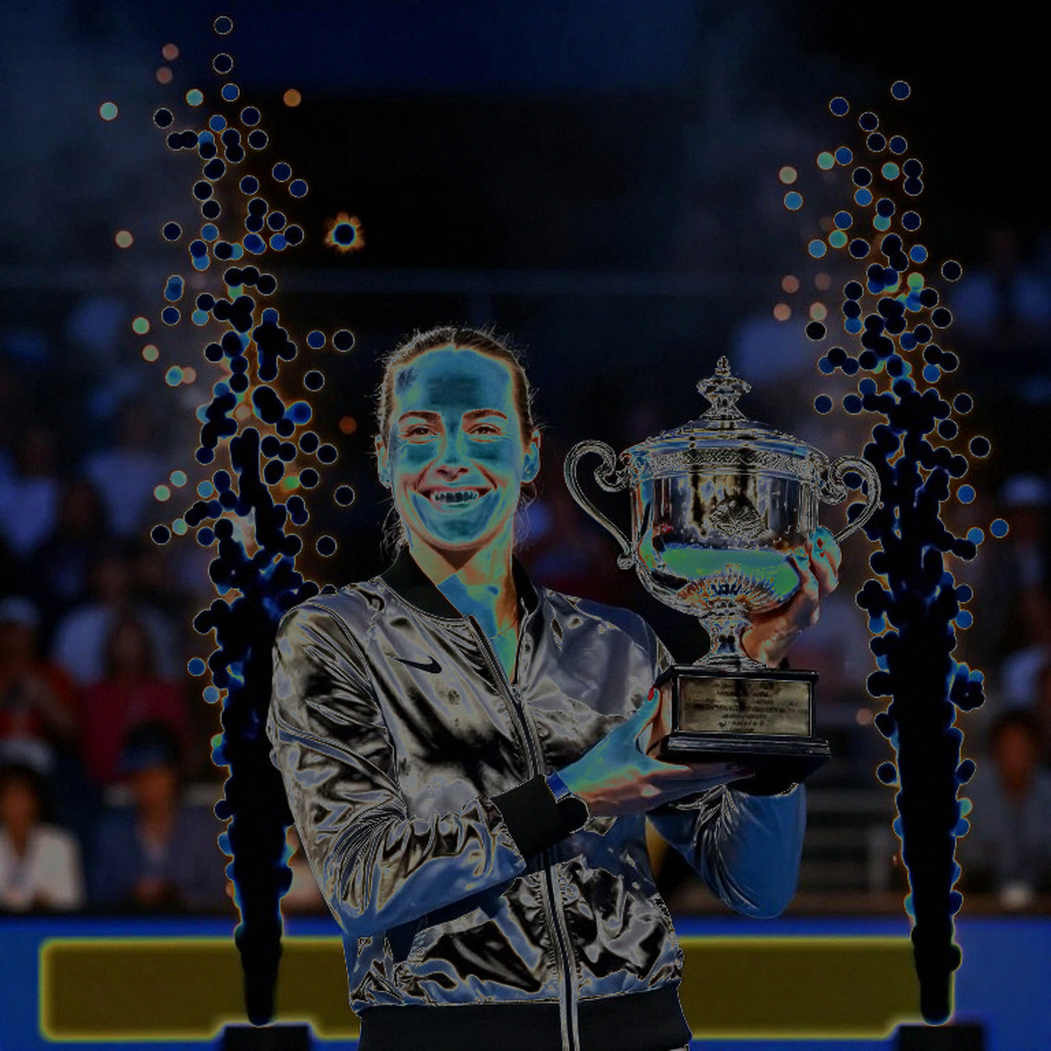
Vienna: Carlos Alcaraz won the Vienna Open men's singles title on Sunday, beating Alex de Minaur 6-1, 6-4 in the final. It is the 28th ATP singles title of the Spaniard's career and his fourth of the 2026 season. The final of the ATP 500 event, officially known as the Erste Bank Open, was played on indoor hard courts, where the second-seeded Alcaraz maintained complete control against the fifth-seeded Australian from start to finish.
The match was the seventh meeting between the two players, and Alcaraz's victory extended his unbeaten record to 7-0. Notably, all seven wins have come across four different surfaces — grass, clay, indoor hard court and outdoor hard court. That record suggests the edge Alcaraz holds over De Minaur is not the product of a single condition or a single season, but rather a structural advantage rooted in playing style.
The first set was entirely one-sided. Alcaraz applied pressure on the return from the opening game and attacked De Minaur's second serve aggressively to close out the set 6-1. The Australian struggled for consistency on his own serve, and several errors came off his forehand, which Alcaraz exploited without delay. De Minaur had no real opportunity to mount a meaningful resistance in the opening set.
In the second set, De Minaur tried to find rhythm and held serve in several games to keep the score close, but Alcaraz took the one break he needed and closed the set 6-4. De Minaur's serve looked better statistically in the second set, but his patience in rallies was weaker and the ball repeatedly flew long off his racket in extended exchanges. Alcaraz also moved his return position further forward in the second set, reducing the space De Minaur had to work with on serve.
In the decisive moments of the match, Alcaraz won a point that showcased his tactical intelligence. The four-shot rally began with an Alcaraz slice drop shot, which De Minaur chased down and returned. Alcaraz responded with a superb lob; De Minaur ran back and managed to return it with a volley. But Alcaraz was already moving toward the net and, with his trademark panache, struck a sharp passing shot to claim the point. The rally mattered because it showed that Alcaraz was generating points not only through power but through geometric use of the court — a quality that makes his game decisive against a retriever like De Minaur.
Alcaraz's path through the tournament was not as straightforward as the final score suggests. In the semifinals he faced Daniil Medvedev, long a difficult opponent on indoor hard courts. Alcaraz won that match to reach the final and demonstrated that his physical and mental preparation had not dipped even at the tail end of the season. The level he produced against Medvedev in the semifinal was high, and the same level appeared in the final, where he handled De Minaur in short order.
De Minaur's tournament, meanwhile, will be remembered for his semifinal win over Alexander Zverev — the same Zverev who is set to become world No. 1 in the ATP rankings to be released next Monday. De Minaur produced an excellent display of serving and baseline defence in that match, but the same weapons did not work against Alcaraz in the final. The Australian was chasing his second title of the season, but that attempt ended in the final.
As for the rankings, this week in Vienna delivered two separate stories at once. Alcaraz won the title and collected the full 500 ranking points awarded to the winner of an ATP 500 event. Despite that, he could not reach the world No. 1 chair, because Zverev signalled — even after losing in the semifinal — that he would take the top spot the following Monday. The real reason for this situation lies in the arithmetic of the ranking system, which this report needs to make explicit.
The ATP ranking is built on a rolling 52-week system in which a player's best results from the past year are counted and older results from the same period drop off automatically. This means that points won in a single week never tell the whole story; one must also see which points from the previous year are being subtracted that same week. The reason Zverev is reaching the top is that his results over recent months have been strong enough that even a semifinal loss could not bring him down. In Alcaraz's case, it is possible that some large points from the previous year were dropping off during this same period, which would effectively reduce the benefit of his 500-point gain.
This is precisely where conventional reporting falls short. A reader may reasonably ask: how can the ranking verdict be reversed between a player who lost the final and a player who won the title and took 500 points? The answer can only come from three figures — the points gap between the two players before the tournament, the points being subtracted from each player's account during this same week, and the net difference that remains after the tournament. Without all three, the story remains incomplete and the reader is left with a suspicion that something has been withheld.
It is also worth noting that Alcaraz was the second seed at this tournament. Being second seed at an ATP 500 event means exactly one player is ranked above him — and whether that player was present as the top seed is not clarified by the report. What is certain is that the gap between Alcaraz and the top spot, whatever it was, could not be bridged by a single 500-point title. The direct implication is that the points separation between the two players was larger than the outcome of one week of this tournament.
This situation also highlights a major feature of modern tennis. Titles and world rankings have become two separate measures. A player can win four titles in a season and still fail to reach the top, if those titles came at small or mid-tier events while a rival consistently went deep at the biggest tournaments. Alcaraz's 2026 season should be assessed through that lens.
This is the 28th ATP title of Alcaraz's career, a remarkable figure for a player who is only now entering his most productive phase. It is his fourth title of the season, and those four include the Australian Open he won at the start of the year. That Australian Open victory was not merely another Grand Slam — it was his seventh major and, with it, he completed a career Grand Slam. That means all four major titles now appear on his record.
To appreciate the significance of that achievement, one must consider how rare a career Grand Slam is in tennis. It places him in the group of players who have won the biggest titles across four different surfaces and four different sets of conditions. Winning a title like Vienna on indoor hard courts is evidence that his game is not confined to the biggest stages — he can sustain the same level in the tired, final stretch of a season.
The 7-0 record against De Minaur becomes even more meaningful in this context. Those seven wins span all four major surfaces, which means Alcaraz has beaten him on grass, where De Minaur's low positioning and quick footwork usually serve him well, and on clay, where De Minaur's patience tends to show. It is a stylistic edge that does not change with court speed or ball bounce. Alcaraz's spin, his habit of using the drop shot, and his willingness to move forward to the net — together these neutralise the very game De Minaur relies on, one built around extending rallies and waiting for the opponent's error.
The Vienna Open occupies a distinct place in the ATP calendar. It is an indoor hard-court tournament played in the final stretch of the season, where the court is fast, the bounce is low and the serve matters more. In such conditions, big names often struggle, because end-of-season fatigue and surface speed arrive together. For Alcaraz, this title matters because he has worked on the aspects of his game considered weaknesses on this surface — consistency on serve and precision in the short game.
The semifinals also showed how dense the top level of men's tennis currently is. On one side, De Minaur beat Zverev to prove he is not out of place in big matches; on the other, Alcaraz beat Medvedev to show his game works on indoor surfaces too. Having these four names in the last four of a single tournament is a sign that even in the closing part of the season, the priorities and preparation levels of the top players remain high.
Several important aspects of this report, however, remain incomplete, and they need to be recorded clearly. The biggest gap is that the entire report contains not a single direct quotation from any player, coach or tournament official. What Alcaraz said after the final, how De Minaur reacted to the loss, what Zverev said about becoming world No. 1 — none of it is available. For a full sports report, that is unusual.
The second gap is technical statistics. The report has no ace count, no double faults, no breakdown of winners and unforced errors, no break-point tally and no total match duration. In modern tennis reporting these figures have become standard, and without them a reader cannot tell whether 6-1, 6-4 was genuinely one-sided or merely the result of a few decisive points.
The third gap is that Alcaraz's full path to the final is not described. Only the semifinal is mentioned, with no reference to the quarterfinal or earlier rounds. This makes it difficult to judge which match was the hardest on the road to the title.
The fourth gap is that the report does not clarify whether this is Alcaraz's first title in Vienna. That is a detail that would add another dimension to the story of a 28th career title, since a first win at a historic indoor tournament is an achievement in itself.
The fifth gap concerns De Minaur's earlier title this season, mentioned only in passing — the report does not say which tournament he won. That information matters because it would help establish the level of his season and whether Vienna could have been the best week of his career.
The sixth and most important point is that the year appears only in the headline, not in the body text. This is a structural risk. If the headline's year is wrong, the body text cannot independently establish which year the event belongs to. When such a report goes into an archive or is quoted elsewhere, its time reference becomes blurred and it could present a future event as a past one.
In addition, the word 'Sunday' is used without a date. A reader who wants to know exactly which day the match was played must rely on outside sources. Information such as ranking changes, season title counts and head-to-head records goes stale quickly, so a full date should be treated as mandatory in the report.
Looking at the internal construction of the text, the score and format are consistent. A 6-1, 6-4 two-set score is valid for an ATP 500 final, where best-of-three applies. The surface description is also consistent — Vienna is an indoor hard-court tournament and the report references that surface. The record of seven wins across four surfaces also checks out. Placed alongside seven Grand Slams and a career Grand Slam, the story does not break internally. A fourth title of the season including the Australian Open is also chronologically sound, since the Australian Open is played in January and Vienna in late October.
But in one place the story shows a clear fracture — the link between Zverev becoming world No. 1 and Alcaraz winning the title. The report places these two events side by side in the same paragraph, creating an odd contradiction for the reader: the player who lost in the semifinal is becoming No. 1, while the player who won the title and took 500 points is not. Three elements needed to resolve that contradiction — who the previous world No. 1 was, where Zverev stood before the tournament, and whose points were dropping that week — are all missing.
One more subtlety deserves attention. The report presents the four-shot rally as one of the decisive moments of the match, but it is not clear whether that point was match point. If it was merely an ordinary point, presenting it as tied to the victory creates a misleading causal link. In tennis reporting that distinction matters a great deal, because a point won on match point and a point won in the fifth game of the second set tell different stories.
The quality of sourcing is also questionable. The report cites no explicit source, no reporter's byline and no official data source. Without sourcing, such a report can only be called 'internally consistent', not 'verified'. The distinction matters because facts like scores, records and rankings change quickly in sports news and need to be checked against an official database.
The results of this tournament will also affect the calendar ahead. Indoor tournaments played in the final stretch of the season often provide the first signal of the following year's preparation. A player who finds rhythm on indoor courts in October often carries that rhythm into the start of the next season. For Alcaraz, this title matters because it pushed his season toward a positive ending, even if he did not reach the top of the rankings.
For Zverev, the week was mixed. Losing in the semifinal is a disappointment, but becoming world No. 1 is an achievement that can change the direction of an entire career. Tennis history offers many examples of players making a big ranking jump after a loss at a tournament, because the ranking is not the result of one event but an average of a full year's performance. This should be explained clearly to readers, because without that understanding such news appears misleading.
For De Minaur, the week is an experience that could shape his career. He beat a player of Zverev's calibre, who becomes the world's No. 1 the following week. That win is an achievement in itself. But his loss to Alcaraz in the final also shows that a gap still exists between the top level and the level beyond it. His next step is to decide how to close that gap — by adding pace to his serve, by building a habit of coming to the net, or by bringing aggression into rallies.
When Alcaraz's tally of 28 titles is placed alongside seven Grand Slams, a clear picture emerges — a large share of his titles have come on the biggest stages, which shows he plays better under pressure. That is considered the most valuable quality in any player, because winning small tournaments is easy, but winning big finals demands a different level of mental strength.
This win in Vienna is another link in that chain. It is an ATP 500 title, not a Grand Slam, but its significance in the context of the season is not small. Winning a title in the closing part of the season shows that a player's physical fitness and mental hunger are both intact — and those are the two things that lay the foundation for the next season.
Another aspect of this report is that it frames the news of Zverev reaching the top alongside Alcaraz's victory, making it appear as though the two events are connected. In reality these are two separate stories that happened in the same week. Explaining them separately would be more useful to readers, because the story of a title and the story of a ranking change each have their own arithmetic and their own language.
It must also be said here that independent sources are needed to confirm the events described in this report. The score, the seeding, the semifinal opponents, the tournament level and the venue can all be checked immediately on the ATP website and the tournament's official site. But ranking changes, career title counts and head-to-head records require the ATP rankings and head-to-head databases. And most importantly, the year of the event referenced in the report must first be confirmed through the publication date and the original source.
In this way, this edition of the Vienna Open is a story in which the truth of the playing field and the arithmetic of the rankings run side by side. What Alcaraz did on court was clean and direct — 6-1, 6-4, two sets, one-sided control, a seventh win. But what happened off court was not so direct — one player won the title and did not reach the top, and another lost in the semifinal and did reach the top. Only by reading both stories together does it become clear that in modern tennis, titles and rankings are two different currencies, each with its own exchange rate.
For Alcaraz, a fourth title of the season and a 28th of his career arriving together is a sign that his consistency is no longer confined to brilliance alone. Players who win early often suffer from dips in level. In Alcaraz's case, winning titles in different parts of the season shows that his level has held through the year — from a Grand Slam in January to an indoor ATP 500 in October.
For De Minaur, the loss is a lesson. His game rests on defensive patience, but against a player like Alcaraz that strategy does not work when the opponent takes the initiative to create points himself. Seven losses in seven matches means this is no coincidence. De Minaur will have to change his approach — either by taking more risk on serve or by being more aggressive on the return.
This Vienna tournament also shows that ATP 500 events are no longer minor. For top players, these tournaments have become a means of maintaining momentum alongside ranking points, especially in the final stretch of the season when the biggest events are over. That is why the names appearing at October indoor tournaments are now the same names that appear in the final rounds of Grand Slams at the start of the year.
Finally, one clear piece of advice is necessary for anyone reading this report. The figures it presents — score, seeding, surface, records — are consistent with one another and form a coherent story. But the weakest link in that story is time. The year appears only in the headline, no date appears anywhere, and the reason for the ranking change is not explained. That means before using this report in any archive, citation or research, three things must be checked — the publication date, the original source, and the official ATP rankings data. Only after all three are confirmed should it be used as fact.
संबंधित खिलाड़ी
अनुशंसित
New Strikes on Iran: Decision Deferred in Washington — the Gap Between Rubio's Restraint and Trump's Hard Line Is the Real Story2026-11-02
Wrexham Open Final: Klugman's 6-1 Receipt, Jacquemot's Tiebreak Leak, and the Six Line Items Missing From Every Report2026-10-25
From Chennai 2026 to Balewadi: The Doubles Arithmetic in Indian Tennis’s Ledger, and a Stadium Gone Quiet2026-11-01
Eleven Set Points and a Love Break: What Rybakina's Ningbo Ledger Says Before the Final2026-10-25
Ningbo's 76 Minutes: Rybakina's Fourth Title Was Built on Serve, Not on Winners2026-10-26
अनुशंसित
Eleven Set Points and a Love Break: What Rybakina's Ningbo Ledger Says Before the Final2026-10-25
Rybakina in Ningbo: zero holds in the second set, and an open question before the semi-final2026-10-25
Wrexham Open Final: Klugman's 6-1 Receipt, Jacquemot's Tiebreak Leak, and the Six Line Items Missing From Every Report2026-10-25
A Blank Cell, a Full Answer: The Most Honest Line in Tennis Data Is 'N/A — Insufficient Information'2026-10-24
Alcaraz and the Davis Cup: Testing 'Career Completion' on an Indoor Hard Court2026-10-24
अनुशंसित
Nine Columns, All Empty: The Discipline of Writing 'No Evidence' in Tennis Analytics2026-10-24
The Chairs Changed, the Ledger Didn't: Pakistan's State Boards and the Accounting of Sports Patronage2026-10-30
The Interest on the Press: When Mid-Table Sides Start Collecting on Gegenpressing's Debt2026-10-28
Ningbo Final Preview: 11 Set Points, 14 Break Points, and the Real Rybakina–Fernandez Ledger2026-10-25
Incomplete Input: Tennis Content Pipeline Analysis Report2026-11-02
अनुशंसित
A Blank Cell, a Full Answer: The Most Honest Line in Tennis Data Is 'N/A — Insufficient Information'2026-10-24
Nine Columns, All Empty: The Discipline of Writing 'No Evidence' in Tennis Analytics2026-10-24
When the Report Came Back Empty: Tennis Coverage's Pipeline and the Price of a Null Return2026-11-02
From Chennai 2026 to Balewadi: The Doubles Arithmetic in Indian Tennis’s Ledger, and a Stadium Gone Quiet2026-11-01
Eleven Set Points and a Love Break: What Rybakina's Ningbo Ledger Says Before the Final2026-10-25