
Kabaddi: The Journey from Clay Courts to the Global Stage
कबड्डी भारत का पारंपरिक खेल है जो अब एशियाई खेलों और प्रो कबड्डी लीग के ज़रिए वैश्विक पहचान बना चुका है। इसमें सात-सात खिलाड़ियों की दो टीमें होती हैं; रेडर साँस रोककर कबड्डी-कबड्डी का उच्चारण करते हुए विपक्षी पाले में जाकर खिलाड़ी को छूकर लौटता है। अंक टच, टैकल, बोनस, सुपर रेड, सुपर टैकल और ऑल आउट से मिलते हैं। भारत पुरुष और महिला दोनों वर्गों में मजबूत टीम है; ईरान उभरती शक्ति है। चुनौतियों में अंतरराष्ट्रीय असमान विकास, महिला कबड्डी को कम संसाधन, चोट-पुनर्वास और प्रशासनिक पारदर्शिता शामिल हैं।
Kabaddi is among the few sports that are rooted deep in India's tradition, culture and everyday life. Its journey—from the clay courts to the mat, and then to the colourful professional league and into the hearts of television audiences—has been full of ups and downs, but at every stage the sport has preserved its essential identity. It does not demand expensive equipment or special infrastructure. A ground, twelve players, a referee and the basic rules are enough. This simplicity turned kabaddi into a game for everyone, from village courtyards to city neighbourhoods.
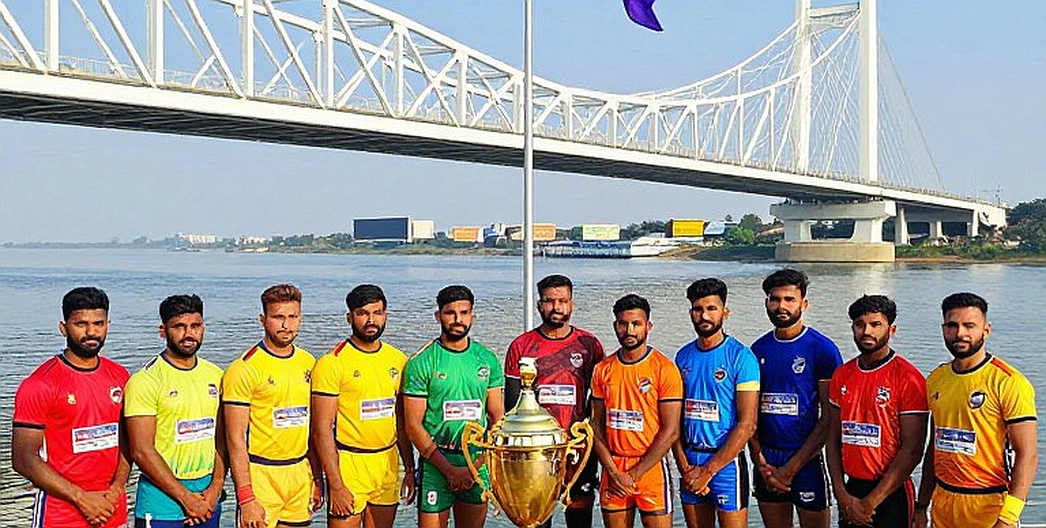
Today kabaddi is not merely a traditional game but an organised, broadcast and commercial sporting ecosystem. It has an international federation, formal status at the Asian Games, and in India the Pro Kabaddi League has carried it into prime-time television. A sport once played on the edges of fields in the evening is now played in stadiums before thousands of spectators, with colourful kits and digital graphics. This transformation has not changed the sport's spirit; it has given it a new stage and a new reach.
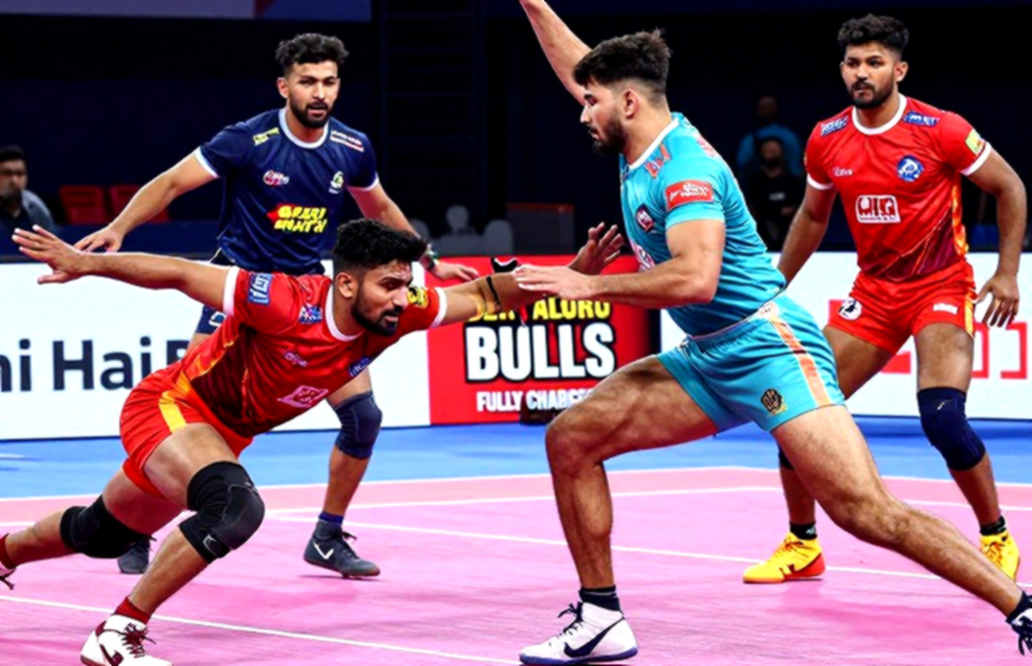
The greatest strength of kabaddi is its simplicity. It needs no ball, bat or complex apparatus. The raider must cross into the opponent's half while holding the breath and chanting kabaddi-kabaddi continuously, touch an opponent, and return before the breath runs out. This discipline of breath is the soul of the game. A moment of carelessness can put the raider in the grip of defenders, while a well-timed raid can change the course of an entire match.
The history of kabaddi is believed to be centuries old. References appear in folk narratives linked to the Mahabharata era and in ancient Indian sporting traditions, though historical evidence remains limited. Many scholars associate it with Vedic-era physical training and martial skills, where courage, endurance and team spirit were cultivated. In the medieval period the game was played across Indian regions under different names and forms. In Maharashtra it was known as Hututu, in Bengal as Ha-du-du, in Punjab as Kaudi, in Tamil Nadu as Sadugudu, and in Karnataka as Chedugudu. Each region preserved the game with its own rules and traditions.
The organised modern form of kabaddi began to take shape in the twentieth century. Efforts to standardise the rules began at the national level in India, and the game gradually spread through schools, colleges and state-level competitions. In the latter half of the century kabaddi began to cross international borders. Indian diaspora communities and sports enthusiasts carried it to several Asian countries. In the 1990s it found a place at the Asian Games, giving the sport's internationalisation a new direction.
The rules of kabaddi are straightforward. The game is played between two teams, each with seven players on the court. The playing area is a defined rectangle divided by a mid-line. Each team has its own half, called its court. At the start of a move, one team sends a raider into the opponent's half. The raider must touch one or more defenders and return safely. If the raider returns to his own half after a successful touch, he earns points. If the defenders catch and hold the raider, the defending team earns a point and the raider is out.
The most crucial rule during a raid is the continuous chanting of kabaddi-kabaddi while holding the breath. If the chanting breaks midway, the raider is declared out. This is why breath capacity and physical endurance matter so much. The raider must attack swiftly while maintaining breath control and executing a strategy.
Points are earned in three main ways. First, if the raider touches defenders and returns safely, he earns points equal to the number of defenders touched. Second, if the defending team catches the raider, it earns one point. Third, if the raider eliminates the entire opposing team, the raider's team earns two additional all-out points. After an all-out, all players of the opposing team return to the court.
Kabaddi also has bonus points. If the raider crosses the bonus line in the opponent's half, touches a defender and returns safely, he earns an additional bonus point. A super raid occurs when a raider touches three or more defenders in a single raid. A super tackle occurs when the defending team catches the raider and earns two points. These rules have made the sport exciting and tactical.
Match duration and format have evolved over time. Traditional matches lasted long, but modern competitions have made the game shorter and more audience-friendly. In the professional league, matches are played in two halves with a fixed break. Each half has a time limit, and the team with more points at the end is declared the winner. If scores are level, some competitions provide for extra time or a tie-breaker.
At the international level, kabaddi's biggest identity is linked to the Asian Games. When kabaddi was included in the Asian Games in the early 1990s, it was a proud moment for Indian sports fans. Since then the Indian men's team has maintained consistent dominance. Besides India, countries such as Iran, Pakistan, Bangladesh, Nepal, Sri Lanka, Japan, South Korea and Thailand have established their presence. Iran in particular has emerged as a rising kabaddi power, giving India tough competition.
Besides the Asian Games, kabaddi has a World Cup and other international competitions. These events have played an important role in spreading the sport. However, challenges remain at the international level. In many countries kabaddi has not received the popularity and resources it has in India. But the situation is gradually changing, and more countries are adopting the sport.
In India, the professional era of kabaddi began with the arrival of the Pro Kabaddi League. The league proved a decisive turning point. It gave players financial security and gave the sport a new identity on television and digital platforms. Players who once depended on government jobs or small competitions now began to be auctioned for lakhs of rupees. The league played a major role in establishing kabaddi as a professional sport.
The league also changed the way the sport is broadcast. Camera angles, slow-motion, graphics and analysis introduced audiences to the finer details of the game. Teams were linked to cities, strengthening local identity and rivalry. A sport once confined to villages became popular among urban youth. Interest in kabaddi grew at school and college levels, and parents began to see it as a career option.
The league also gave players new visibility and branding. Players once known only in their state or region became national faces. Names such as Pardeep Narwal, Anup Kumar, Ajay Thakur, Rahul Chaudhari, Deepak Niwas Hooda, Manjeet Chhillar and Naveen Kumar built a distinct identity through the league. These names are now recognised in kabaddi-loving households. It must be made clear, however, that this report makes no claim about any player's statistics, team or recent performances, since verified data would be required for that.
The league's success strengthened the economics of kabaddi. Franchise teams, sponsors and broadcast rights brought big money into the sport. Player salaries rose, and they received better training and medical facilities. Employment opportunities opened for coaches, physiotherapists and analysts. The entire ecosystem became professional.
Women's kabaddi has also made notable progress in recent years. It was included in the Asian Games, and the Indian women's team has performed well internationally. However, compared with men's kabaddi, women's kabaddi still receives less media coverage, less sponsorship and fewer resources. Women players need a safe environment, better training facilities and equal opportunities. Women's kabaddi competitions are held in several states, but greater recognition at national and international levels is needed.
Kabaddi's technique and strategy have evolved. Earlier raiders depended mainly on physical strength and speed, but now strategy and intelligence matter more. Raiders analyse opponents' weaknesses, read the structure of the defence and plan their raids accordingly. Techniques such as hand touch, toe touch, squat touch, running hand touch and dive have developed.
Defence has also changed significantly. Earlier defenders focused only on catching the raider, but now they operate as an organised unit. Chain tackle, corner defence, cover defence and dash are common strategies. Teams study an opponent raider's style and prepare their defence accordingly. Data and video analysis have become common in modern kabaddi.
Physical fitness is the foundation of kabaddi. The sport demands speed, agility, endurance, strength and flexibility. Players undergo special breath-control training because they must play while holding the breath during raids. Running, sprinting, weight training and yoga are part of training. Warm-up and cool-down have been made mandatory to prevent injuries.
A key feature of kabaddi is that every player must both attack and defend. However, specialisation has grown in the modern game. Some players are primarily raiders, others defenders. But a good team is one with balance. If a team has only good raiders and weak defence, opponents can exploit it. Similarly, strong defence alone cannot win matches.
India's kabaddi base lies in rural and semi-urban areas. Young people there grow up playing kabaddi on clay grounds. That is why India never lacks talent in kabaddi. But better systems are needed to identify, train and promote that talent. Sports academies and training centres have been opened in several states, offering free or subsidised training to young players.
Kabaddi needs promotion at school and college levels. If the game is firmly included in physical education curricula, interest will grow from childhood. Under various government schemes and sports promotion programmes, kabaddi players receive scholarships and job reservations, which has increased the number of young people choosing the sport as a career.
Commercially, kabaddi has become an attractive market. It has established its presence on television ratings, digital audiences and sponsorship. Players' social media followings have grown rapidly, raising their brand value. Several companies now make kabaddi players brand ambassadors. This shows that kabaddi is no longer just a sport but also part of entertainment and marketing.
But rapid growth brings challenges. The first is uneven international development. Kabaddi is strong in countries such as India and Iran, but many countries still lack basic facilities and coaches. The second is a lack of coordination between leagues and national competitions at home. The third is player career security—many players drop out after injury due to inadequate rehabilitation.
Another important issue is transparency and governance. Long-term development of any sport requires transparency, accountability and player-friendly decisions in its administration. Selection processes, team management and financial discipline all need strong systems. If players trust that opportunities will come on the basis of hard work and performance, they will perform better.
The role of the media is also important. Traditionally, media attention has focused more on cricket, leaving many sports, including kabaddi, neglected. However, this has changed somewhat in recent years. Pro Kabaddi League broadcasts and the popularity of digital platforms have given kabaddi more space. But kabaddi is still not covered as deeply as cricket. Local competitions, stories of young players and the ground reality of rural kabaddi deserve more media space.
Kabaddi's future looks bright, provided steps are taken in the right direction. To spread the sport internationally, more training centres should be opened in more countries, local coaches developed and the number of international competitions increased. At home, grassroots infrastructure must be strengthened, school sports promoted and women's kabaddi given equal opportunities.
Kabaddi should also advance technologically. Data analysis, biomechanics and sports science can improve player performance. Injury prevention, rehabilitation and mental health also need attention. A system should be developed where players focus only on playing, not on financial insecurity or career anxiety.
Kabaddi's greatest strength is its simplicity and accessibility. It is a sport anyone can play, anywhere, at any age. It recognises no barriers of caste, class, gender or region. An ordinary young person from a village can reach national and international levels through hard work and dedication. This inclusive nature has made kabaddi one of India's most democratic sports.
The sport has also shown that modernity and tradition can coexist. The fragrance of the clay court still lives in players' hearts, even as they play professionally on the mat. This balance makes kabaddi special.
In conclusion, kabaddi has come a long way. From the soil of villages to international arenas and professional leagues, the sport has travelled far. It faced many challenges along the way but retained its identity and popularity. In the coming years, if administrators, sponsors, media and players work together, kabaddi can reach even greater heights. The sport is part of India's cultural heritage, and preserving it is a shared responsibility.
संबंधित खिलाड़ी
अनुशंसित
Commonwealth Kabaddi Championship 2026, Day 1: The Table's Arithmetic Is Correct, Its Meaning Is Missing2026-10-25
India vs England, Match 4: The Rotation Ledger in Ahmedabad, and a Fixture That Proves Nothing2026-10-25
The Empty Scoresheet: Kabaddi Coverage Is Full of Claims and Short of Data2026-10-30
अनुशंसित
Kabaddi: From the Clay Akhara to the Broadcast Studio2026-10-31
From the Cant to the Dubki: The Column Kabaddi's Rulebook Never Prints2026-10-24
Commonwealth Kabaddi Championship 2026, Day 1: The Points Table Isn't Lying, But It Isn't Telling the Whole Truth Either2026-10-25
Kabaddi: The Journey from Clay Courts to the Global Stage2026-11-01
The ₹2.605 Crore Bid Is a Receipt, Not a Redemption: Where Kabaddi's Auction Noise Swallows the Signal2026-10-25
अनुशंसित
Commonwealth Kabaddi Championship 2026, Day 1: The Table's Arithmetic Is Correct, Its Meaning Is Missing2026-10-25
The Truth of the Third Raid: In Kabaddi, the Stand Speaks Before the Scoreboard2026-10-25
The Empty Scoresheet: Kabaddi Coverage Is Full of Claims and Short of Data2026-10-30
Ahmedabad's Points Table: Three Teams Ranked Without Playing, and the 'Commonwealth' Filter That Keeps Iran Out2026-10-25
Commonwealth Kabaddi Championship 2026: Three Numbers Nobody Counted Before India vs Uganda2026-10-25
अनुशंसित
The Ahmedabad Points Table That Didn't Lie, But Didn't Tell the Whole Story Either2026-10-25
Commonwealth Kabaddi Championship 2026, Day 1: The Table's Arithmetic Is Correct, Its Meaning Is Missing2026-10-25
The ₹2.605 Crore Bid Is a Receipt, Not a Redemption: Where Kabaddi's Auction Noise Swallows the Signal2026-10-25
Nine Days in Ahmedabad, Eight Matches for India: The Commonwealth Kabaddi Championship's Real Scoreboard Will Sit in the Medical Room2026-10-28
"India Will Win, But the Scoreline Will Lie" — Fact-Checking the Commonwealth Kabaddi Championship 20262026-10-25